
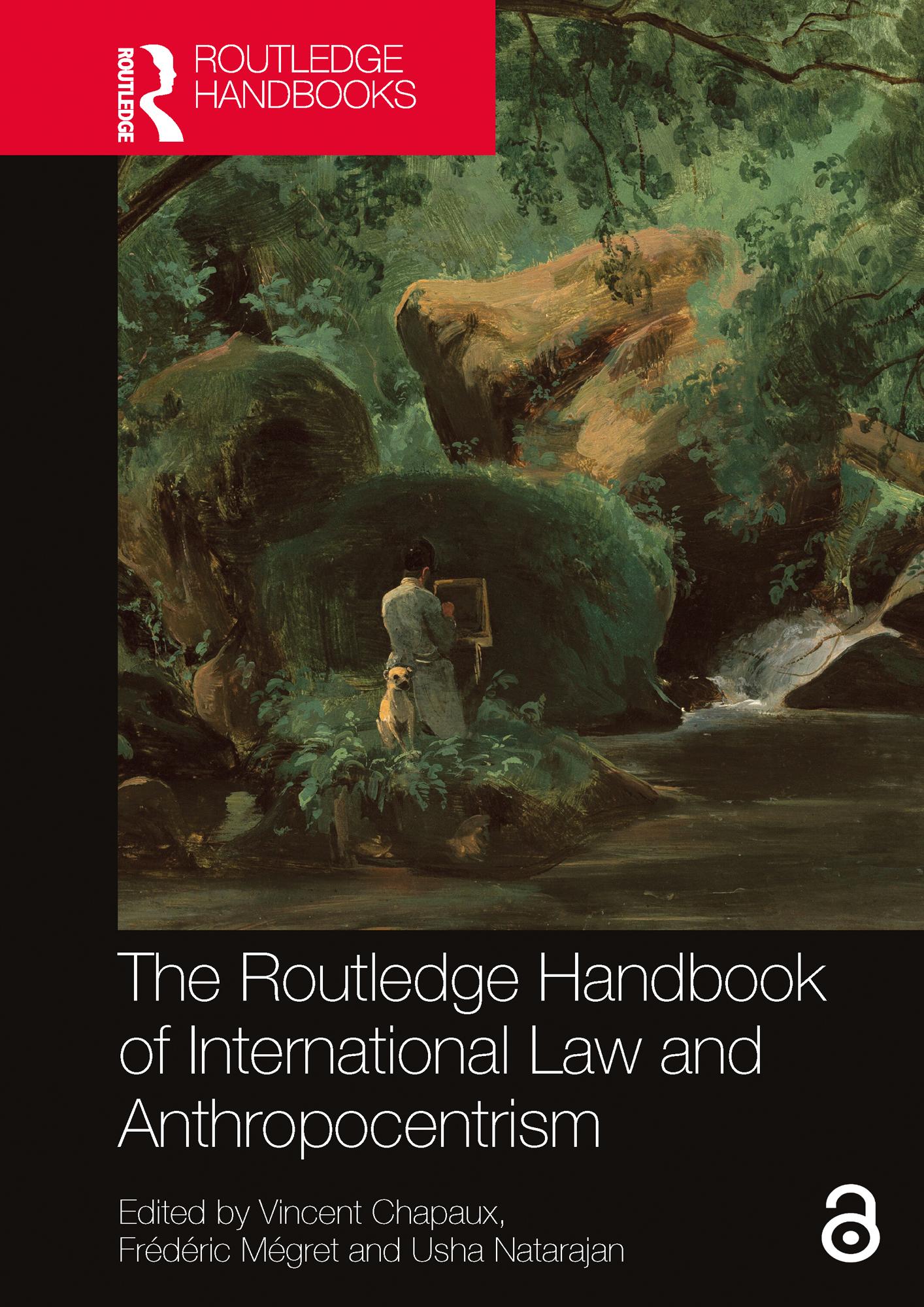
This handbook explores, contextualises and critiques the relationship between anthropocentrism – the idea that human beings are socially and politically at the centre of the cosmos – and international law.
While the critical study of anthropocentrism has been under way for several years, it has either focused on specific subfields of international law or emanated from two distinctive strands inspired by the animal rights movement and deep ecology. This handbook offers a broader study of anthropocentrism in international law as a global legal system and academic field. It assesses the extent to which current international law is anthropocentric, contextualises that claim in relation to broader critical theories of anthropocentrism, and explores alternative ways for international law to organise relations between humans and other living and non-living entities.
This book will interest international lawyers, environmental lawyers, legal theorists, social theorists, and those concerned with the philosophy and ethics of ecology and the non-human realms.
Chapter 6 of this book is freely available as a downloadable Open Access PDF at http://www.taylorfrancis.com under a Creative Commons Attribution-Non Commercial-No Derivatives (CC-BY-NC-ND) 4.0 license. Funded by University of Gothenburg and Lund University.
Betaal eenvoudig met kaart, Klarna, Apple Pay of Google Pay. Niet tevreden? Je hebt altijd 14 dagen bedenktijd. Lees meer in onze voorwaarden. Heb je vragen, mail ons dan via hello@memmo.org.
Memmo maakt studeren makkelijker – waar je ook bent ter wereld. Wij brengen je cursusboeken en slimme studietools samen op één plek: samenvattingen, quizzen, podcasts en flashcards. En Ted, je studievriend die antwoord geeft op alles wat je je afvraagt. Meer dan 50.000 studenten studeren hier al – gebouwd om je sneller te laten leren en minder stress te geven.