
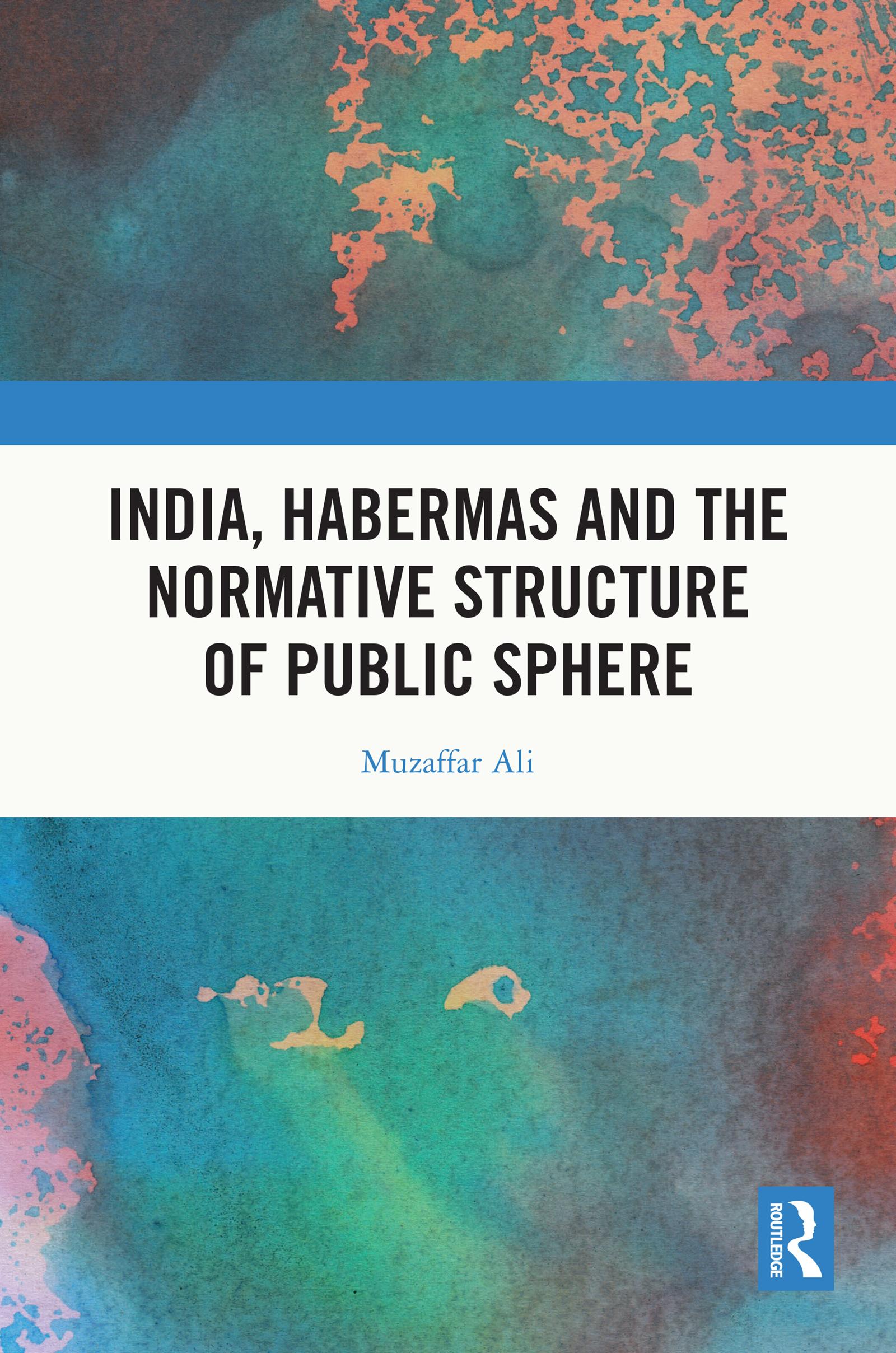
This book examines how the contemporary Indian situation poses a strict theoretical challenge to Habermas’s theorization of the public sphere and employs the method of samvāda to critically analyse and dissect its universalist claims. It invites the reader to consider the possibility of imagining a normative Indian public sphere that is embedded in the Indian context—in a native and not nativist sense—to get past the derivative language of philosophical and political discourses prevalent within Indian academia. The book proposes that the dynamic cooperative space between Indian political theory and contemporary Indian philosophy is effectively suited to theorize the native idea of the Indian public sphere. It underlines the normative need for a natively theorized Indian public sphere to further the multilayered democratization of public spheres within diverse communities that constitute Indian society.
The book will be a key read for contemporary studies in philosophy, political theory, sociology, postcolonial theory, history and media and communication studies.
Betaal eenvoudig met kaart, Klarna, Apple Pay of Google Pay. Niet tevreden? Je hebt altijd 14 dagen bedenktijd. Lees meer in onze voorwaarden. Heb je vragen, mail ons dan via hello@memmo.org.
Memmo maakt studeren makkelijker – waar je ook bent ter wereld. Wij brengen je cursusboeken en slimme studietools samen op één plek: samenvattingen, quizzen, podcasts en flashcards. En Ted, je studievriend die antwoord geeft op alles wat je je afvraagt. Meer dan 50.000 studenten studeren hier al – gebouwd om je sneller te laten leren en minder stress te geven.