
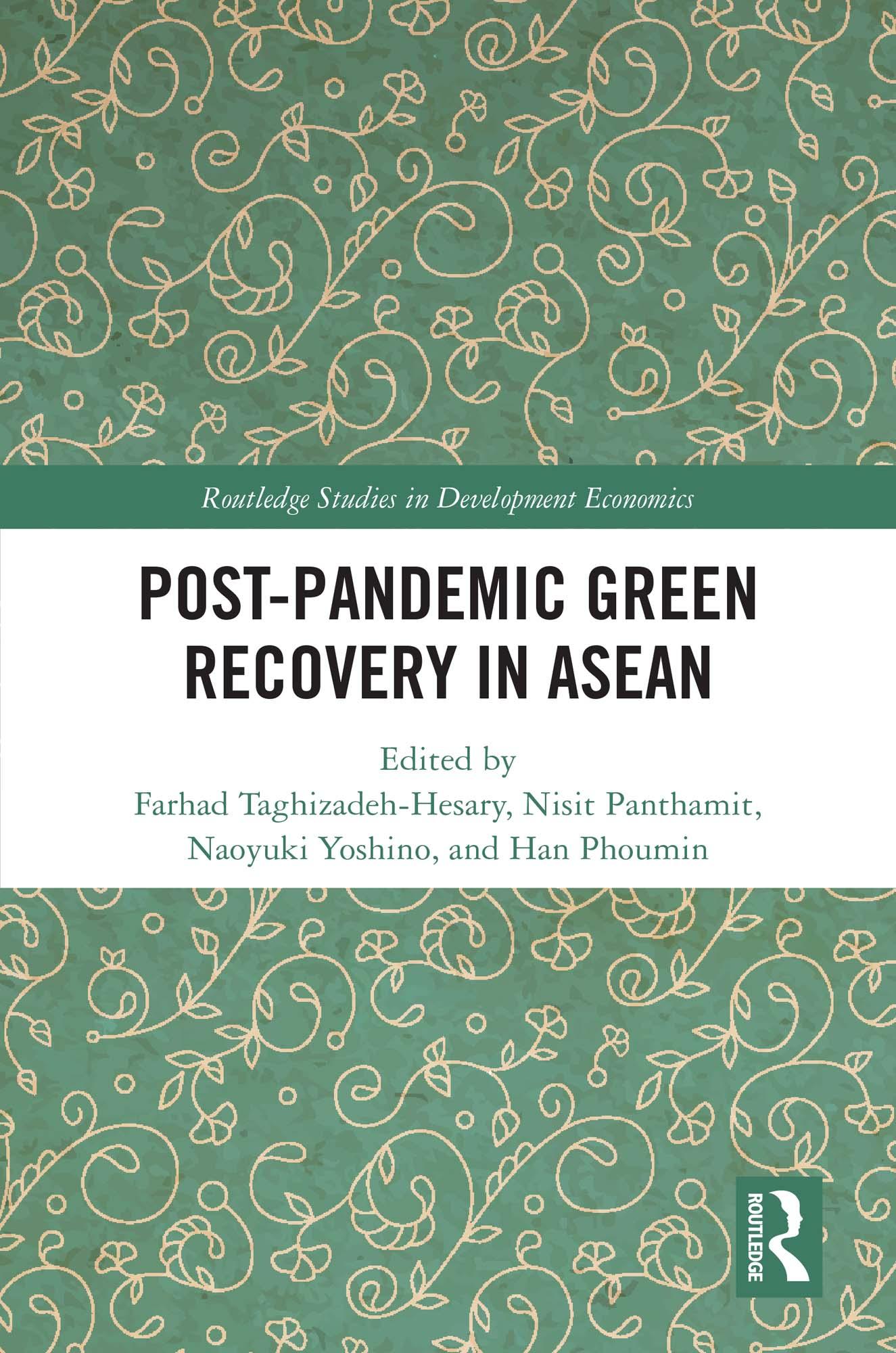
ASEAN’s real gross domestic product (GDP) had declined sharply due to the COVID-19 pandemic. The economic downturn and the uncertainty about the future reduced the new investments in green projects drastically. Besides this, many governments rolled back environmental regulations and taxes and increased fossil-fuel intensive infrastructure and electricity to stimulate economic growth. Post-Pandemic Green Recovery in ASEAN consists of several empirical studies using fresh data, with regional and country-level perspectives on ways to keep the greenness of the economic recovery plans.
The chapters look at various aspects and sectors, including tourism, infrastructure, energy, small and medium enterprises (SMEs), employment, and livelihood, by assessing the effectiveness of various tools and instruments, including green finance, carbon taxation, green Sukuk, credit guarantee, cash transfer payment, power purchase agreements, and the related policies. They also provide practical policy recommendations useful for the ASEAN member states and other developing regions for the green recovery in the post-pandemic.
Reiterating the importance of green and low-carbon mechanisms and climate change tackling policies besides the usual economic recovery strategies, this book is a precious resource for the researchers of economics, finance, ASEAN and Asian studies, and policymakers.
Betaal eenvoudig met kaart, Klarna, Apple Pay of Google Pay. Niet tevreden? Je hebt altijd 14 dagen bedenktijd. Lees meer in onze voorwaarden. Heb je vragen, mail ons dan via hello@memmo.org.
Memmo maakt studeren makkelijker – waar je ook bent ter wereld. Wij brengen je cursusboeken en slimme studietools samen op één plek: samenvattingen, quizzen, podcasts en flashcards. En Ted, je studievriend die antwoord geeft op alles wat je je afvraagt. Meer dan 50.000 studenten studeren hier al – gebouwd om je sneller te laten leren en minder stress te geven.