
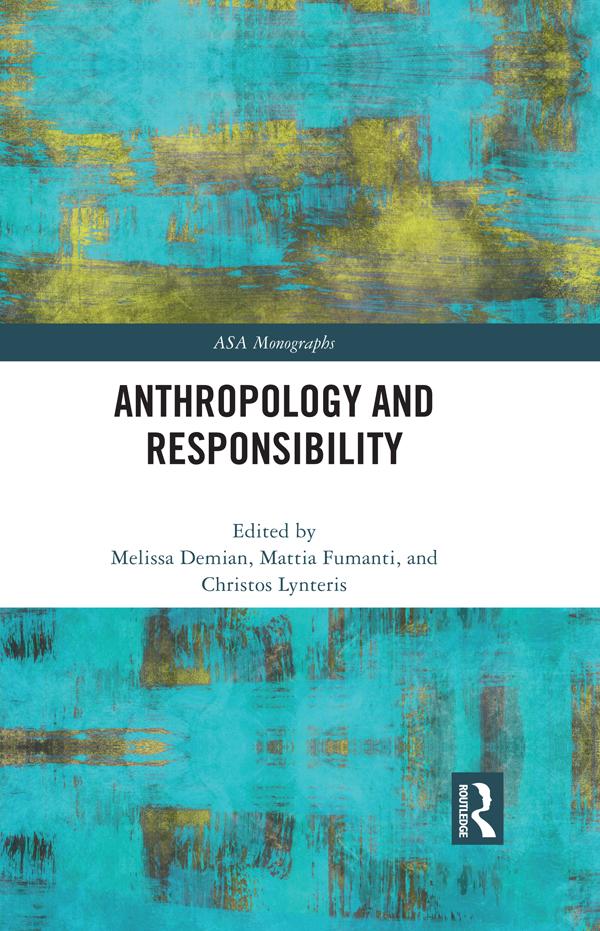
This book explores the role and implications of responsibility for anthropology, asking how responsibility is recognised and invoked in the world, what relations it draws upon, and how it comes to define notions of the person, institutional practices, ways of knowing and modes of evaluation. The category of responsibility has a long genealogy within the discipline of anthropology and it surfaces in contemporary debates as well as in anthropologists’ collaboration with other disciplines, including when anthropology is applied in fields such as development, medicine, and humanitarian response. As a category that unsettles, challenges and critically engages with political, ethical and epistemological questions, responsibility is central to anthropological theory, ethnographic practice, collaborative research, and applied engagement. With chapters focused on a variety of cultural contexts, this volume considers how anthropology can contribute to a better understanding of responsibility, including the ‘responsibility of anthropology’ and the responsibility of anthropologists to specific others.
Betaal eenvoudig met kaart, Klarna, Apple Pay of Google Pay. Niet tevreden? Je hebt altijd 14 dagen bedenktijd. Lees meer in onze voorwaarden. Heb je vragen, mail ons dan via hello@memmo.org.
Memmo maakt studeren makkelijker – waar je ook bent ter wereld. Wij brengen je cursusboeken en slimme studietools samen op één plek: samenvattingen, quizzen, podcasts en flashcards. En Ted, je studievriend die antwoord geeft op alles wat je je afvraagt. Meer dan 50.000 studenten studeren hier al – gebouwd om je sneller te laten leren en minder stress te geven.