
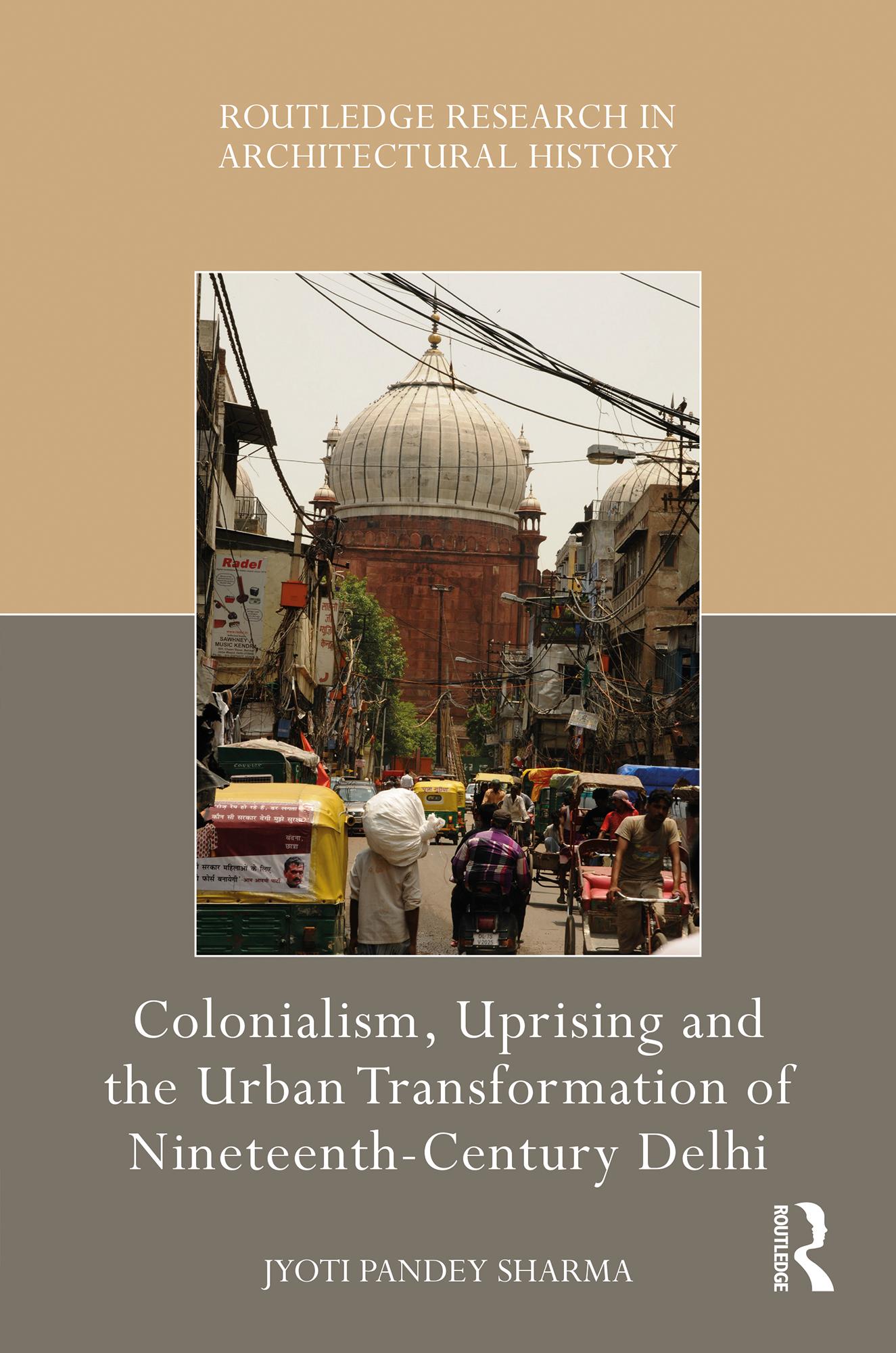
No other city in the Indian subcontinent can lay claim to having so many lives as Delhi. This book examines Delhi in the politically and culturally dynamic nineteenth century which was marked midway by the 1857 uprising against British colonial rule as a watershed event. Following British occupation, Delhi became a receptacle for encounters between the centuries-old Mughal traditions and the incoming colonial ideal, producing a traditionalism-modernity binary. Employing the built environment lens, the book traces the architectural trajectory of Delhi as it transitioned from the seventeenth-century Mughal Badshahi Shahar (imperial city) first into a culturally hybrid Dilli-Delhi combine of the pre-uprising era and thereafter into a modern British city following the uprising. This transition is presented via four constructs that draw on the traditionalism-modernity binary of Mughal and British Delhi and include Marhoom Dilli (Dead Delhi); Picturesque Delhi; Baaghi Dilli (Insurgent Delhi) and Tamed Delhi. The book goes beyond the nineteenth century to examine the vestiges of Delhi’s four nineteenth-century lives in the present while making a case for their acknowledgement as a cultural asset that can propel the city’s urban development agenda. By bringing together the city’s past and its present as well as addressing its future, the book can count among its readers not just scholars but also those interested in cities and their evolving landscapes.
Betaal eenvoudig met kaart, Klarna, Apple Pay of Google Pay. Niet tevreden? Je hebt altijd 14 dagen bedenktijd. Lees meer in onze voorwaarden. Heb je vragen, mail ons dan via hello@memmo.org.
Memmo maakt studeren makkelijker – waar je ook bent ter wereld. Wij brengen je cursusboeken en slimme studietools samen op één plek: samenvattingen, quizzen, podcasts en flashcards. En Ted, je studievriend die antwoord geeft op alles wat je je afvraagt. Meer dan 50.000 studenten studeren hier al – gebouwd om je sneller te laten leren en minder stress te geven.