
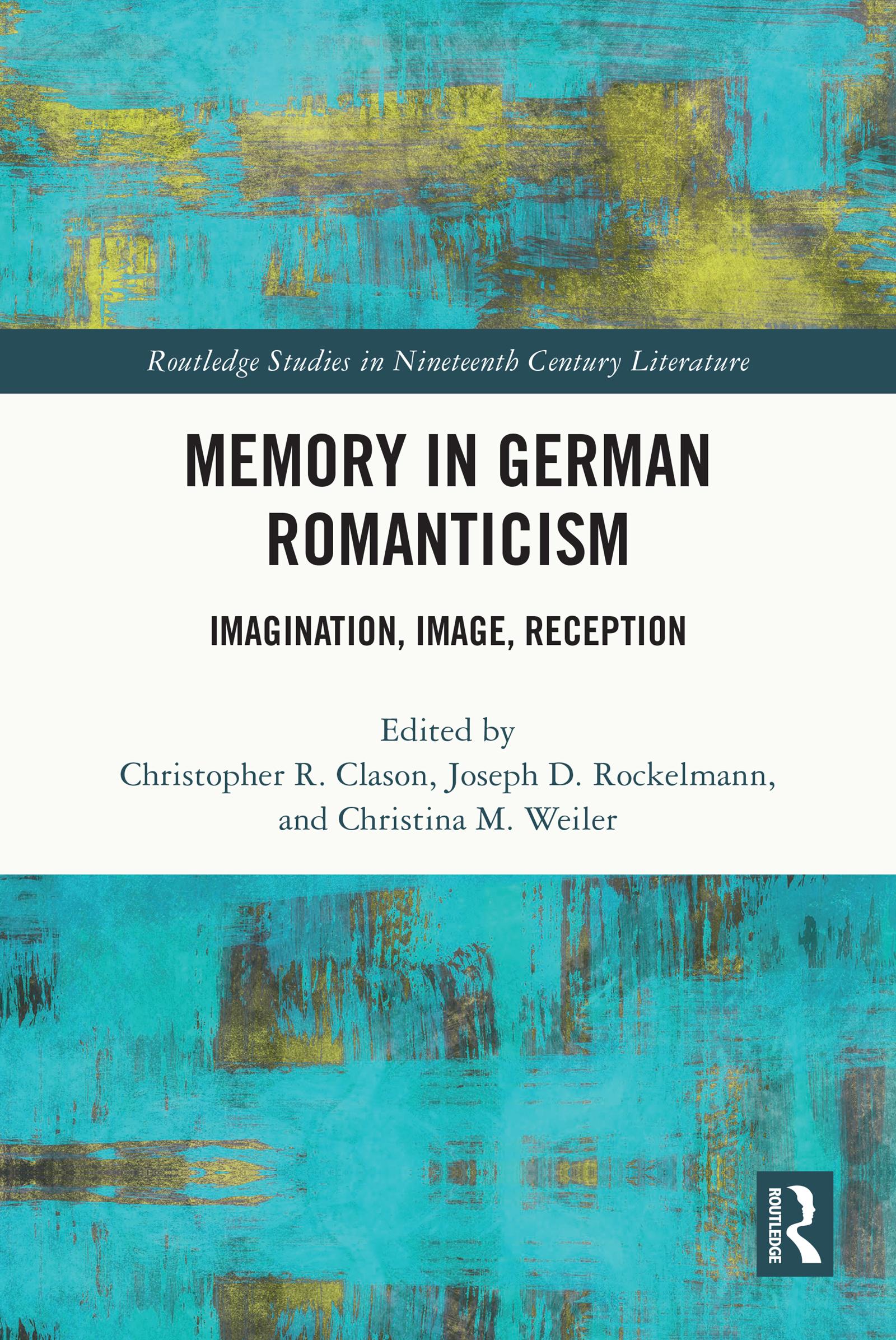
Memory in German Romanticism treats memory as a core element in the production and reception of German art and literature of the Romantic era. The contributors explore the artistic expression of memory under the categories of imagination, image, and reception. Romantic literary aesthetics raises the subjective imagination to a level of primary importance for the creation of art. It goes beyond challenging reason and objectivity, two leading intellectual faculties of eighteenth-century Enlightenment, and instead elevates subjective invention to form and sustain memory and imagination. Indeed, memory and imagination, both cognitive functions, seek to assemble the elements of one’s own experience, either directed toward the past (memory) or toward the future (imagination), coherently into a narrative. And like memories, images hold the potential to elicit charged emotional responses; those responses live on through time, becoming part of the spatial and temporal reception of the artist and their work. While imagination generates and images trigger and capture memories, reception creates a temporal-spatial context for art, organizing it and rendering it "memorable," both for good and for bad. Thus, through the categories of imagination, image, and reception, this volume explores the phenomenon of German Romantic memory from different perspectives and in new contexts.
Betaal eenvoudig met kaart, Klarna, Apple Pay of Google Pay. Niet tevreden? Je hebt altijd 14 dagen bedenktijd. Lees meer in onze voorwaarden. Heb je vragen, mail ons dan via hello@memmo.org.
Memmo maakt studeren makkelijker – waar je ook bent ter wereld. Wij brengen je cursusboeken en slimme studietools samen op één plek: samenvattingen, quizzen, podcasts en flashcards. En Ted, je studievriend die antwoord geeft op alles wat je je afvraagt. Meer dan 50.000 studenten studeren hier al – gebouwd om je sneller te laten leren en minder stress te geven.