
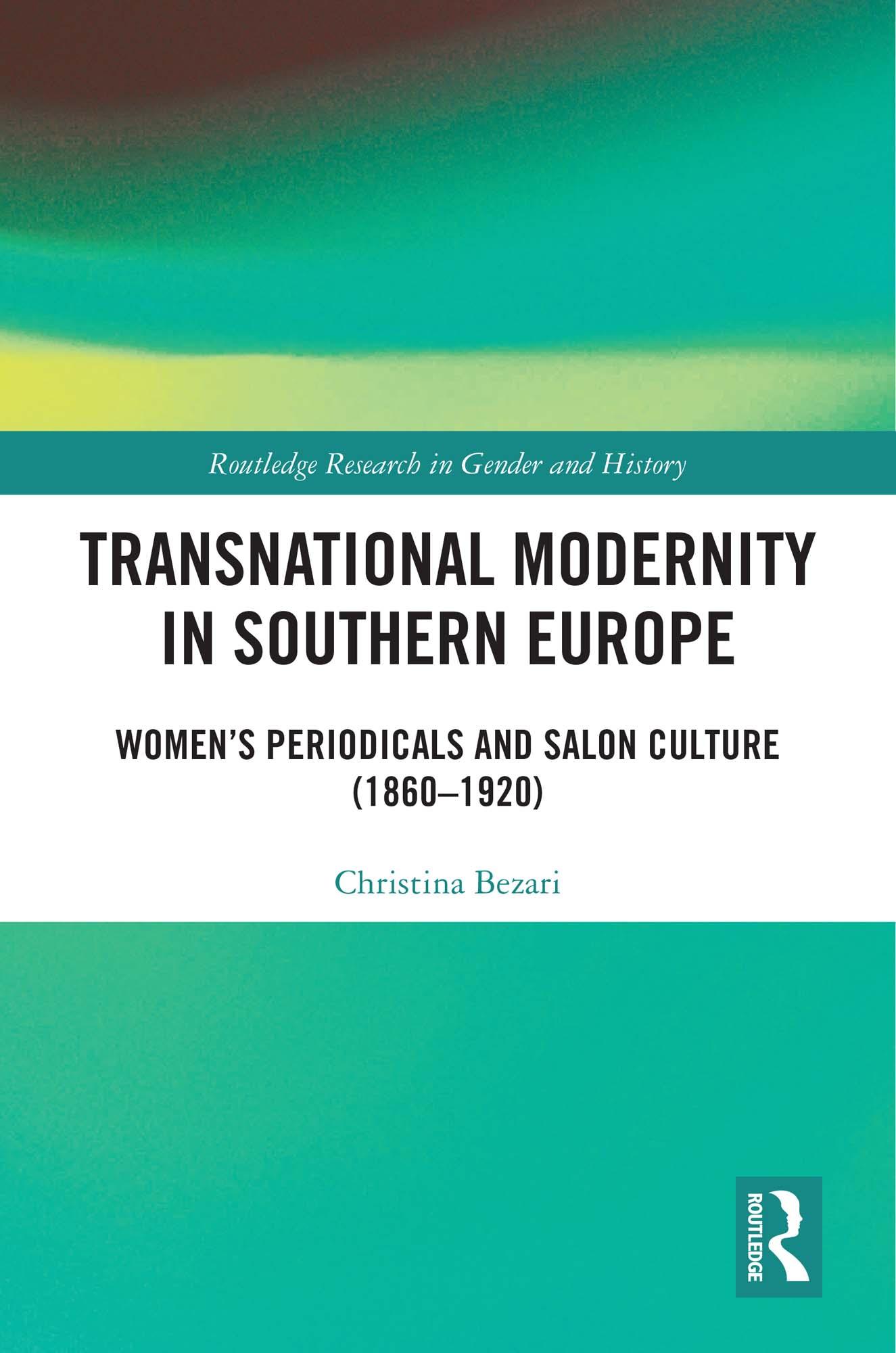
This book explores women’s editorial and salon activities in Southern Europe and provides a comparative view of their practices. It argues that women in Spain, Italy, Portugal and Greece used their double role as editors and salonnières to engage with foreign cultures, launch the careers of promising young authors and advocate for modernization and social change. By examining a neglected body of periodicals edited between 1860 and 1920, this book sets out to explore women’s editorial agendas and their interest in creating a connection between salon life and the print press. What purpose did this connection serve? How did women editors use their periodicals and their salons to create opportunities for cross-cultural exchange? In what ways did women use their double role as editors and salonnières to promote modernization and social progress in Southern Europe? By addressing these questions, this monograph contributes to the recent expansion of scholarship on nineteenth and twentieth-century periodicals and opens new avenues for theoretical reflection on European modernity. It also invites scholars and non-specialist readers to question the center vs. periphery model and to consider Southern European counties as cultural hubs in their own right.
Betaal eenvoudig met kaart, Klarna, Apple Pay of Google Pay. Niet tevreden? Je hebt altijd 14 dagen bedenktijd. Lees meer in onze voorwaarden. Heb je vragen, mail ons dan via hello@memmo.org.
Memmo maakt studeren makkelijker – waar je ook bent ter wereld. Wij brengen je cursusboeken en slimme studietools samen op één plek: samenvattingen, quizzen, podcasts en flashcards. En Ted, je studievriend die antwoord geeft op alles wat je je afvraagt. Meer dan 50.000 studenten studeren hier al – gebouwd om je sneller te laten leren en minder stress te geven.