
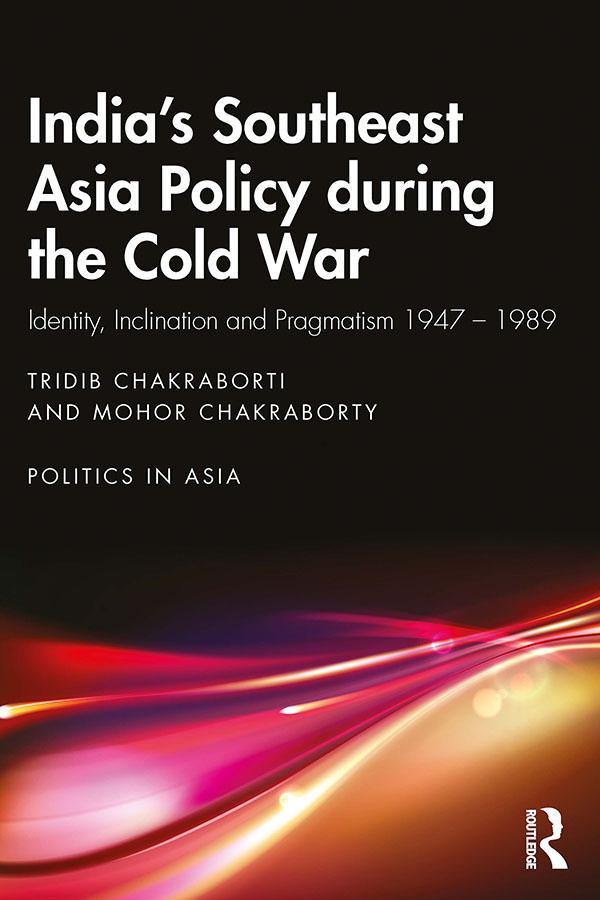
Over the course of four decades of the Cold War, Chakraborti and Chakraborty analyse India’s path from nonalignment towards realism and self-assertion, and finally to confidence-building and interdependence with respect to their neighbours in Southeast Asia.
What were the reasons for India’s shift from non-alignment to a more pragmatic approach to foreign relations in its relationships with both the non-Communist states of ASEAN and the Communist States of Indochina? How was this shift perceived by those countries? To what degree were Pakistan’s foreign and defence policies responsible for India’s changes in alignment throughout the Cold War? What lessons can we draw from these events, as the Indo-Pacific is again becoming a major arena of great power rivalry? In order to address these questions, Chakraborti and Chakraborty study the development of India’s foreign and security policies throughout the period, tracking the changes of stances between and within administrations. They evaluate how these decisions were driven by a combination of ideology, pragmatism and changes in priorities as the regional architecture developed over time.
A valuable read for scholars and students of India’s foreign relations and of Indo-Pacific geopolitics more broadly.
Betaal eenvoudig met kaart, Klarna, Apple Pay of Google Pay. Niet tevreden? Je hebt altijd 14 dagen bedenktijd. Lees meer in onze voorwaarden. Heb je vragen, mail ons dan via hello@memmo.org.
Memmo maakt studeren makkelijker – waar je ook bent ter wereld. Wij brengen je cursusboeken en slimme studietools samen op één plek: samenvattingen, quizzen, podcasts en flashcards. En Ted, je studievriend die antwoord geeft op alles wat je je afvraagt. Meer dan 50.000 studenten studeren hier al – gebouwd om je sneller te laten leren en minder stress te geven.