
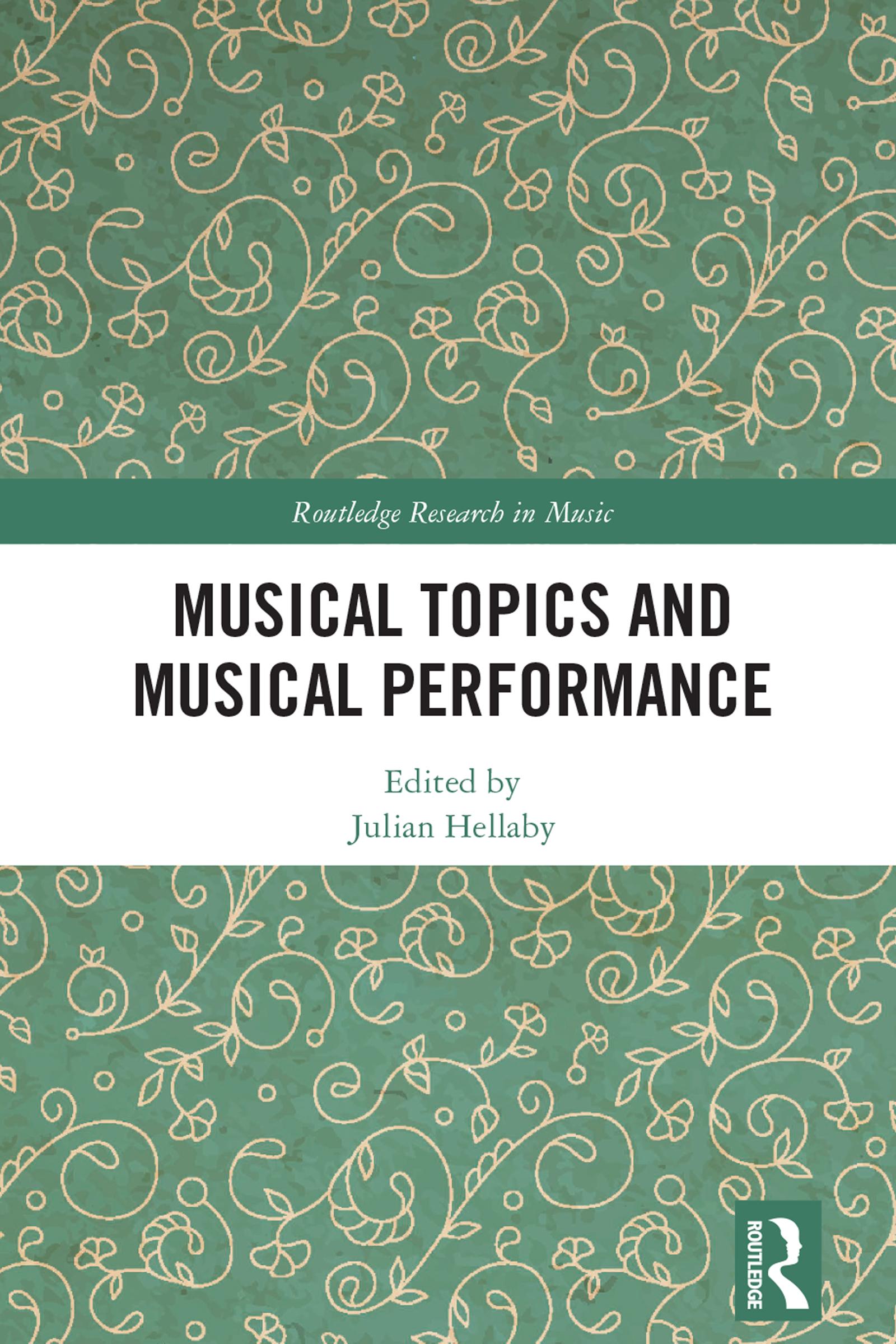
The principal purpose of topics in musicology has been to identify meaning-bearing units within a musical composition that would have been understood by contemporary audiences and therefore also by later receivers, albeit in a different context and with a need for historically aware listening. Since Leonard Ratner (1980) introduced the idea of topics, his relatively simple ideas have been expanded and developed by a number of distinguished authors. Topic theory has now become a well-established branch of musicology, often embracing semiotics, but its relationship to performance has received less attention. Musical Topics and Musical Performance thus focuses on the interface of theory and practice, and investigates how an appreciation of topical presence in a work may prompt interpretative thoughts for a potential performer as well as how performers have responded to such a presence in practice. The chapters focus on music from the nineteenth, twentieth and twenty-first centuries with case studies drawn from composers as diverse as Beethoven, Scriabin and Péter Eötvös. Using both scores and recordings, the book presents a variety of original and innovative perspectives on the subject from a range of distinguished authors, and addresses a neglected area of musicology and musical performance.
Betaal eenvoudig met kaart, Klarna, Apple Pay of Google Pay. Niet tevreden? Je hebt altijd 14 dagen bedenktijd. Lees meer in onze voorwaarden. Heb je vragen, mail ons dan via hello@memmo.org.
Memmo maakt studeren makkelijker – waar je ook bent ter wereld. Wij brengen je cursusboeken en slimme studietools samen op één plek: samenvattingen, quizzen, podcasts en flashcards. En Ted, je studievriend die antwoord geeft op alles wat je je afvraagt. Meer dan 50.000 studenten studeren hier al – gebouwd om je sneller te laten leren en minder stress te geven.