
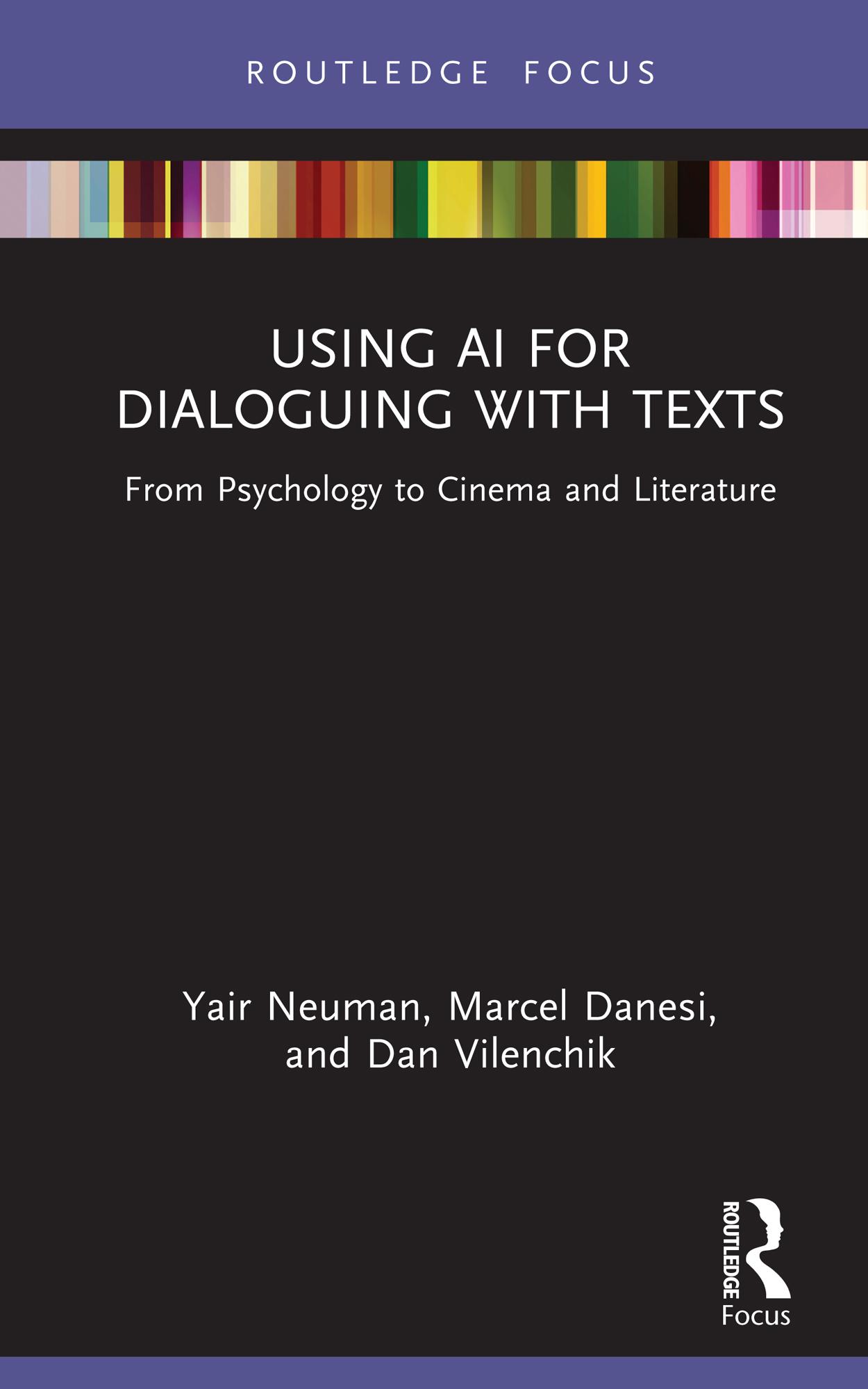
This concise volume offers an accessible introduction to state-of-the-art artificial intelligence (AI) language models, providing a platform for their use in textual interpretation across the humanities and social sciences.
The book outlines the affordances of new technologies for textual analysis, which has historically employed established approaches within the humanities. Neuman, Danesi, and Vilenchik argue that these different forms of analysis are indeed complementary, demonstrating the ways in which AI-based perspectives echo similar theoretical and methodological currents in traditional approaches while also offering new directions for research. The volume showcases examples from a wide range of texts, including novels, television shows, and films to illustrate the ways in which the latest AI technologies can be used for "dialoguing" with textual characters and examining textual meaning coherence.
Illuminating the potential of AI language models to both enhance and extend research on the interpretation of texts, this book will appeal to scholars interested in cognitive approaches to the humanities in such fields as literary studies, discourse analysis, media studies, film studies, psychology, and artificial intelligence.
Betaal eenvoudig met kaart, Klarna, Apple Pay of Google Pay. Niet tevreden? Je hebt altijd 14 dagen bedenktijd. Lees meer in onze voorwaarden. Heb je vragen, mail ons dan via hello@memmo.org.
Memmo maakt studeren makkelijker – waar je ook bent ter wereld. Wij brengen je cursusboeken en slimme studietools samen op één plek: samenvattingen, quizzen, podcasts en flashcards. En Ted, je studievriend die antwoord geeft op alles wat je je afvraagt. Meer dan 50.000 studenten studeren hier al – gebouwd om je sneller te laten leren en minder stress te geven.