
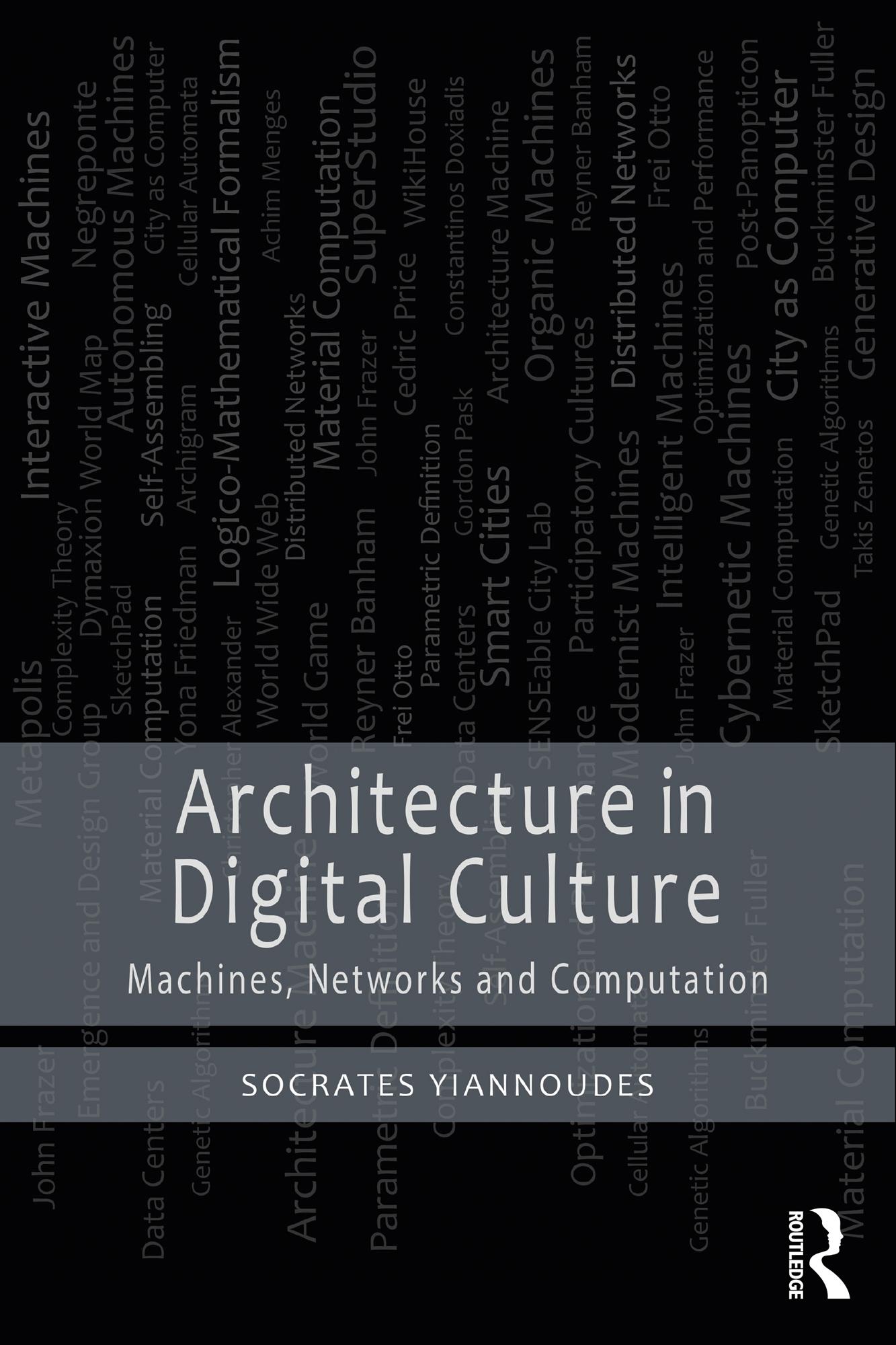
This book examines the manifestations of architecture, cities, and design processes within digital culture.
Adopting a comparative and critical method, the author looks at past and present encounters of the digital with architectural discourse and practice. Along three central themes – machines, networks, and computation – the book begins by discussing transformations of the analogy between architecture and the machine since the early twentieth century, foregrounding questions about the relations between architecture, humans, machines, and the environment. It moves on to the city, to observe how big data and smart city sustainable management systems have transformed historical visions of global networked cities. Lastly, it explores computational design thinking historically and in the context of complex systems, as well as the latest technical, social, and economic developments. Exposing possible drawbacks while still focusing on what is radically innovative, this book proposes a way toward more liberating, digital, and sustainable futures for architecture.
An important read for architecture students, academics, and professionals, this book connects instances of digital architecture practice and discourse throughout the history of the digital culture paradigm and their ties with sociopolitical developments. It shares the possibility that these connecting lines may be the canvas for a novel architectural history of the recent past.
Betaal eenvoudig met kaart, Klarna, Apple Pay of Google Pay. Niet tevreden? Je hebt altijd 14 dagen bedenktijd. Lees meer in onze voorwaarden. Heb je vragen, mail ons dan via hello@memmo.org.
Memmo maakt studeren makkelijker – waar je ook bent ter wereld. Wij brengen je cursusboeken en slimme studietools samen op één plek: samenvattingen, quizzen, podcasts en flashcards. En Ted, je studievriend die antwoord geeft op alles wat je je afvraagt. Meer dan 50.000 studenten studeren hier al – gebouwd om je sneller te laten leren en minder stress te geven.