
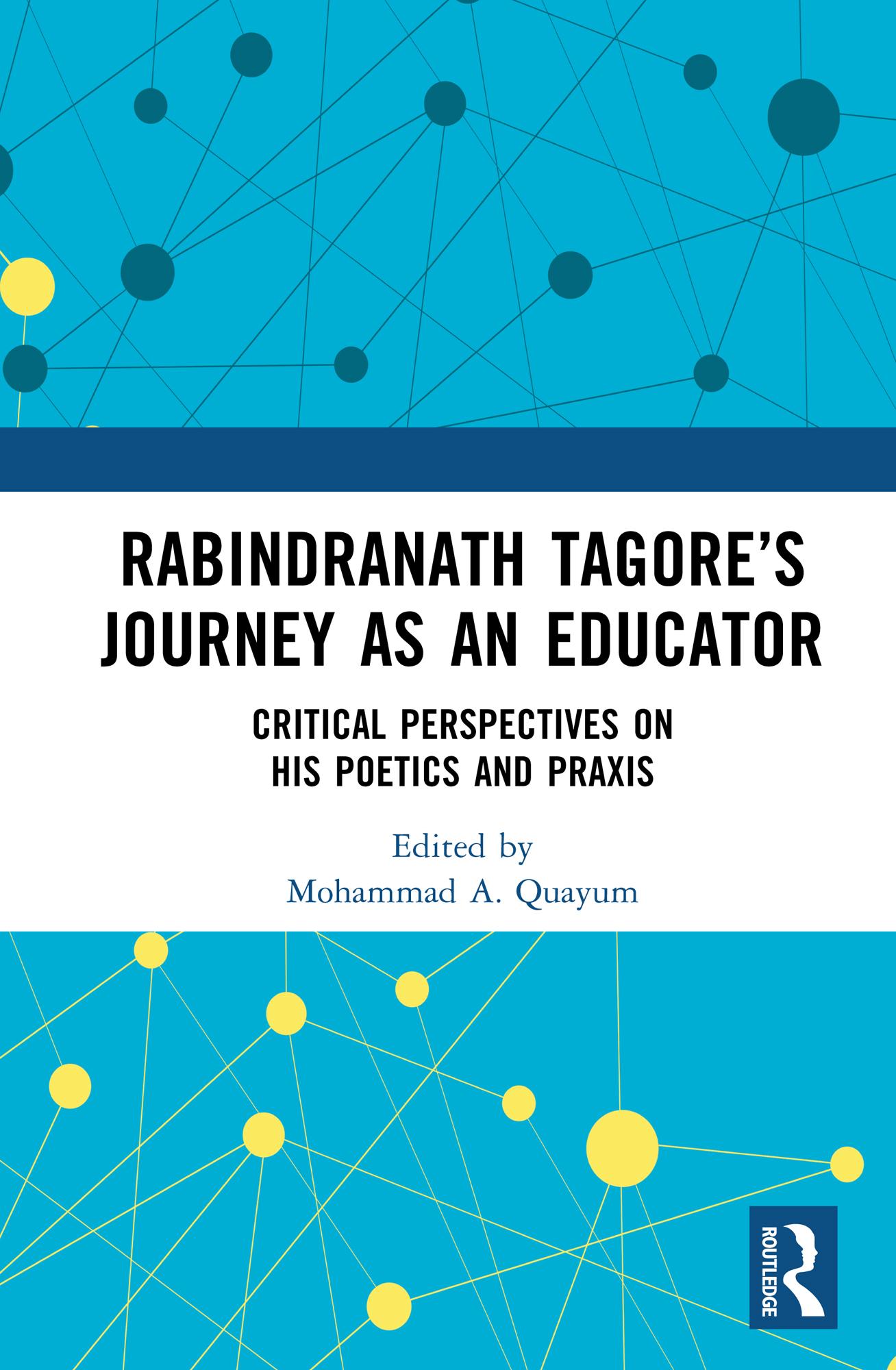
This book looks at Rabindranath Tagore’s, experiments and journey as an educator and the influence of humanistic worldviews, nationalism and cosmopolitanism in his philosophy of education.
It juxtaposes the educational systems and institutions set up by the British colonial administration with Tagore’s pedagogical vision and schools in Santiniketan, West Bengal—Brahmacharya Asram (1901), Visva-Bharati University (1921) and Sriniketan Institute of Village Reconstruction (1922). An educational pioneer and a poet-teacher, Tagore combined nature and culture, tradition and modernity, East and West, in formulating his educational methodology. The essays in this volume analyse the relevance of his theories and practice in encouraging greater cultural exchange and the dissolution of the walls between classrooms and communities.
This book will be useful for scholars and researchers of education, Tagore studies, literature, cultural studies, sociology of education, South Asian studies and colonial and postcolonial studies.
Betaal eenvoudig met kaart, Klarna, Apple Pay of Google Pay. Niet tevreden? Je hebt altijd 14 dagen bedenktijd. Lees meer in onze voorwaarden. Heb je vragen, mail ons dan via hello@memmo.org.
Memmo maakt studeren makkelijker – waar je ook bent ter wereld. Wij brengen je cursusboeken en slimme studietools samen op één plek: samenvattingen, quizzen, podcasts en flashcards. En Ted, je studievriend die antwoord geeft op alles wat je je afvraagt. Meer dan 50.000 studenten studeren hier al – gebouwd om je sneller te laten leren en minder stress te geven.