
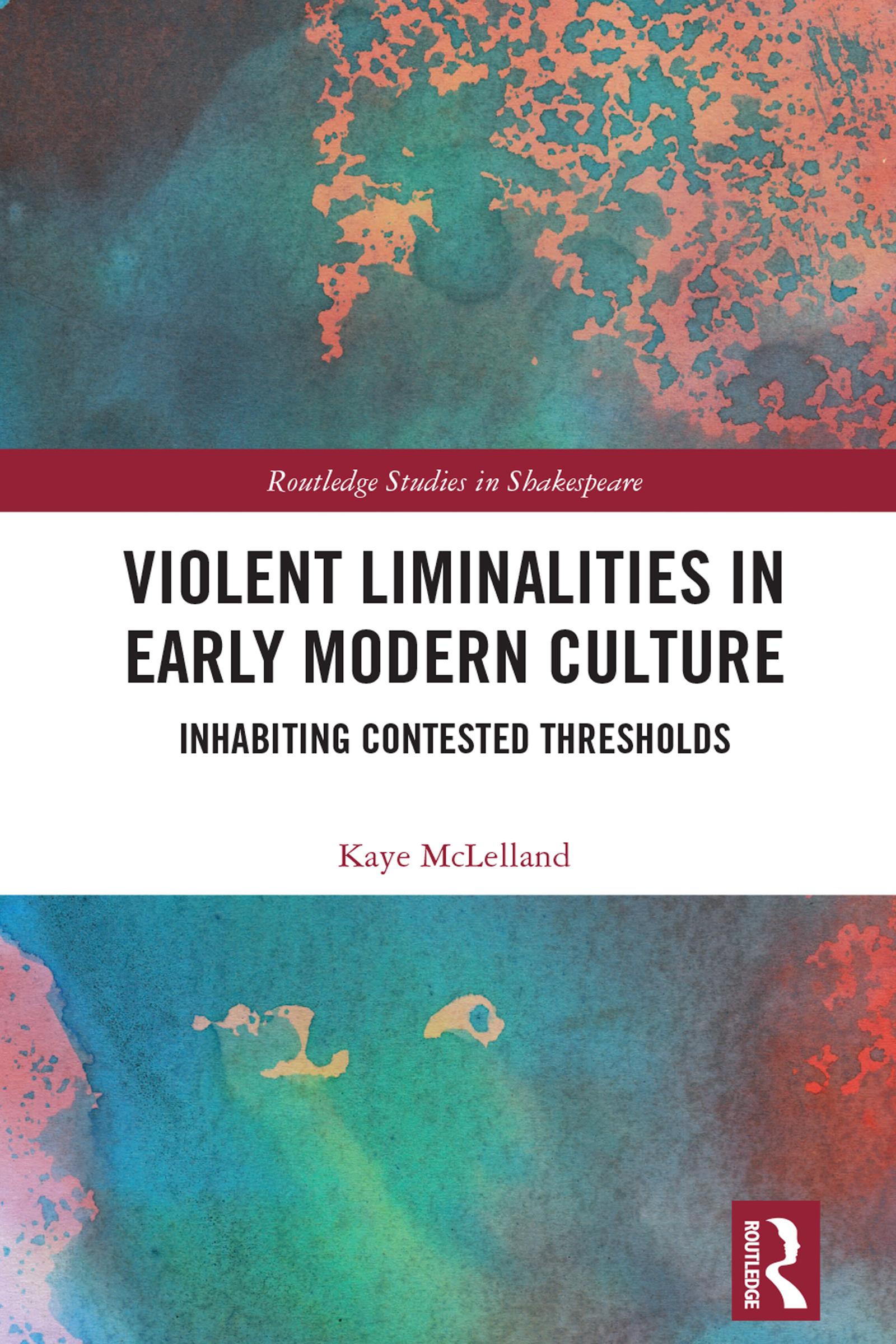
Violent liminalities in Early Modern Culture is a methodologically innovative book combining the twin disciplines of queer theory and disability studies. It investigates the violence feared from, and directed at, inhabitants of the ‘betwixt and between’ spaces of early modern literature and culture, through a focus on the perpetuated metamorphic states of Shakespeare’s and Spenser’s liminal figures including Lavinia, Puck, and Britomart. With chapters on gender, sexuality, adolescence, madness, and physical disability, Kaye McLelland applies a bi-theoretical lens to interrogate the ways in which being simultaneously ‘neither’ and ‘both’ brings to bear the non-normative disruption identified by queer theory in ways that use binary systems against themselves. For many of Spenser’s and Shakespeare’s characters, the ‘in-between’ state, whether ritually or otherwise induced, transforms the instantaneous binary threshold of the limen into a permanent ‘habitation’. This created space is one of great power that is feared and violently countered by those who would shut it down. Set against the literary history of Spenser’s and Shakespeare’s Ovidianism and festivity, and the historical context of the post-Reformation transformation from a tertiary to a binary model of the afterlife, this volume identifies a persistent positioning of liminal literary figures in proximity to the liminality of the dead and dying, whilst simultaneously tracing the positive ways in which these inhabitants of the powerful ‘betwixt and between’ are depicted.
Betaal eenvoudig met kaart, Klarna, Apple Pay of Google Pay. Niet tevreden? Je hebt altijd 14 dagen bedenktijd. Lees meer in onze voorwaarden. Heb je vragen, mail ons dan via hello@memmo.org.
Memmo maakt studeren makkelijker – waar je ook bent ter wereld. Wij brengen je cursusboeken en slimme studietools samen op één plek: samenvattingen, quizzen, podcasts en flashcards. En Ted, je studievriend die antwoord geeft op alles wat je je afvraagt. Meer dan 50.000 studenten studeren hier al – gebouwd om je sneller te laten leren en minder stress te geven.