
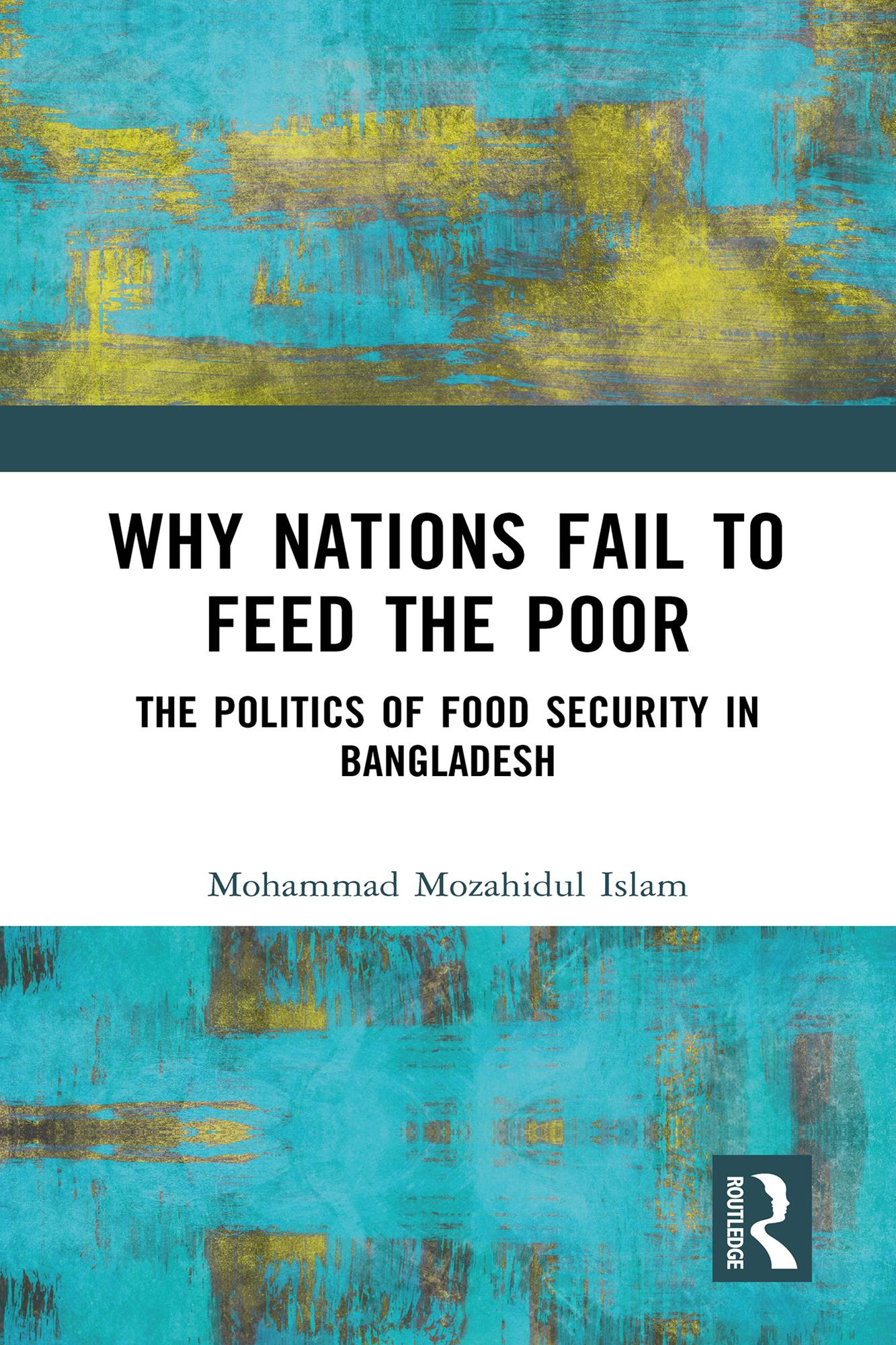
This book examines the political and economic dimensions of food security in Bangladesh and assesses the role of the state in meeting the challenges of food security. The key concern, which is at the heart of this study, is to explore how Bangladesh responds, when its people go hungry. There are no detailed empirical studies that examine the Bangladesh’s role by providing an historical cum political analysis; however conventional approaches are primarily concerned with a partial diagnosis of the economic or nutritional problems of food security. The book then provides a detailed picture of the missing dimensions of state that include the strength of institutions, the scope of state functions, and other important attributes. In doing so, it uses the concept of neo-patrimonialism to explore the political system of Bangladesh.
This book explicates the various impediments to food security, ranging from the process of policy formulation to their implementation mechanisms. It unpacks the structural weaknesses of the Bangladesh's institutional capacity in promoting food security, and, in the process, argues that the root cause of food insecurity is deeply embedded in the nature of the government itself, and the political institutions that link the state and society.
Betaal eenvoudig met kaart, Klarna, Apple Pay of Google Pay. Niet tevreden? Je hebt altijd 14 dagen bedenktijd. Lees meer in onze voorwaarden. Heb je vragen, mail ons dan via hello@memmo.org.
Memmo maakt studeren makkelijker – waar je ook bent ter wereld. Wij brengen je cursusboeken en slimme studietools samen op één plek: samenvattingen, quizzen, podcasts en flashcards. En Ted, je studievriend die antwoord geeft op alles wat je je afvraagt. Meer dan 50.000 studenten studeren hier al – gebouwd om je sneller te laten leren en minder stress te geven.