
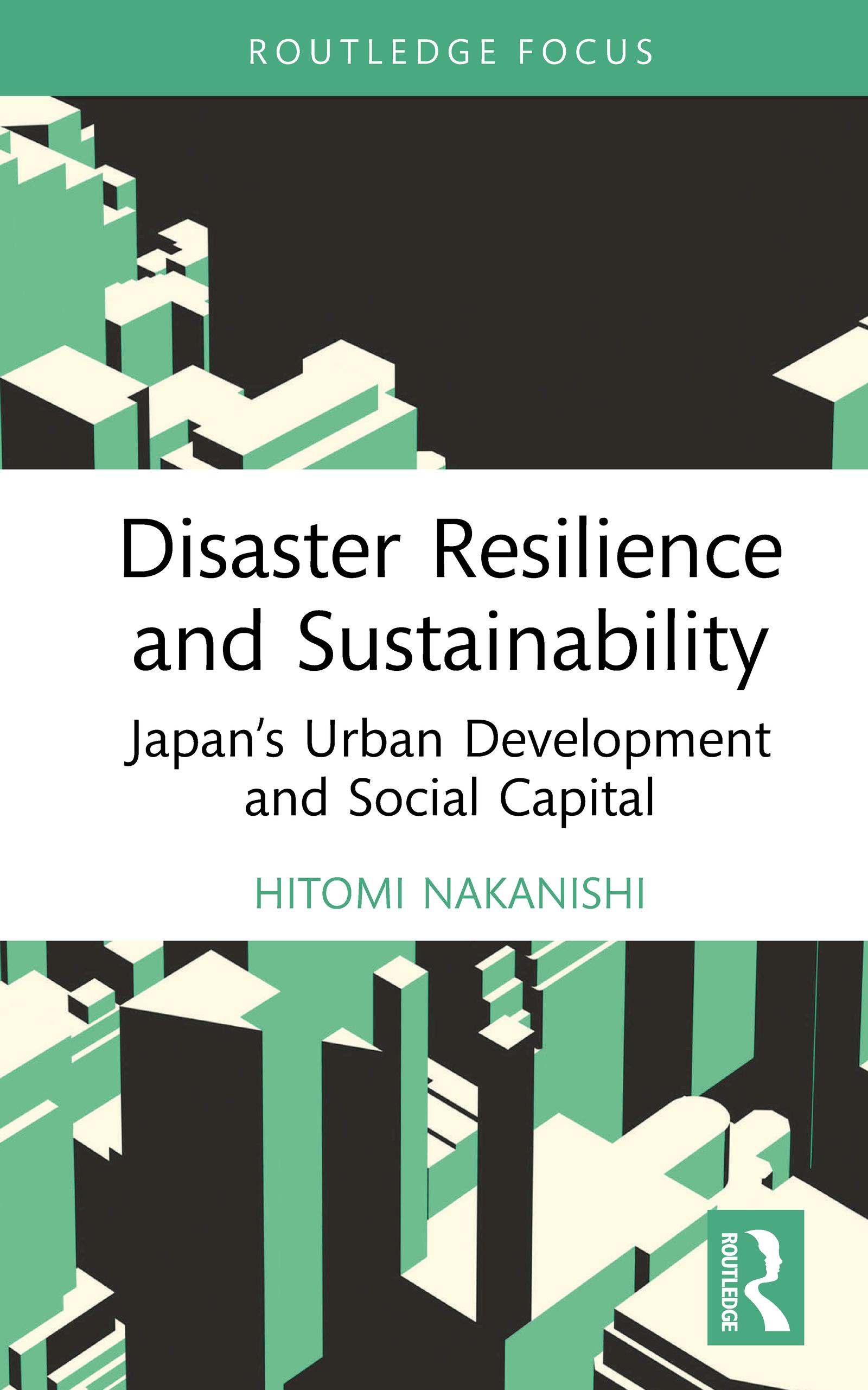
This book examines urban planning and infrastructure development in Japanese cities after the second world war as a way to mitigate the risks of disasters while pursuing sustainable development. It looks at the benefits of social capital and how communities organise to tackle problems during the recovery phase after a disaster. The book also illustrates with case studies to highlight community attitudes which improve recovery outcomes.
The book underlines challenges such as ageing and depopulation which Japan would face should the next disaster occur. These demographic shifts are causing difficulties among neighbourhood associations at a time when communities need to effectively support each other. Nakanishi explains why overcoming these societal issues is imperative for sustainability and the need for a comprehensive approach which would integrate smart technology.
This book will be of interest to scholars in city development and planning, urban studies and human geography, as well as those interested in building resilient communities.
Betaal eenvoudig met kaart, Klarna, Apple Pay of Google Pay. Niet tevreden? Je hebt altijd 14 dagen bedenktijd. Lees meer in onze voorwaarden. Heb je vragen, mail ons dan via hello@memmo.org.
Memmo maakt studeren makkelijker – waar je ook bent ter wereld. Wij brengen je cursusboeken en slimme studietools samen op één plek: samenvattingen, quizzen, podcasts en flashcards. En Ted, je studievriend die antwoord geeft op alles wat je je afvraagt. Meer dan 50.000 studenten studeren hier al – gebouwd om je sneller te laten leren en minder stress te geven.