
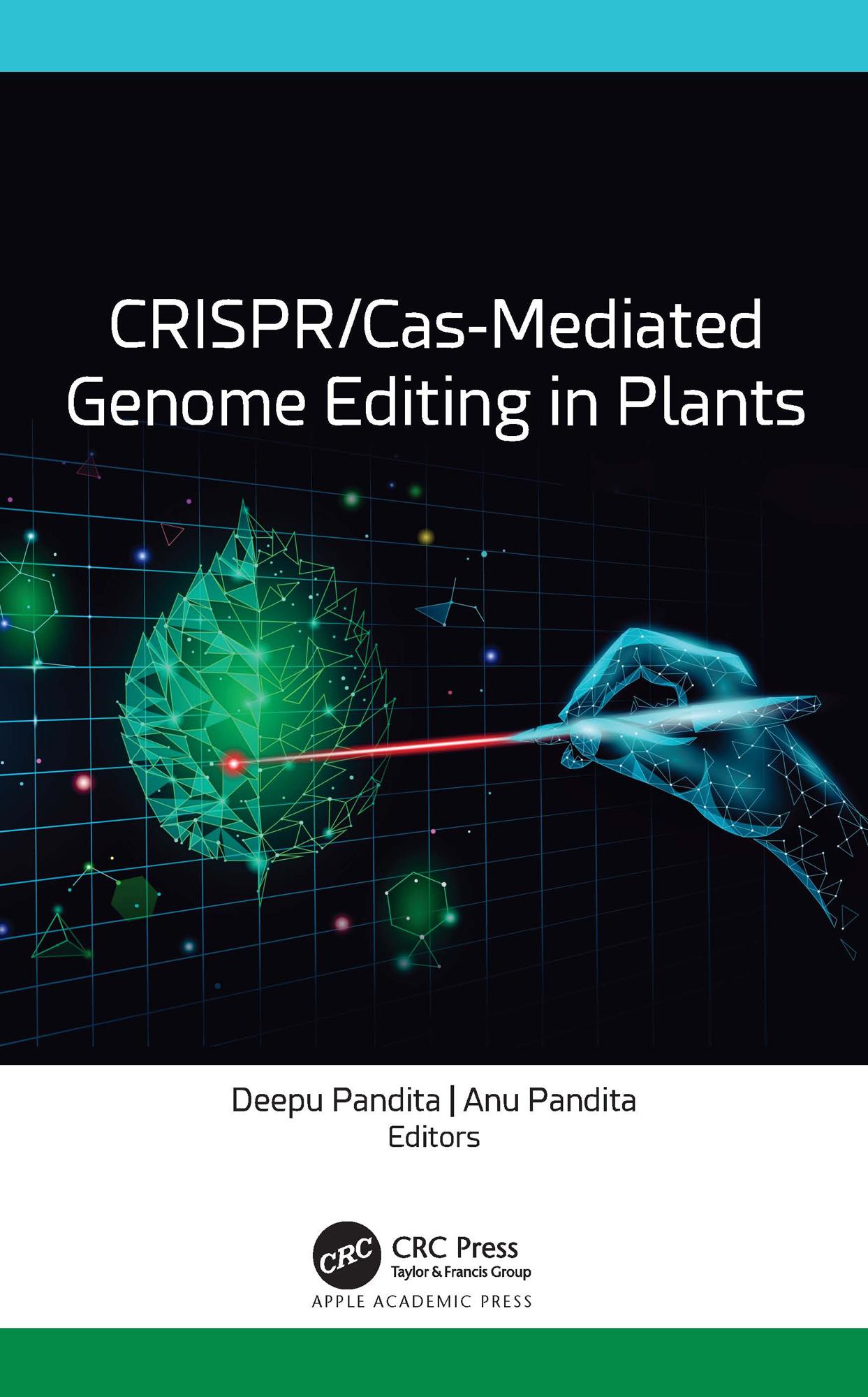
With over 820 million people facing hunger in today’s world, the need of the hour is the design of plant varieties with high yield, improved traits, and resistance properties in order to mitigate the detrimental impacts of biotic and abiotic stress conditions on food crops. This volume highlights the use of Clustered Regularly Interspaced Short Palindromic Repeats (CRISPR) and CRISPR-associated nuclease proteins as a solution for sustainable agriculture. CRISPR/Cas-mediated genome editing (GE) provides a robust, simple, precise, efficient, economical, and revolutionary toolbox that leads to improved plant traits with enhanced yield, quality, and resistance against various stresses, including climate-related stress, insect pests and diseases, pollution-related stresses, etc.
Key features of the book:
- Explains the differences between conventional breeding, genetically modified crops, and genome editing approaches using CRISPR/Cas
- Introduces the tools of genome editing, such as ZFNS (zinc finger nucleases), mega nucleases, and TLENS (transcription activator-like effector nucleases)
- Covers the history, origin, discovery, structure, and classification of CRISPR/Cas
- Examines the databases and computational approaches of CRISPR/Cas
- Highlights genome editing of important crop plants with CRISPR/Cas systems, including wheat, maize. tomato, Brassica crops, rice, fruits
- Explores potential applications of CRISPR/Cas systems for climate smart crops
Betaal eenvoudig met kaart, Klarna, Apple Pay of Google Pay. Niet tevreden? Je hebt altijd 14 dagen bedenktijd. Lees meer in onze voorwaarden. Heb je vragen, mail ons dan via hello@memmo.org.
Memmo maakt studeren makkelijker – waar je ook bent ter wereld. Wij brengen je cursusboeken en slimme studietools samen op één plek: samenvattingen, quizzen, podcasts en flashcards. En Ted, je studievriend die antwoord geeft op alles wat je je afvraagt. Meer dan 50.000 studenten studeren hier al – gebouwd om je sneller te laten leren en minder stress te geven.