
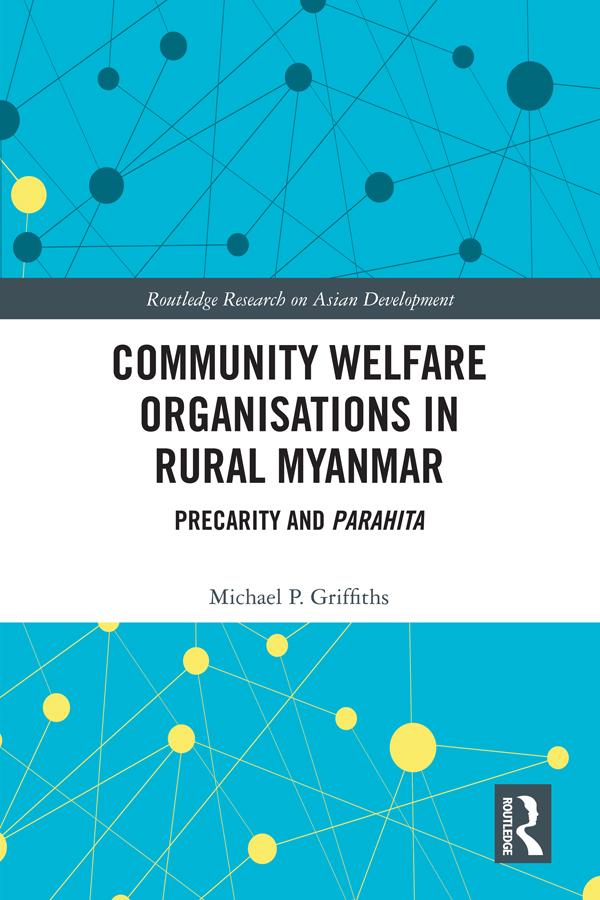
This book provides an in-depth study of the moral economies emerging from within conditions of precarity in rural communities in contemporary Myanmar.
James C. Scott’s seminal work on ‘The Moral Economy of the Peasant’ argued that peasant notions of subsistence and expectations of reciprocity formed the basis for subsequent rebellion as economic conditions changed and new market forces were introduced. Now, nearly a century on, Michael Griffiths argues that the conditions faced by rural communities in Myanmar remain precarious, but different forms of moral economy shape their responses. In the contemporary context, the moral economy of rural communities is characterized by the emergence of localized, self-organized community welfare associations which adopt a sophisticated iteration of self-help framed by the Buddhist concept of parahita (altruism). This book analyses the performative nature of these welfare organizations as a form of politics, asking how notions of citizenship expressed in these organizations promote more inclusive, or more exclusive practices towards non-Buddhist minorities.
At a time when discourse on identity in Myanmar has been dominated by practices of othering and exclusion, this book provides an important analysis of what citizenship and reciprocity means in contemporary rural Myanmar. This book is a critical resource for researchers working on rural development and the social sciences in Southeast Asia.
Betaal eenvoudig met kaart, Klarna, Apple Pay of Google Pay. Niet tevreden? Je hebt altijd 14 dagen bedenktijd. Lees meer in onze voorwaarden. Heb je vragen, mail ons dan via hello@memmo.org.
Memmo maakt studeren makkelijker – waar je ook bent ter wereld. Wij brengen je cursusboeken en slimme studietools samen op één plek: samenvattingen, quizzen, podcasts en flashcards. En Ted, je studievriend die antwoord geeft op alles wat je je afvraagt. Meer dan 50.000 studenten studeren hier al – gebouwd om je sneller te laten leren en minder stress te geven.