
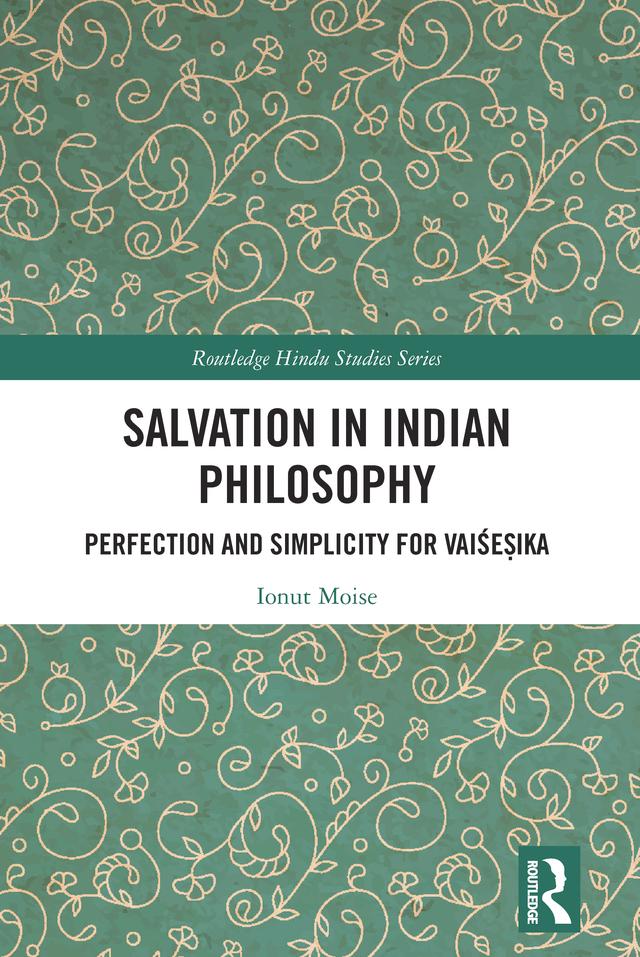
This book offers a comprehensive description of the ‘doctrine of salvation’ (niḥśreyasa/ mokṣa) and Vaiśeṣika, one of the oldest philosophical systems of Indian philosophy and provides an overview of theories in other related Indian philosophical systems and classical doctrines of salvation.
The book examines liberation, the fourth goal of life and arguably one of the most important topics in Indian philosophy, from a comparative philosophical perspective. Contextualising classical Greek Philosophy which contains the three goals of life (Aristotle’s Ethics), and explains salvation as first understood in the theology of the Hellenistic and Patristics periods, the author analyses six classical philosophical schools of Indian philosophy in which there is a marked emphasis on the ultimate ontological elements of the world and ‘self’. Analysing Vaiśeṣika and the manner in which this lesser known system has put forward its own theory of salvation (niḥśreyasa), the author demonstrates its significance and originality as an old and influential philosophical system. He argues that it is essential for the study of other Indian sciences and for the study of all comparative philosophy.□
An extensive introduction to Indian soteriology, this book will be an important reference work for academics interested in comparative religion and philosophy, Indian philosophy, Asian religion and South Asian Studies.
Betaal eenvoudig met kaart, Klarna, Apple Pay of Google Pay. Niet tevreden? Je hebt altijd 14 dagen bedenktijd. Lees meer in onze voorwaarden. Heb je vragen, mail ons dan via hello@memmo.org.
Memmo maakt studeren makkelijker – waar je ook bent ter wereld. Wij brengen je cursusboeken en slimme studietools samen op één plek: samenvattingen, quizzen, podcasts en flashcards. En Ted, je studievriend die antwoord geeft op alles wat je je afvraagt. Meer dan 50.000 studenten studeren hier al – gebouwd om je sneller te laten leren en minder stress te geven.