
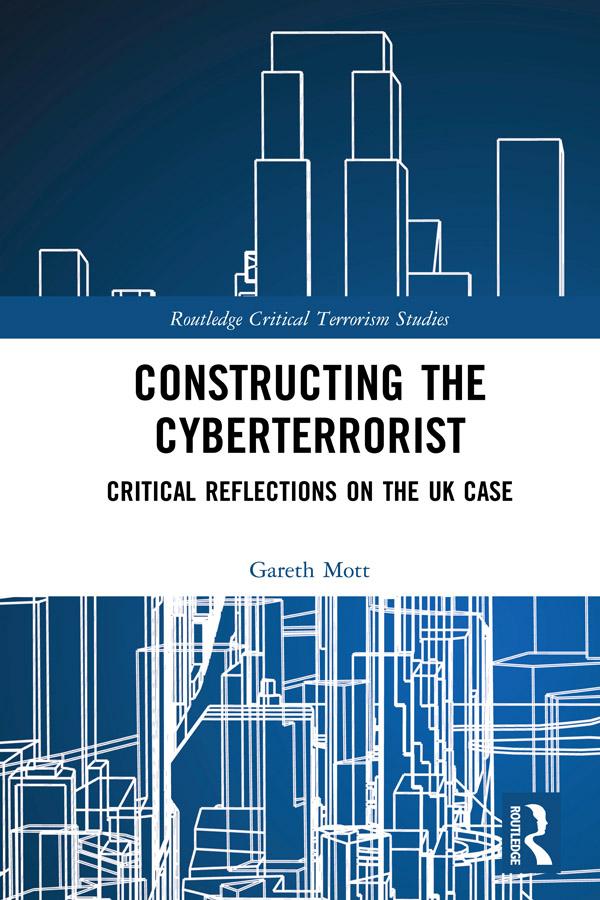
This book maps and analyses the official British construction of the threat of cyberterrorism.
By using interpretive discourse analysis, this book identifies ‘strands’ from a corpus of policy documents, statements, and speeches from UK Ministers, MPs, and Peers between 12 May 2010 and 24 June 2016. The book examines how the threat of cyberterrorism was constructed in the UK, and what this securitisation has made possible. The author makes novel contributions to the Copenhagen School’s ‘securitisation theory’ framework by outlining a ‘tiered’ rather than monolithic audience system; refining the ‘temporal’ and ‘spatial’ conditioning of a securitisation with reference to the distinctive characteristics of cyberterrorism; and, lastly, by detailing the way in which popular fiction can be ascribed agency to ‘fill in’ an absence of ‘cyberterrorism’ case studies. He also argues that the UK government’s classification of cyberterrorism as a ‘Tier One’ threat created a central strand upon which a discursive securitisation was established.
This book will be of interest to students of Critical Security Studies, terrorism studies, UK politics, and international relations.
Betaal eenvoudig met kaart, Klarna, Apple Pay of Google Pay. Niet tevreden? Je hebt altijd 14 dagen bedenktijd. Lees meer in onze voorwaarden. Heb je vragen, mail ons dan via hello@memmo.org.
Memmo maakt studeren makkelijker – waar je ook bent ter wereld. Wij brengen je cursusboeken en slimme studietools samen op één plek: samenvattingen, quizzen, podcasts en flashcards. En Ted, je studievriend die antwoord geeft op alles wat je je afvraagt. Meer dan 50.000 studenten studeren hier al – gebouwd om je sneller te laten leren en minder stress te geven.