
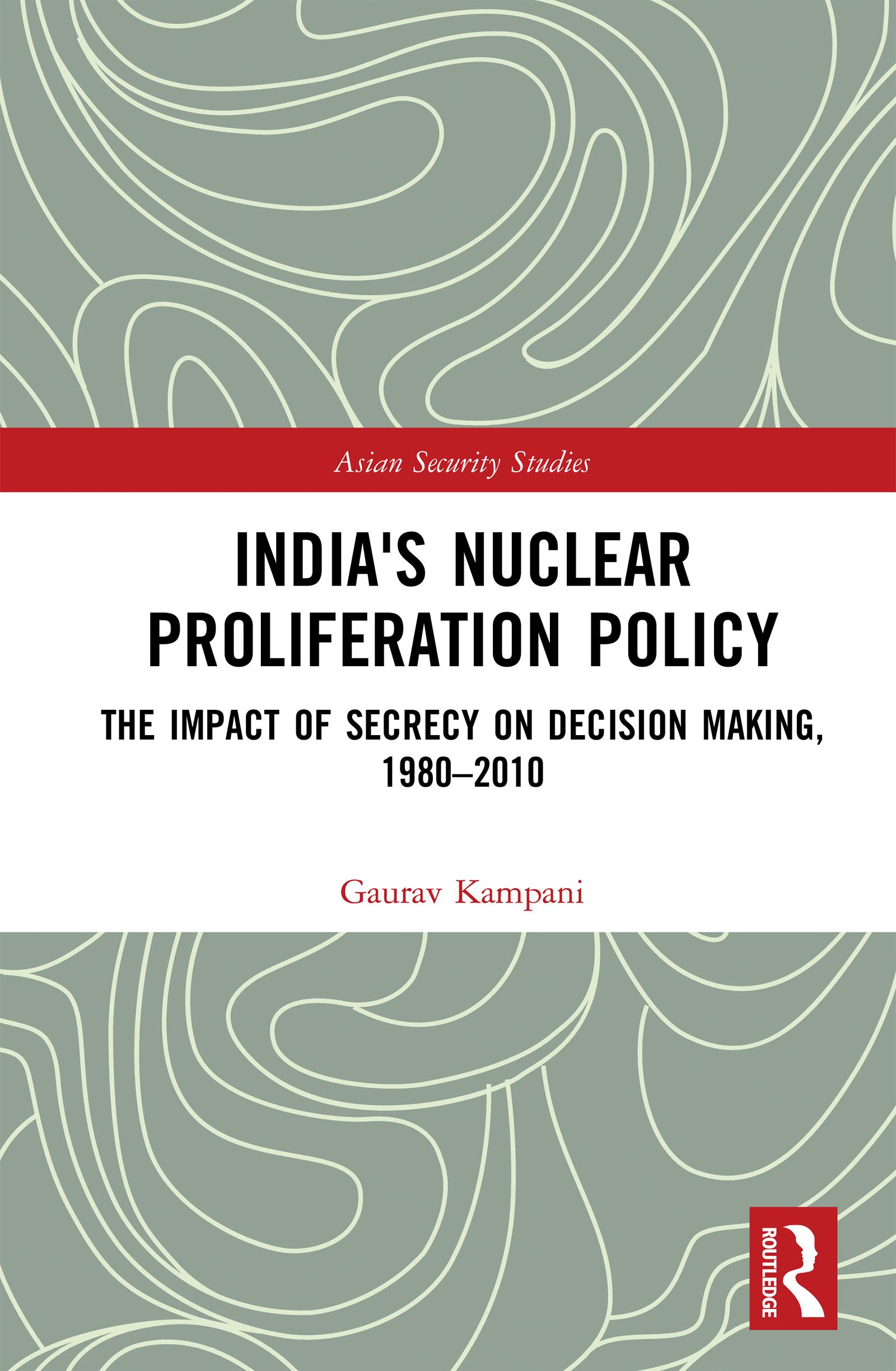
This book examines India’s nuclear program, and it shows how secrecy inhibits learning in states and corrodes the capacity of decision-makers to generate optimal policy choices.
Focusing on clandestine Indian nuclear proliferation during 1980–2010, the book argues that efficient decision-making is dependent on strongly established knowledge actors, high information turnover and the capacity of leaders to effectively monitor their agents. When secrecy concerns prevent states from institutionalizing these processes, leaders tend to rely more on heuristics and less on rational thought processes in choices involving matters of great political uncertainty and technical complexity. Conversely, decision-making improves as secrecy declines and policy choices become subject to higher levels of scrutiny and contestation. The arguments in this book draw on compelling evidence gathered from interviews conducted by the author, with interviewees including individuals who were involved in nuclear planning in India from 1980 to 2010, such as former cabinet and defence secretaries, the principal secretary to the prime minister, national security advisors, secretaries to the department of atomic energy, military chiefs of staff and their principal staff officers, and commanders of India’s strategic (nuclear) forces.
This book will be of much interest to students of nuclear proliferation, Asian politics, strategic studies and International Relations.
Betaal eenvoudig met kaart, Klarna, Apple Pay of Google Pay. Niet tevreden? Je hebt altijd 14 dagen bedenktijd. Lees meer in onze voorwaarden. Heb je vragen, mail ons dan via hello@memmo.org.
Memmo maakt studeren makkelijker – waar je ook bent ter wereld. Wij brengen je cursusboeken en slimme studietools samen op één plek: samenvattingen, quizzen, podcasts en flashcards. En Ted, je studievriend die antwoord geeft op alles wat je je afvraagt. Meer dan 50.000 studenten studeren hier al – gebouwd om je sneller te laten leren en minder stress te geven.