
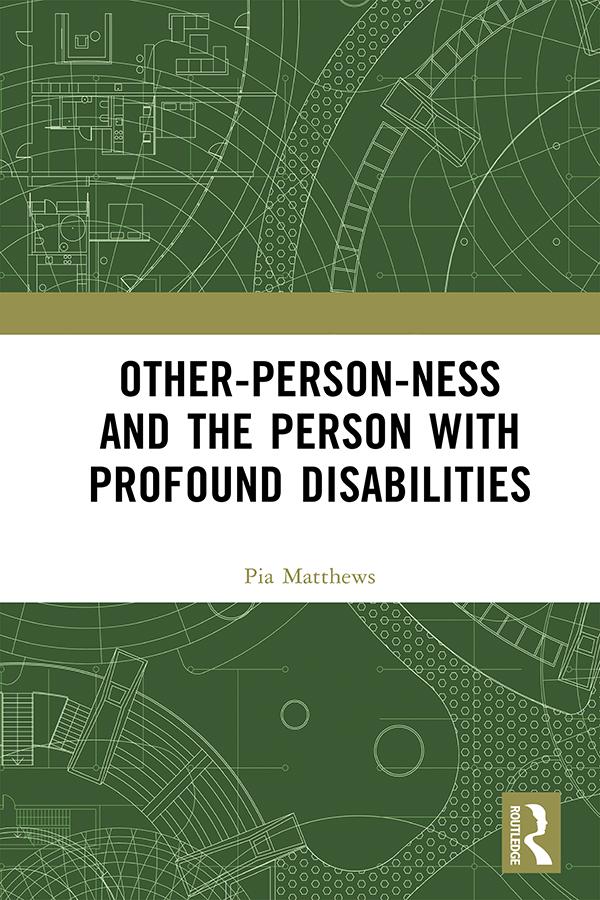
Many people think that profound disability presents us with a real problem, often because it seems difficult to connect with someone who does not seem to think or act like us. Positioning profound disability in this way immediately sets up a ‘them’ and ‘us’, where the person with profound disability becomes the problematic ‘other’. Attempts to bridge the ‘them’ and ‘us’ risk reducing everyone to the same where disability is not taken seriously.
In contrast to a ‘them’ and ‘us’, and negative connotations of the other found in the existentialist philosophies of writers like Sartre and Beauvoir, Pia Matthews argues for a return to a positive view of the other. One positive approach to the other, based on an ethics of relationship as championed by Levinas, seems to mitigate the other-ness of profound disability. However, this still makes the person with profound disability dependent on the ethical concern of the more powerful other. Instead, this book argues for return to a personalist philosophy of being offered by Mounier, Marcel, and Wojtyła, and deepened by participation, belonging, and the possibility of contributing to the good of all. This deepened philosophy of being gives a more solid foundation for people who are especially at the mercy of others.
It will be of interest to all scholars and students of disability studies, philosophy and anthropology.
Betaal eenvoudig met kaart, Klarna, Apple Pay of Google Pay. Niet tevreden? Je hebt altijd 14 dagen bedenktijd. Lees meer in onze voorwaarden. Heb je vragen, mail ons dan via hello@memmo.org.
Memmo maakt studeren makkelijker – waar je ook bent ter wereld. Wij brengen je cursusboeken en slimme studietools samen op één plek: samenvattingen, quizzen, podcasts en flashcards. En Ted, je studievriend die antwoord geeft op alles wat je je afvraagt. Meer dan 50.000 studenten studeren hier al – gebouwd om je sneller te laten leren en minder stress te geven.