
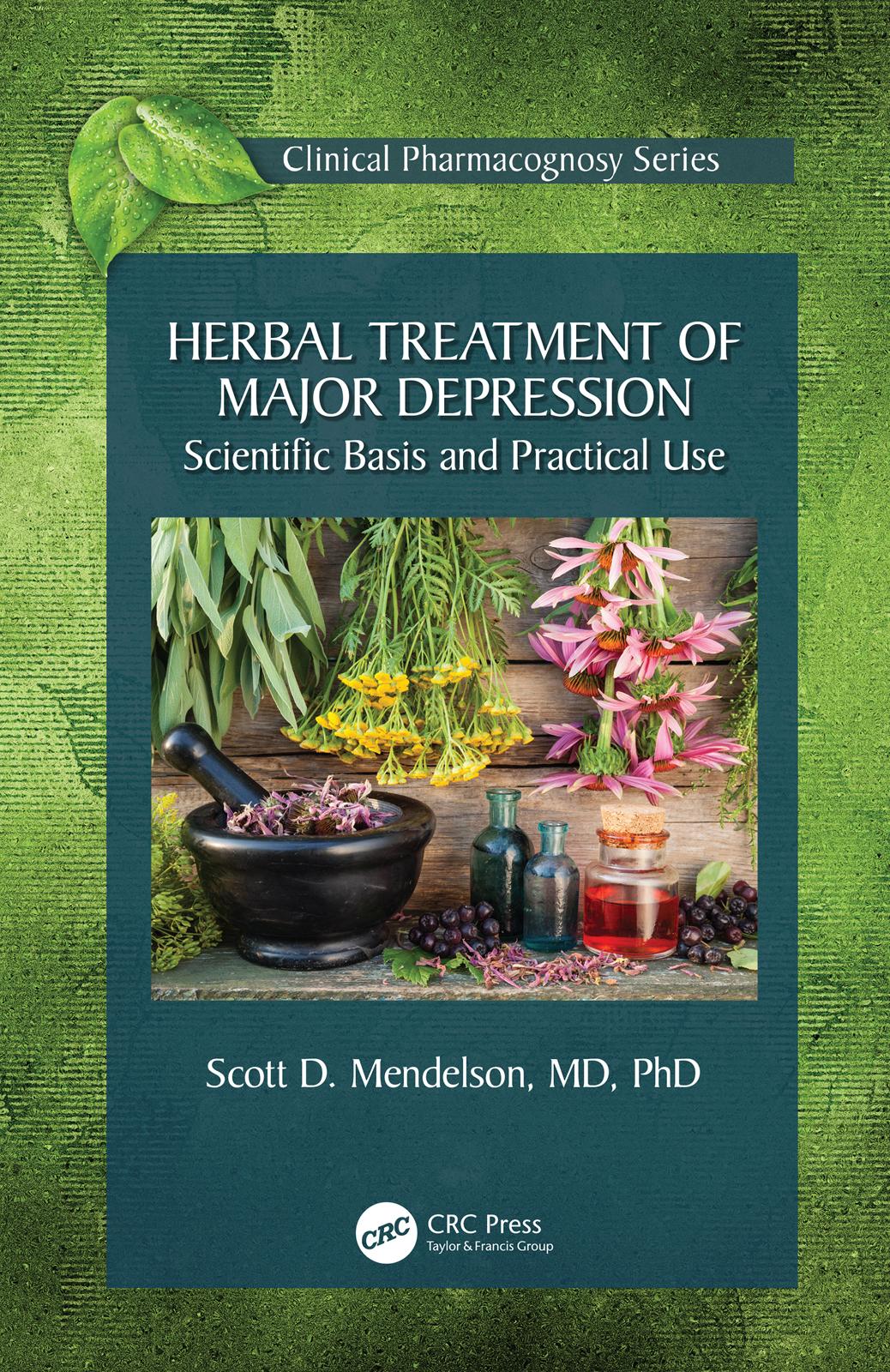
This unique volume presents new understandings of the neurochemical nature of major depression, and how herbs and their constituent flavonoids and terpenes appear to address some of the mechanisms now thought to be involved. It explores how recent studies of the rapid antidepressant effects of ketamine inform neuroscientists about deep intracellular mechanisms of antidepressant action that have little to do with simple enhancement of monoaminergic activity. These mechanisms include actions on PI3K, Akt, mTOR, GSK3, BDNF, and other intracellular pathways. New theories of the pathophysiology underlying major depression, such as oxidative damage, inflammation, stress and insulin resistance are then explored.
Key Features:
- Focuses on oxidative damage, inflammation, and metabolic syndrome.
- Explains that a significant percentage of people treated for major depression obtain little if any relief from standard antidepressant medications.
- These facts lead to discussion of herbs that can be used to treat major depression, as well as consideration of the scientific basis for how these herbs act.
- The antidepressant properties of 66 herbs are discussed, along with dosing and safety information.
Betaal eenvoudig met kaart, Klarna, Apple Pay of Google Pay. Niet tevreden? Je hebt altijd 14 dagen bedenktijd. Lees meer in onze voorwaarden. Heb je vragen, mail ons dan via hello@memmo.org.
Memmo maakt studeren makkelijker – waar je ook bent ter wereld. Wij brengen je cursusboeken en slimme studietools samen op één plek: samenvattingen, quizzen, podcasts en flashcards. En Ted, je studievriend die antwoord geeft op alles wat je je afvraagt. Meer dan 50.000 studenten studeren hier al – gebouwd om je sneller te laten leren en minder stress te geven.