
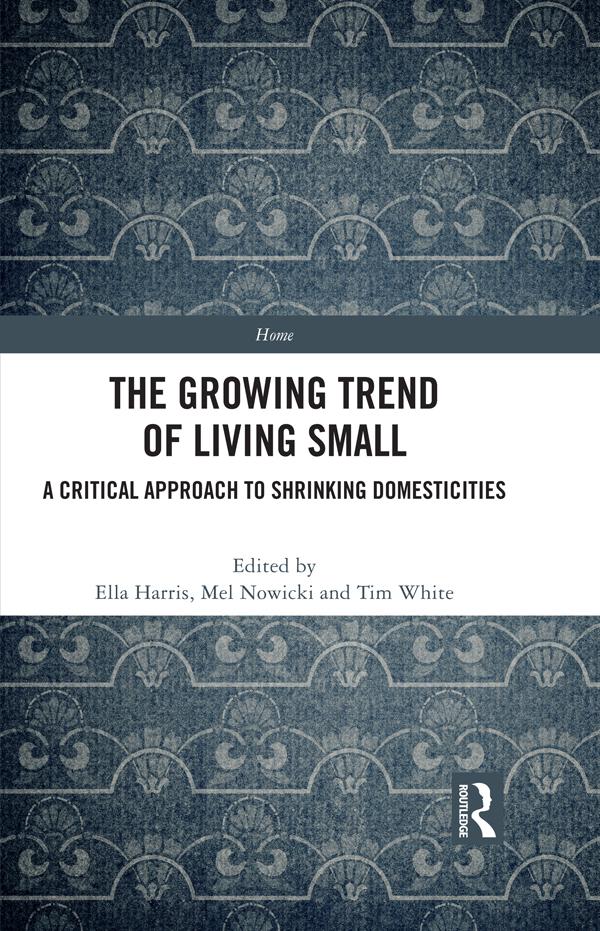
This book examines the growing trend for housing models that shrink private living space and seeks to understand the implications of these shrinking domestic worlds. Small spaces have become big business. Reducing the size of our homes, and the amount of stuff within them, is increasingly sold as a catch-all solution to the stresses of modern life and the need to reduce our carbon footprint. Shrinking living space is being repackaged in a neoliberal capitalist context as a lifestyle choice rather than the consequence of diminishing choice in the face of what has become a long-term housing ‘crisis’. What does this mean for how we live in the long term, and is there a dark side to the promise of a simpler, more sustainable home life? Shrinking Domesticities brings together research from across the social sciences, planning and architecture to explore these issues. From co-living developments to the Tiny House Movement, self-storage units to practices of ‘de-stuffification’, and drawing on examples from across Europe, North America and Australasia, the authors of this volume seek to understand both what micro-living is bringing to our societies, and what it may be eroding
Betaal eenvoudig met kaart, Klarna, Apple Pay of Google Pay. Niet tevreden? Je hebt altijd 14 dagen bedenktijd. Lees meer in onze voorwaarden. Heb je vragen, mail ons dan via hello@memmo.org.
Memmo maakt studeren makkelijker – waar je ook bent ter wereld. Wij brengen je cursusboeken en slimme studietools samen op één plek: samenvattingen, quizzen, podcasts en flashcards. En Ted, je studievriend die antwoord geeft op alles wat je je afvraagt. Meer dan 50.000 studenten studeren hier al – gebouwd om je sneller te laten leren en minder stress te geven.