
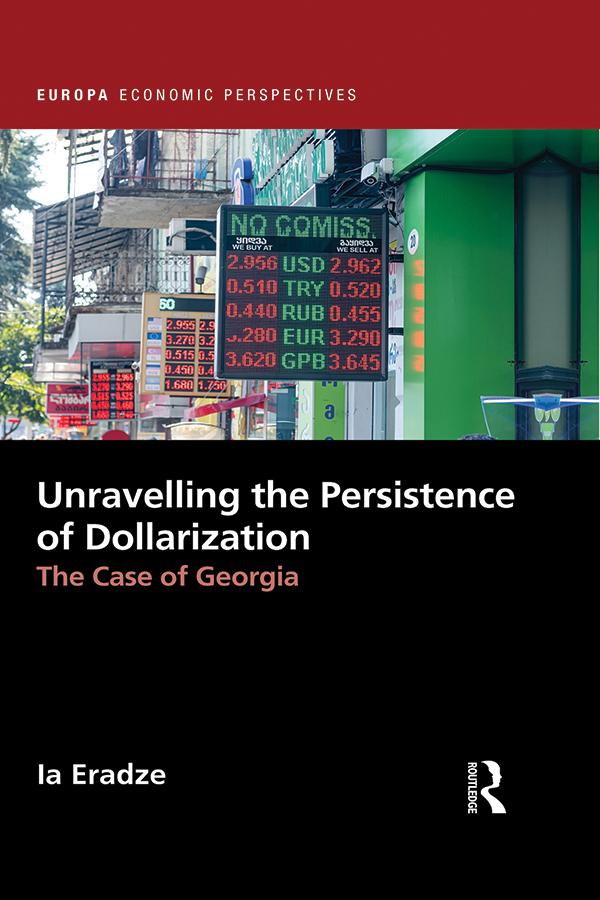
This volume engages with the roots, dimensions, and implications of foreign currency domination in states with a national currency. Referred to as unofficial dollarization in literature, this is a worldwide phenomenon among developing countries and has a long history.
This monograph provides a political economic analysis of dollarization in Georgia and is structured around three themes: the genesis of dollarization (1991–2003), the persistence of dollarization (2003–12) and the politicization of dollarization (2012–19). The case of Georgia is especially representative of the post-socialist transition states, but also has wider applicability.
A high level of dollarization is a significant barrier to economic growth, macroeconomic and political stability, functional monetary policy, as well as social welfare. The Covid-19 crisis and the increasing debt of developing countries in foreign currency exacerbate dollarization-related vulnerabilities for these economies.
This book will be of interest to postgraduate students in global/comparative political economy, development economics or transition economies, researchers in monetary sovereignty, central banking, exchange rate policies, currency hierarchy, money, financialization, and policy makers in dollarized countries and global institutions.
Betaal eenvoudig met kaart, Klarna, Apple Pay of Google Pay. Niet tevreden? Je hebt altijd 14 dagen bedenktijd. Lees meer in onze voorwaarden. Heb je vragen, mail ons dan via hello@memmo.org.
Memmo maakt studeren makkelijker – waar je ook bent ter wereld. Wij brengen je cursusboeken en slimme studietools samen op één plek: samenvattingen, quizzen, podcasts en flashcards. En Ted, je studievriend die antwoord geeft op alles wat je je afvraagt. Meer dan 50.000 studenten studeren hier al – gebouwd om je sneller te laten leren en minder stress te geven.