
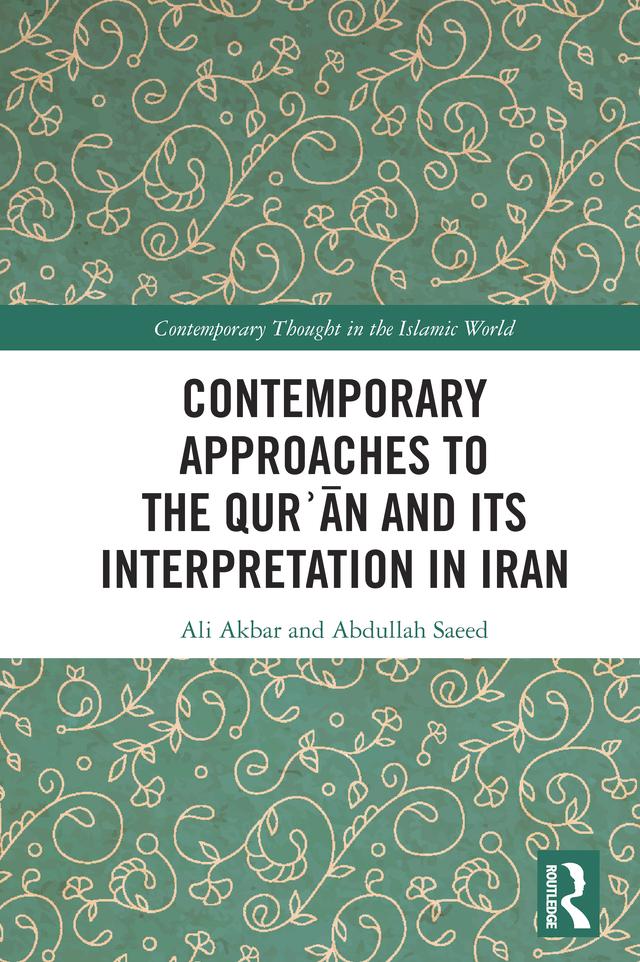
This book sets out how contemporary Iranian scholars have approached the Qurʾān during recent decades. It particularly aims to explore the contributions of scholars that have emerged in the post 1979-revolution era, outlining their primary interpretive methods and foundational theories regarding the reading of the Qurʾān.
Examining issues such as the status of women, democracy, freedom of religion and human rights, this book analyses the theoretical contributions of several Iranian scholars, some of which are new to the English-speaking academy. The hermeneutical approaches of figures such Abdolkarim Soroush, Muhammad Mojtahed Shabestari, Mohsen Kadivar, Hasan Yousefi-Eshkevari, Abolqasem Fanaie and Mostafa Malekian are presented and then analysed to demonstrate how a contextualist approach to the Qu’ran has been formed in response to the influence of Western Orientalism. The effect of this approach to the Qu’ran is then shown to have wide-ranging effects on Iranian society.
This study reveals Qu’ranic thought that has been largely overlooked by the West. It will, therefore. Be of great use to academics in Religious, Islamic and Qurʾānic studies as well as those studying the culture of Iran and the Middle East more generally.
Betaal eenvoudig met kaart, Klarna, Apple Pay of Google Pay. Niet tevreden? Je hebt altijd 14 dagen bedenktijd. Lees meer in onze voorwaarden. Heb je vragen, mail ons dan via hello@memmo.org.
Memmo maakt studeren makkelijker – waar je ook bent ter wereld. Wij brengen je cursusboeken en slimme studietools samen op één plek: samenvattingen, quizzen, podcasts en flashcards. En Ted, je studievriend die antwoord geeft op alles wat je je afvraagt. Meer dan 50.000 studenten studeren hier al – gebouwd om je sneller te laten leren en minder stress te geven.