
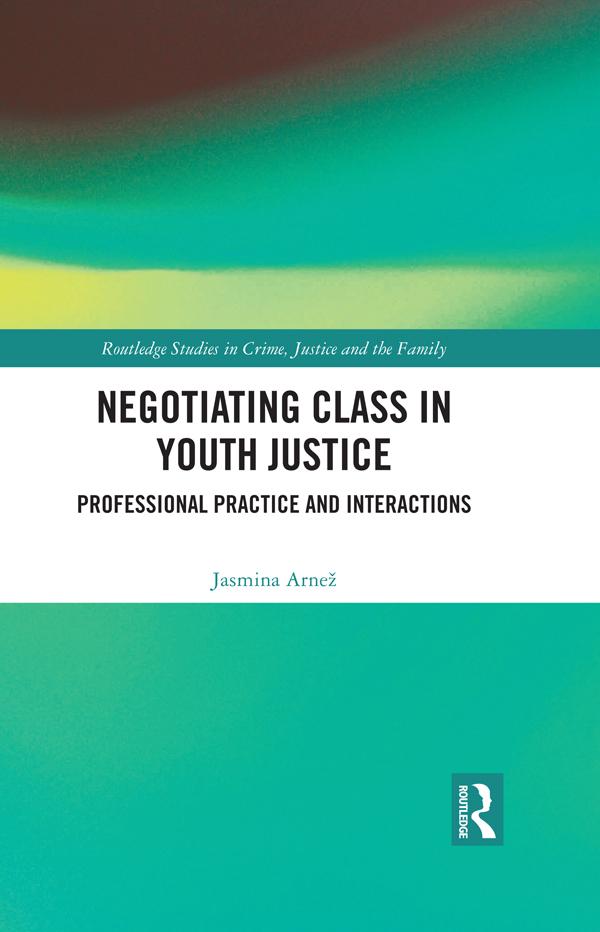
This book examines how class shapes interactions between professionals, parents, and young people in the youth justice system, utilising a mix of contemporary social theory and a wealth of empirical material. It suggests ways to neutralise the effects of class on youth justice interventions in structurally unequal societies and argues for reform based on conceptions of negotiated justice, relational agency, and autonomy in dependence.
The author develops a theoretical framework to explore how class is negotiated within youth justice, taking as its starting point the work of Bourdieu on habitus, Boltanski and Thévenot on the sociology of lay normativity, and Sayer’s work on moral understandings of class. This is combined with a detailed reading of empirical material gathered through focus groups, interviews with practitioners, parents and children, and participant observation of parenting courses. The result is an innovative revisiting of the part that social class plays in determining who is diverted into and away from youth justice and a sustained theoretical and empirical argument for the continued importance of class in criminological research.
This book offers an original contribution to the fields of criminology, youth justice, and crime and the family. It provides an important source of knowledge for academics and practitioners interested in discussions on social class and indirect discrimination.
Betaal eenvoudig met kaart, Klarna, Apple Pay of Google Pay. Niet tevreden? Je hebt altijd 14 dagen bedenktijd. Lees meer in onze voorwaarden. Heb je vragen, mail ons dan via hello@memmo.org.
Memmo maakt studeren makkelijker – waar je ook bent ter wereld. Wij brengen je cursusboeken en slimme studietools samen op één plek: samenvattingen, quizzen, podcasts en flashcards. En Ted, je studievriend die antwoord geeft op alles wat je je afvraagt. Meer dan 50.000 studenten studeren hier al – gebouwd om je sneller te laten leren en minder stress te geven.