
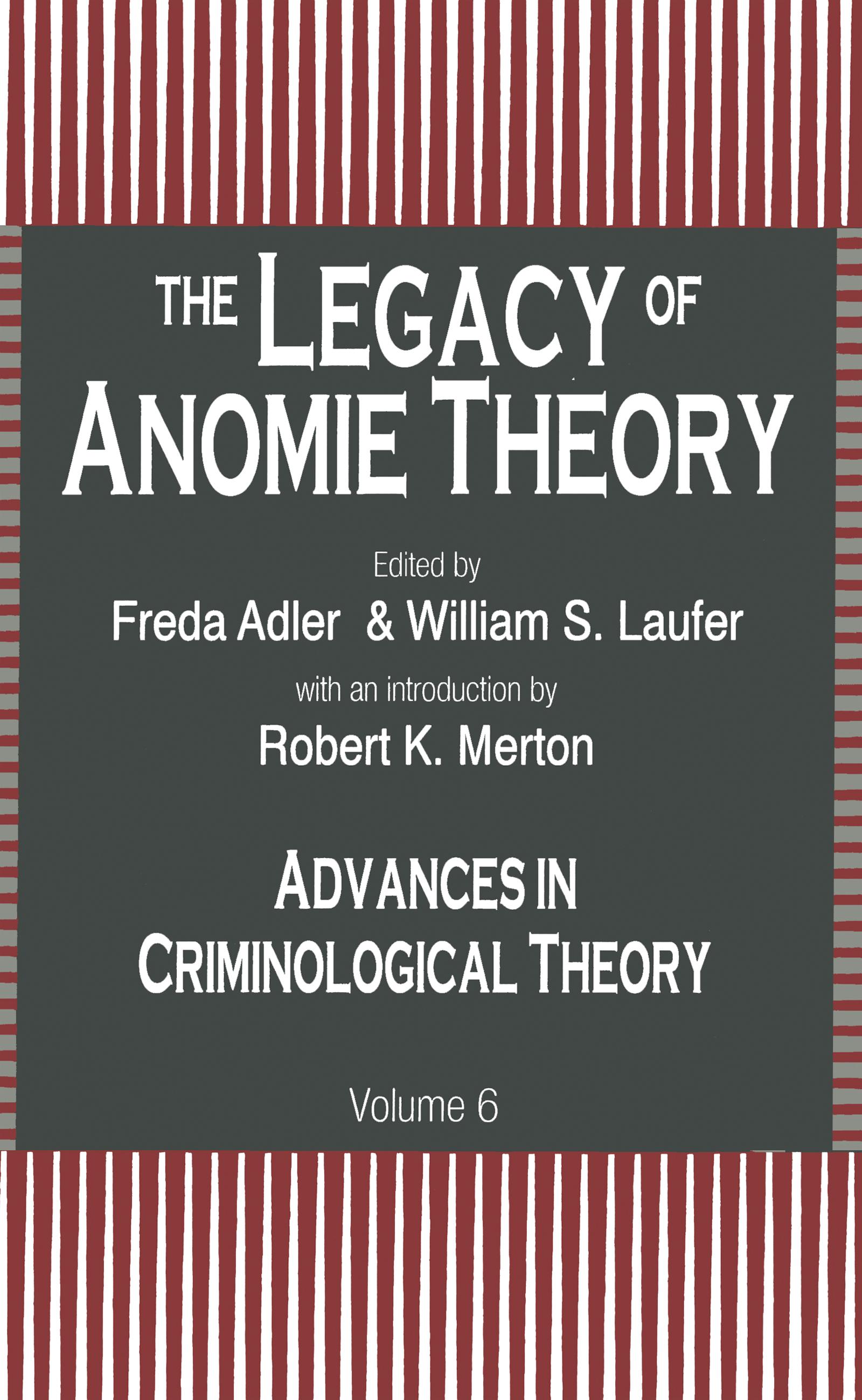
This sixth volume of Advances in Criminological Theory is testimony to a resurgent interest in anomie-strain theory, which began in the mid- 1980s and continues unabated. Contributors focus on the new body of empirical research and theorizing that has been added to the anomie tradition that extends from Durkheim to Merton. The first section is a major, 75-page statement by Robert K. Merton, examining the development of the anomie-and-opportunity-structure paradigm and its significance to criminology., The Legacy of Anomie Theoy assesses the theory's continuing usefulness, explains the relevance of Merton's concept of goals/means disparity as a psychological mechanism in the explanation of delinquency, and compares strain theory with social control theory. A macrosociological theoretical formulation is used to explain the association between societal development and crime rates. In other chapters, anomie is used to explain white-collar crime and to explore the symbiotic relationship between Chinese gangs and adult criminal organizations within the cultural, economic, and political context of the American-Chinese community.
Betaal eenvoudig met kaart, Klarna, Apple Pay of Google Pay. Niet tevreden? Je hebt altijd 14 dagen bedenktijd. Lees meer in onze voorwaarden. Heb je vragen, mail ons dan via hello@memmo.org.
Memmo maakt studeren makkelijker – waar je ook bent ter wereld. Wij brengen je cursusboeken en slimme studietools samen op één plek: samenvattingen, quizzen, podcasts en flashcards. En Ted, je studievriend die antwoord geeft op alles wat je je afvraagt. Meer dan 50.000 studenten studeren hier al – gebouwd om je sneller te laten leren en minder stress te geven.