
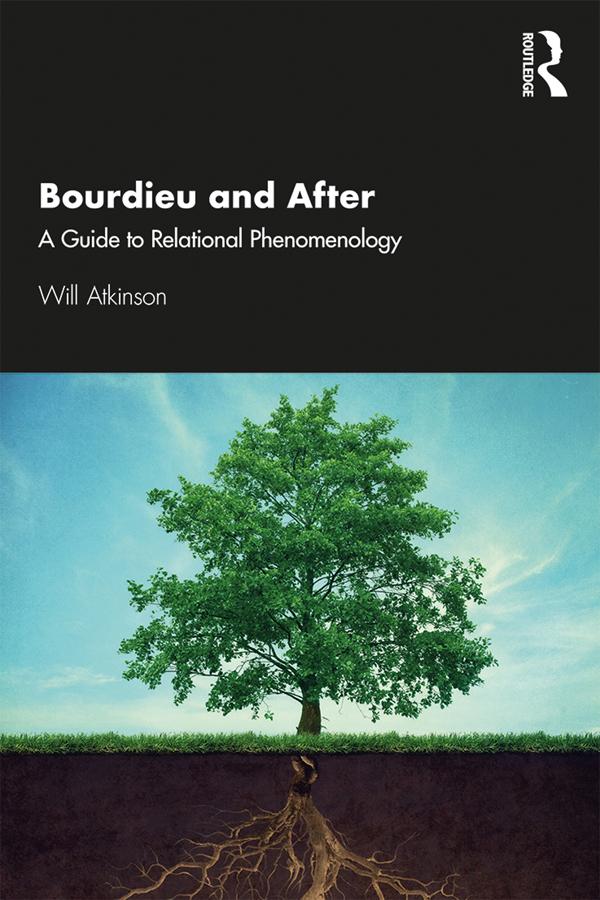
Pierre Bourdieu was the most influential sociologist of the late 20th century. The framework he developed continues to inspire countless researchers across the globe and provokes intense debates long after his death. Novel concepts, innovative applications and countless elaborations spring up every day, bulking out and shaping a distinct, if not always entirely consistent, body of work that might be characterised as a recognisable tradition. For those coming to Bourdieu for the first time, therefore, and interested in using his ideas in their own research, it no longer makes sense to confine oneself to the ideas of the man himself. An overview of the varied ways his concepts and arguments have been deepened and updated to make sense of new times or to fill certain gaps, and how insights on seemingly disconnected topics weave together into a bigger picture, is not just desirable but essential.
Bourdieu and After aims to provide exactly this overview. Working closely with Bourdieu’s own writings, but also covering a wide range of research and literature inspired by him, it aims to guide the reader through the key principles, the major and minor concepts and the concrete findings of Bourdieusian sociology as clearly and comprehensively as possible. It explains the difficult and often overlooked philosophical foundations, walks through the logic of famous terms like ‘field’, ‘habitus’ and ‘capital’ and demonstrates how they have been or can be used to provide powerful accounts of colonialism, the emergence of nation states and the rise of global social relations. It covers topics that Bourdieu was famous for analysing, like class and educational inequality, yet also traverses subjects on which he said little but that others influenced by him have tackled in depth, such as ethnicity, sexuality and family.
Along the way Atkinson seeks to undermine some of the common criticisms levelled at Bourdieu while identifying remaining gaps and limitations. Rather than simply recognising the problems, however, Atkinson proposes possible solutions too – solutions that are facilitated, he argues, by characterising Bourdieusian sociology as what he calls ‘relational phenomenology’.
Betaal eenvoudig met kaart, Klarna, Apple Pay of Google Pay. Niet tevreden? Je hebt altijd 14 dagen bedenktijd. Lees meer in onze voorwaarden. Heb je vragen, mail ons dan via hello@memmo.org.
Memmo maakt studeren makkelijker – waar je ook bent ter wereld. Wij brengen je cursusboeken en slimme studietools samen op één plek: samenvattingen, quizzen, podcasts en flashcards. En Ted, je studievriend die antwoord geeft op alles wat je je afvraagt. Meer dan 50.000 studenten studeren hier al – gebouwd om je sneller te laten leren en minder stress te geven.