
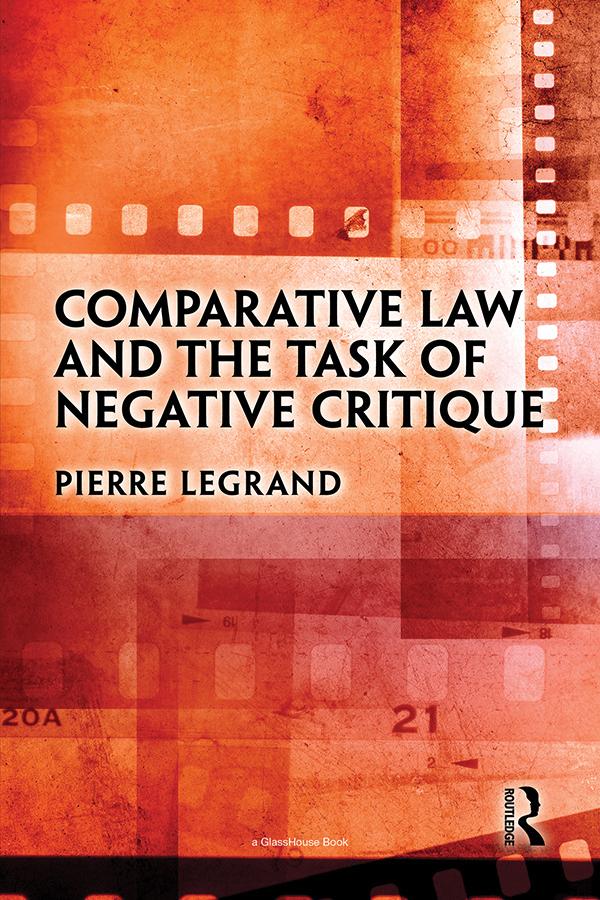
This book’s essays seek to cleanse comparative law of some of the epistemic detritus it has been collecting and that has been cluttering its theory and practice to the point where this flotsam has effectively stultified ‘good’ comparison. While a critique would pursue adjustments to the prevailing model, this text’s negative critique seeks a much more radical refurbishment as it utters an emphatic ‘no’ to the governing epistemology: it pursues, in effect, a deposition and a disposition of the leading epistemic configuration and the various assumptions regarding the acquisition of knowledge about foreign law that inform it. Negative comparative law thus operates at a primordial level inasmuch as it concerns the matter of justice: it aims to do justice to foreign law as foreignness finds itself appropriated and travestied by comparatists for ideological purposes. In the process, negative critique purports significantly to enhance comparative law’s institutional, intellectual, and ethical respectability.
This book will benefit all law teachers and postgraduate law students interested in the workings of law on the international scene, whether specialists in comparative law, public international law, private international law, transnational law, or foreign relations law – in particular, individuals bringing to bear a critical inclination to their subject-matter.
Betaal eenvoudig met kaart, Klarna, Apple Pay of Google Pay. Niet tevreden? Je hebt altijd 14 dagen bedenktijd. Lees meer in onze voorwaarden. Heb je vragen, mail ons dan via hello@memmo.org.
Memmo maakt studeren makkelijker – waar je ook bent ter wereld. Wij brengen je cursusboeken en slimme studietools samen op één plek: samenvattingen, quizzen, podcasts en flashcards. En Ted, je studievriend die antwoord geeft op alles wat je je afvraagt. Meer dan 50.000 studenten studeren hier al – gebouwd om je sneller te laten leren en minder stress te geven.