
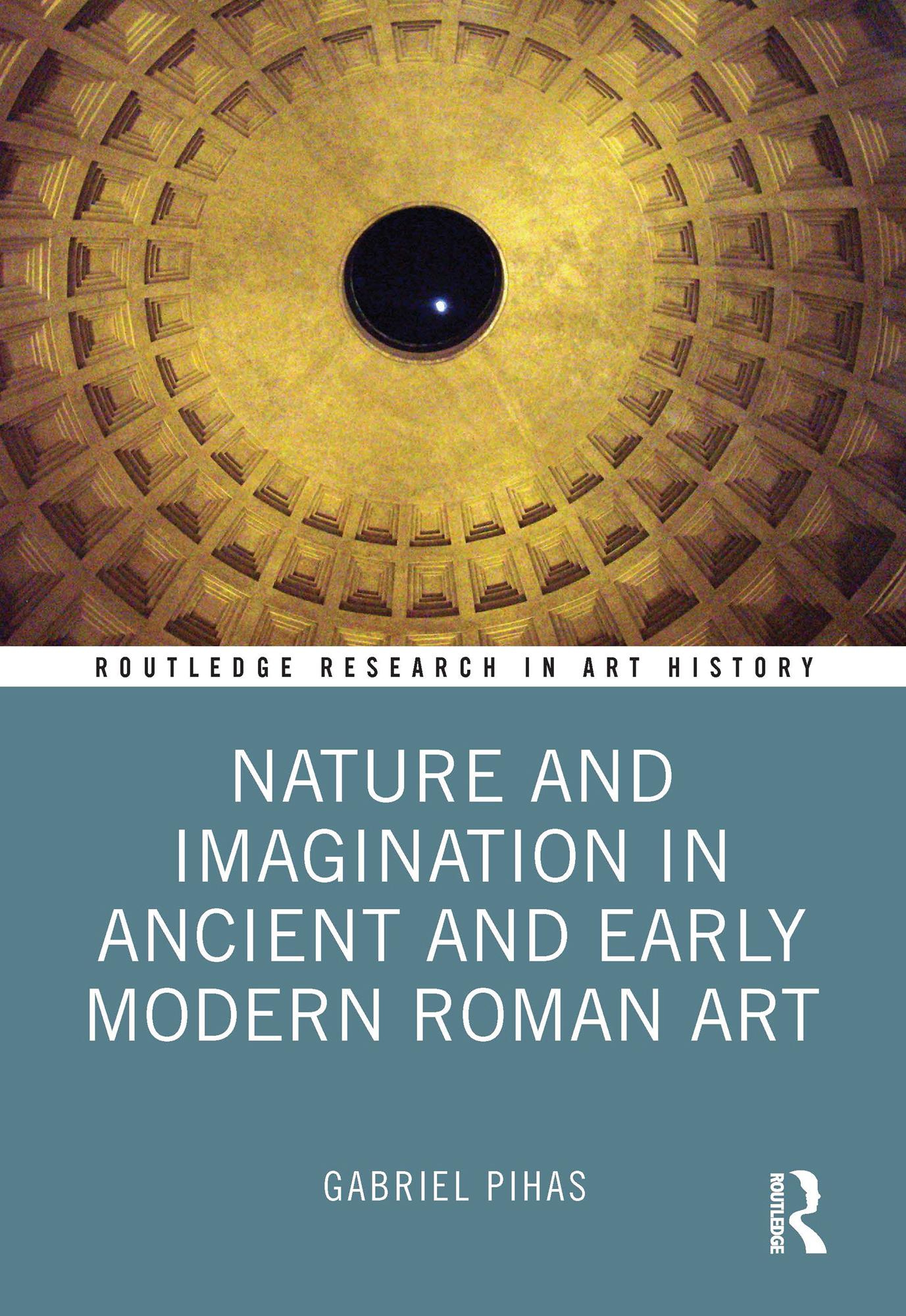
This volume uses the art of Rome to help us understand the radical historical break between the fundamental ancient pre-supposition that there is a natural world or cosmos situating human life, and the equally fundamental modern emphasis on human imagination and its creative power.
Rome’s unique art history reveals a different side of the battle between ancients and moderns than that usually raised as an issue in the history of science and philosophy. The book traces the idea of a cosmos in pre-modern art in Rome, from the reception of Greek art in the Roman republic to the construction of the Pantheon, to early Christian art and architecture. It then sketches the disappearance of the presupposition of a cosmos in the High Renaissance and Baroque periods, as creativity became a new ideal. Through discussions of the art and architecture that defines proto-modern Rome— from Michelangelo’s terribilita’ in the Sistine Chapel, Caravaggio’s realism, Baroque illusionism, the infinities of Borromini’s architecture, to the Grand Tour’s representations of ruins— through an interpretation of such major issues and works, this book shows how modern art liberates us while leaving us feeling estranged from our grounding in the natural world.
The book will be of interest to scholars working in art history, architectural history, classics, philosophy, and early modern history and culture.
Betaal eenvoudig met kaart, Klarna, Apple Pay of Google Pay. Niet tevreden? Je hebt altijd 14 dagen bedenktijd. Lees meer in onze voorwaarden. Heb je vragen, mail ons dan via hello@memmo.org.
Memmo maakt studeren makkelijker – waar je ook bent ter wereld. Wij brengen je cursusboeken en slimme studietools samen op één plek: samenvattingen, quizzen, podcasts en flashcards. En Ted, je studievriend die antwoord geeft op alles wat je je afvraagt. Meer dan 50.000 studenten studeren hier al – gebouwd om je sneller te laten leren en minder stress te geven.