
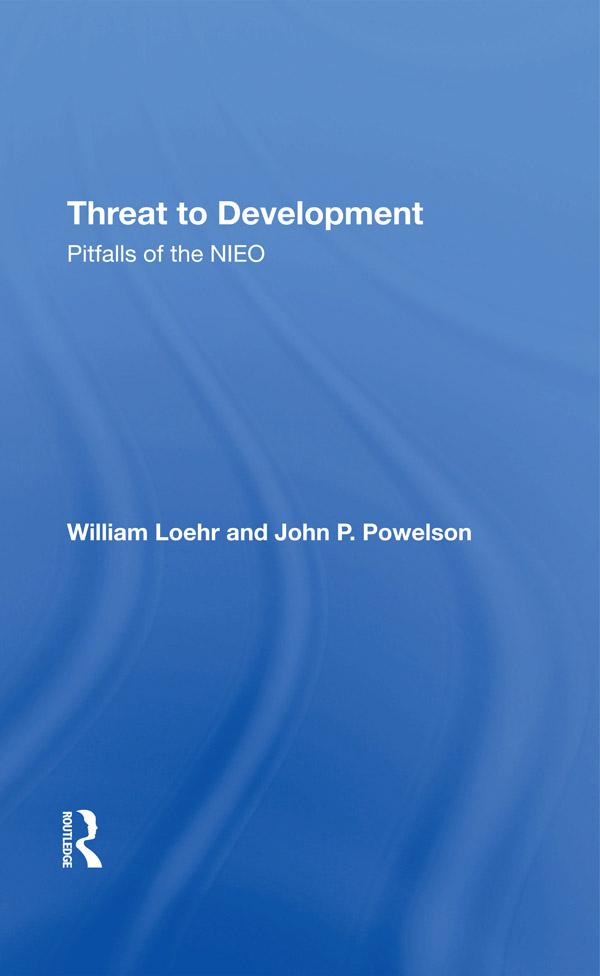
Far from transferring resources from the rich to the poor, as intended, the New International Economic Order (NIEO)—if fully implemented—is more likely to transfer them from the poor to the rich. Thus assert the authors, who present their analysis of trade and investment data in support of their conclusions. The NIEO, a program adopted by the United Nations, proposes increased prices of primary products, tariff preferences for exports of less developed countries to the industrial world, a code of conduct for multinational corporations, international monetary reform, debt forgiveness or rescheduling for the third world, plus a number of other provisions designed to help third world countries. But, the authors contend, all these provisions will further enrich the already rich within the third world, while adding to the poverty of the already poor. Higher prices for primary products would benefit the rich producers at the expense of the poor who buy them. Debt rescheduling would help only those rich enough to incur debt in the first place; because aid is available in finite quantities, this help might be at the expense of the poor. Likewise, trade preferences would also help the rich, who are the major exporters. The NIEO has been widely acclaimed in industrialized as well as in third world countries; this book demonstrates how the effects of the NIEO could well be the opposite from what is widely believed.
Betaal eenvoudig met kaart, Klarna, Apple Pay of Google Pay. Niet tevreden? Je hebt altijd 14 dagen bedenktijd. Lees meer in onze voorwaarden. Heb je vragen, mail ons dan via hello@memmo.org.
Memmo maakt studeren makkelijker – waar je ook bent ter wereld. Wij brengen je cursusboeken en slimme studietools samen op één plek: samenvattingen, quizzen, podcasts en flashcards. En Ted, je studievriend die antwoord geeft op alles wat je je afvraagt. Meer dan 50.000 studenten studeren hier al – gebouwd om je sneller te laten leren en minder stress te geven.
Misschien vind je dit ook leuk
Koop het boek0