
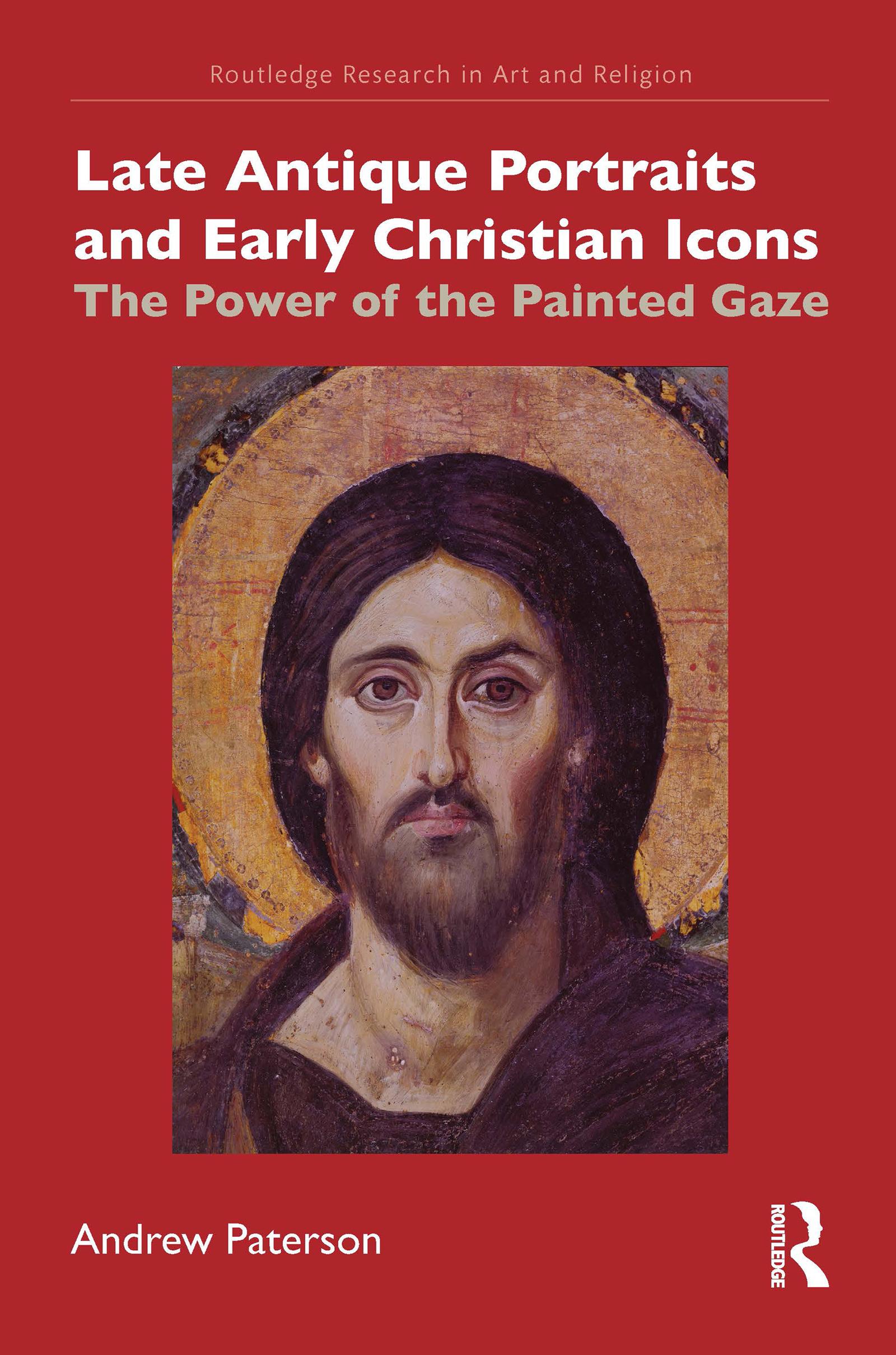
This book focuses on the earliest surviving Christian icons, dated to the sixth and seventh centuries, which bear many resemblances to three other well-established genres of ‘sacred portrait’ also produced during late antiquity, namely Roman imperial portraiture, Graeco-Egyptian funerary portraiture and panel paintings depicting non-Christian deities.
Andrew Paterson addresses two fundamental questions about devotional portraiture – both Christian and non-Christian – in the late antique period. Firstly, how did artists visualise and construct these images of divine or sanctified figures? And secondly, how did their intended viewers look at, respond to, and even interact with these images? Paterson argues that a key factor of many of these portrait images is the emphasis given to the depicted gaze, which invites an intensified form of personal encounter with the portrait’s subject.
The book will be of interest to scholars working in art history, theology, religion and classical studies.
Betaal eenvoudig met kaart, Klarna, Apple Pay of Google Pay. Niet tevreden? Je hebt altijd 14 dagen bedenktijd. Lees meer in onze voorwaarden. Heb je vragen, mail ons dan via hello@memmo.org.
Memmo maakt studeren makkelijker – waar je ook bent ter wereld. Wij brengen je cursusboeken en slimme studietools samen op één plek: samenvattingen, quizzen, podcasts en flashcards. En Ted, je studievriend die antwoord geeft op alles wat je je afvraagt. Meer dan 50.000 studenten studeren hier al – gebouwd om je sneller te laten leren en minder stress te geven.