
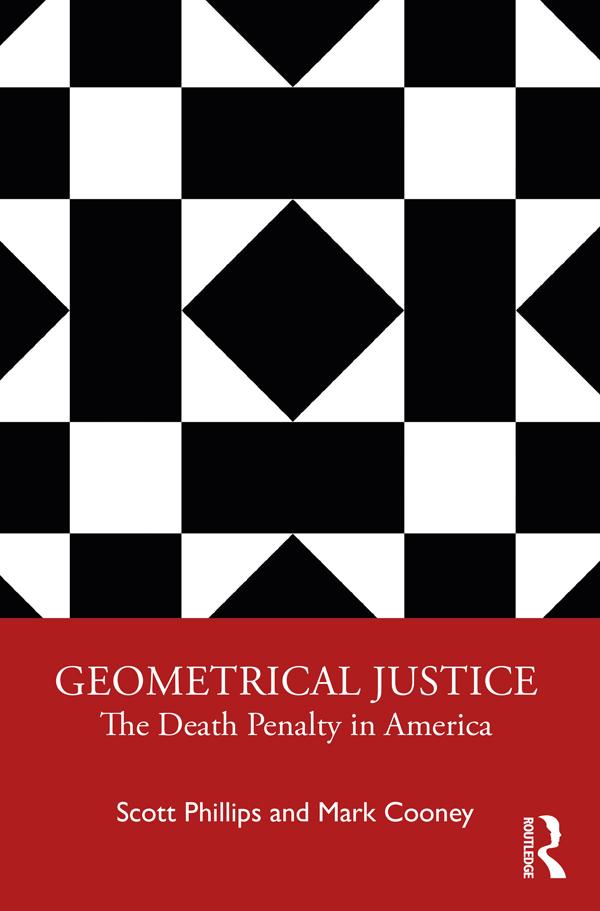
Legal decisions continue to mystify: why was this person sentenced to 20 years in prison, but that person to just 10 years for the same crime? Why did one person sue for civil damages, but another let the matter drop? Legal rules are supposed to answer these questions, but their answers are radically incomplete. Wouldn’t it be wonderful to have a theory that predicted and explained legal decisions?
Drawing on Donald Black’s theoretical ideas, Geometrical Justice: The Death Penalty in America addresses these issues, focusing specifi cally on who is sentenced to death and executed in the United States. The book explains why some murders are more serious than others and how the social characteristics of defendants, victims, and jurors aff ect case outcomes. Building on the most rigorous data in the field, the authors reveal wide discrepancies in capital punishment – why one person lives, but another person dies.
Geometrical Justice will be of interest to those engaged in criminal justice, criminology, and socio- legal studies, as well as students taking courses on sentencing, corrections, and capital punishment.
Betaal eenvoudig met kaart, Klarna, Apple Pay of Google Pay. Niet tevreden? Je hebt altijd 14 dagen bedenktijd. Lees meer in onze voorwaarden. Heb je vragen, mail ons dan via hello@memmo.org.
Memmo maakt studeren makkelijker – waar je ook bent ter wereld. Wij brengen je cursusboeken en slimme studietools samen op één plek: samenvattingen, quizzen, podcasts en flashcards. En Ted, je studievriend die antwoord geeft op alles wat je je afvraagt. Meer dan 50.000 studenten studeren hier al – gebouwd om je sneller te laten leren en minder stress te geven.