
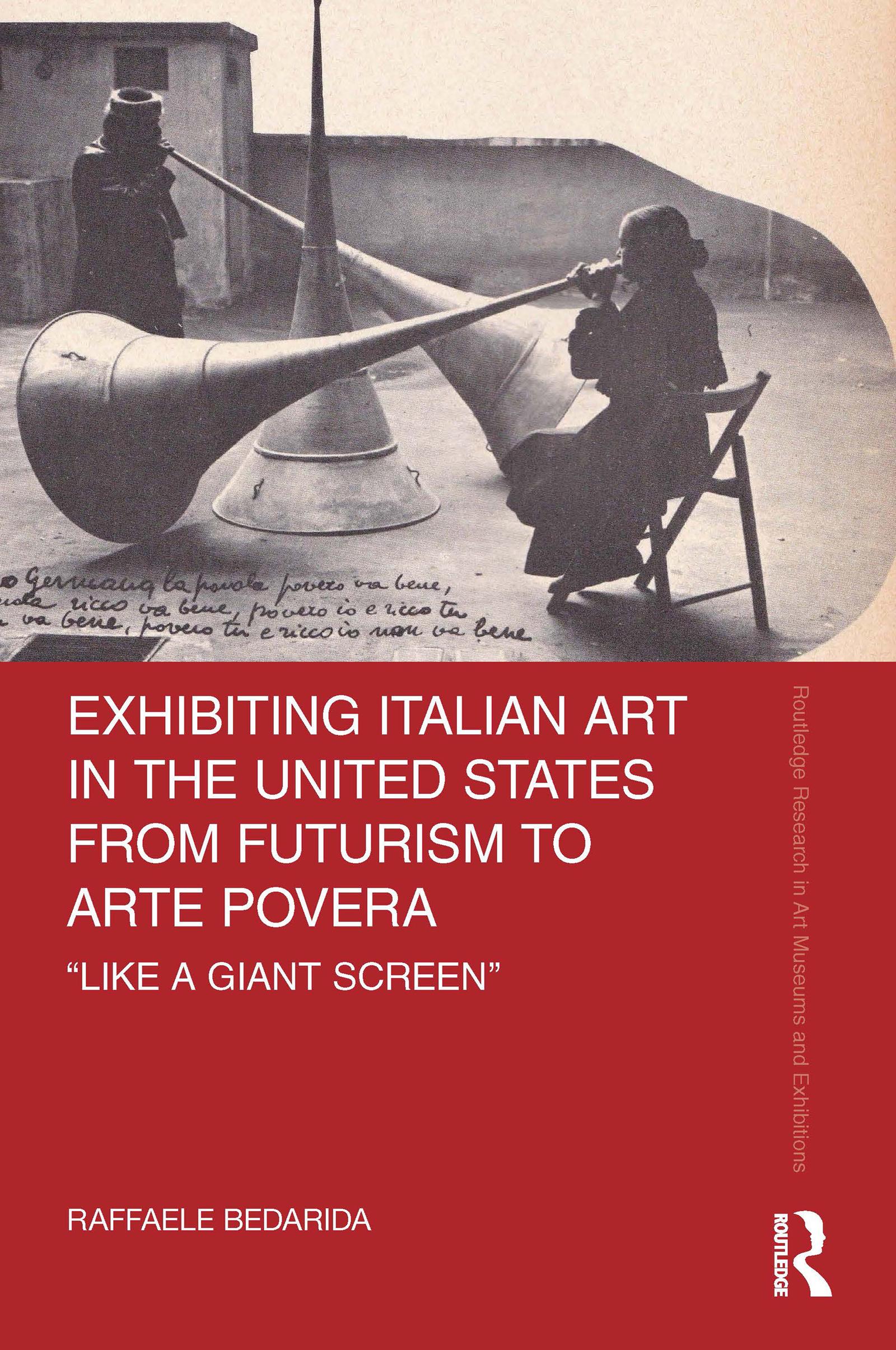
This volume explores how Italian institutions, dealers, critics, and artists constructed a modern national identity for Italy by exporting – literally and figuratively – contemporary art to the United States in key moments between 1929 and 1969.
From artist Fortunato Depero opening his Futurist House in New York City to critic Germano Celant launching Arte Povera in the United States, Raffaele Bedarida examines the thick web of individuals and cultural environments beyond the two more canonical movements that shaped this project. By interrogating standard narratives of Italian Fascist propaganda on the one hand and American Cold War imperialism on the other, this book establishes a more nuanced transnational approach. The central thesis is that, beyond the immediate aims of political propaganda and conquering a new market for Italian art, these art exhibitions, publications, and the critical discourse aimed at American audiences all reflected back on their makers: they forced and helped Italians define their own modernity in relation to the world’s new dominant cultural and economic power.
The book will be of interest to scholars working in art history, social history, exhibition history, and Italian studies.
Betaal eenvoudig met kaart, Klarna, Apple Pay of Google Pay. Niet tevreden? Je hebt altijd 14 dagen bedenktijd. Lees meer in onze voorwaarden. Heb je vragen, mail ons dan via hello@memmo.org.
Memmo maakt studeren makkelijker – waar je ook bent ter wereld. Wij brengen je cursusboeken en slimme studietools samen op één plek: samenvattingen, quizzen, podcasts en flashcards. En Ted, je studievriend die antwoord geeft op alles wat je je afvraagt. Meer dan 50.000 studenten studeren hier al – gebouwd om je sneller te laten leren en minder stress te geven.