
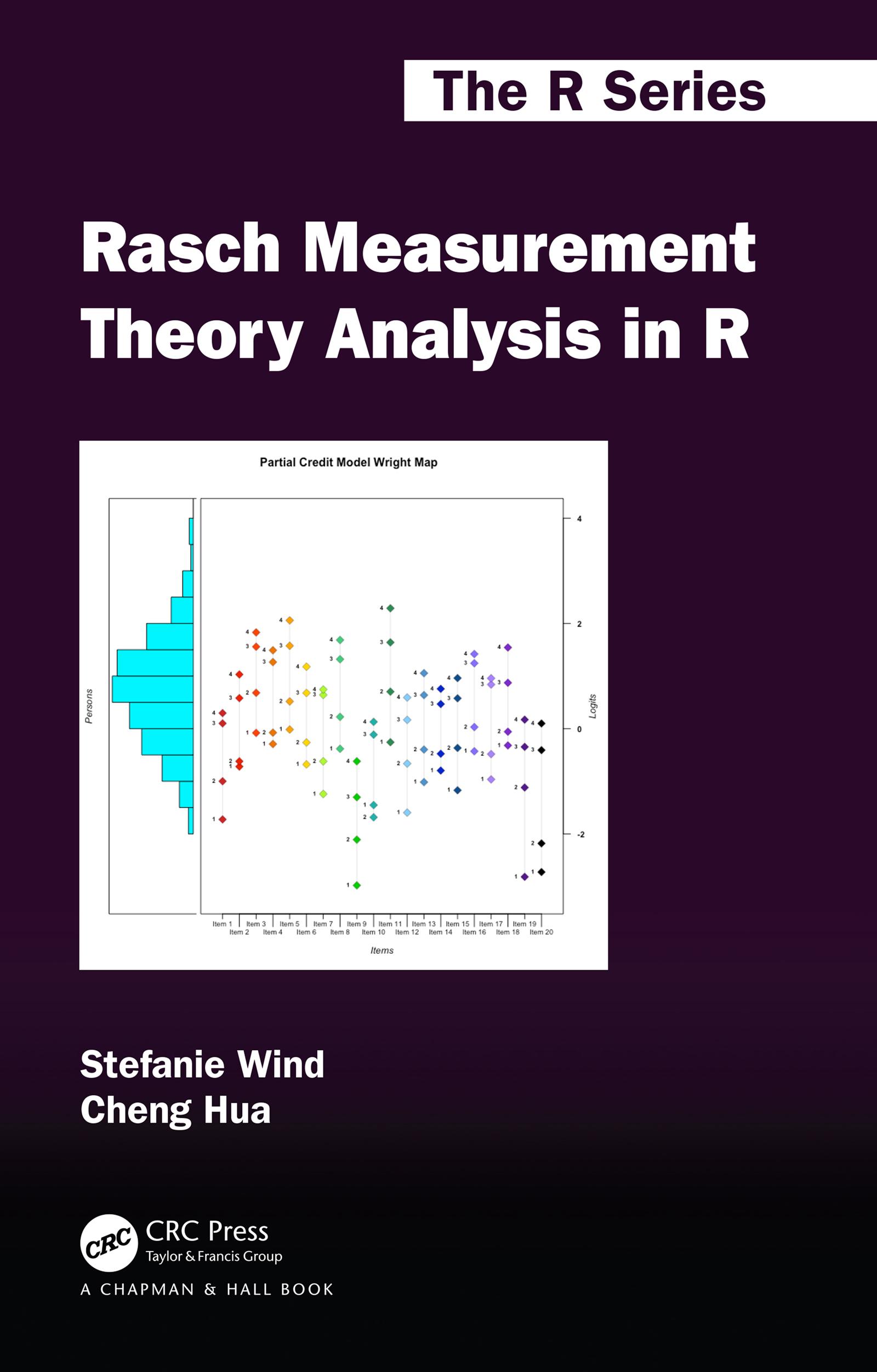
Rasch Measurement Theory Analysis in R provides researchers and practitioners with a step-by-step guide for conducting Rasch measurement theory analyses using R. It includes theoretical introductions to major Rasch measurement principles and techniques, demonstrations of analyses using several R packages that contain Rasch measurement functions, and sample interpretations of results.
Features:
- Accessible to users with relatively little experience with R programming
- Reproducible data analysis examples that can be modified to accommodate users’ own data
- Accompanying book website with links to additional resources and R code updates as needed
- Features dichotomous and polytomous (rating scale) Rasch models that can be applied to data from a wide range of disciplines
This book is designed for graduate students, researchers, and practitioners across the social, health, and behavioral sciences who have a basic familiarity with Rasch measurement theory and with R. Readers will learn how to use existing R packages to conduct a variety of analyses related to Rasch measurement theory, including evaluating data for adherence to measurement requirements, applying the dichotomous, Rating Scale, Partial Credit, and Many-Facet Rasch models, examining data for evidence of differential item functioning, and considering potential interpretations of results from such analyses.
Betaal eenvoudig met kaart, Klarna, Apple Pay of Google Pay. Niet tevreden? Je hebt altijd 14 dagen bedenktijd. Lees meer in onze voorwaarden. Heb je vragen, mail ons dan via hello@memmo.org.
Memmo maakt studeren makkelijker – waar je ook bent ter wereld. Wij brengen je cursusboeken en slimme studietools samen op één plek: samenvattingen, quizzen, podcasts en flashcards. En Ted, je studievriend die antwoord geeft op alles wat je je afvraagt. Meer dan 50.000 studenten studeren hier al – gebouwd om je sneller te laten leren en minder stress te geven.