
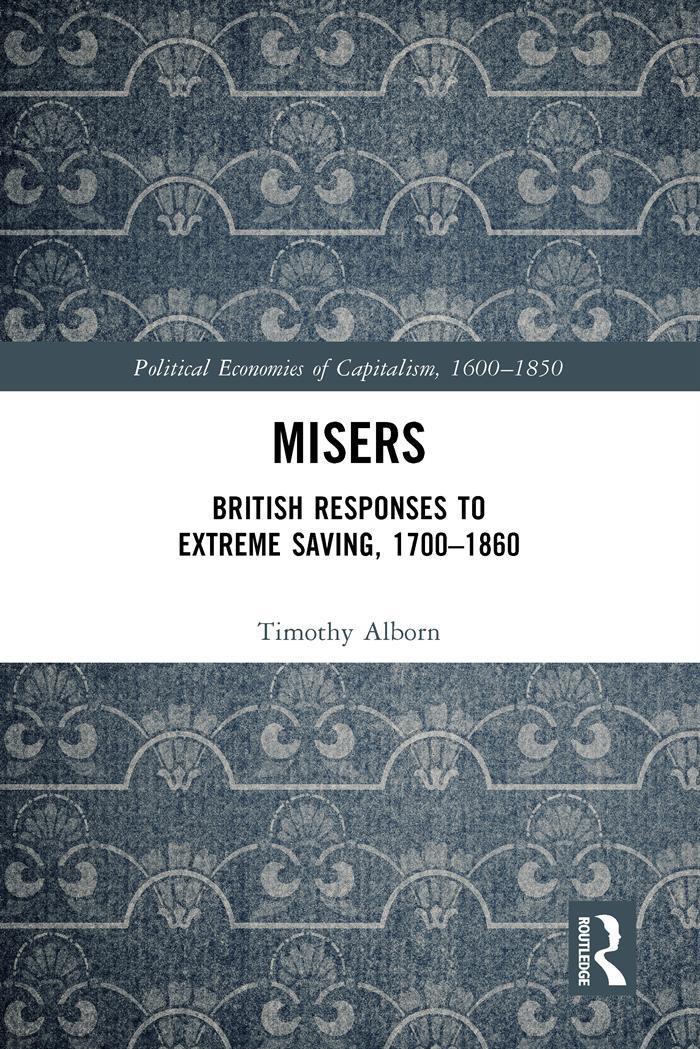
This volume uses the extreme case of misers to examine interlocking categories that undergirded the emergence of modern British society, including new perspectives on charity, morality, and marriage; new representations of passion and sympathy; and new modes of saving, spending, and investment.
Misers surveys this class of people—as invented and interpreted in sermons, poems, novels, and plays; analyzed by economists and philosophers; and profiled in obituaries and biographies—to explore how British attitudes about saving money shifted between 1700 and 1860. As opposed to the century before, the nineteenth century witnessed a new appreciation for misers, as economists credited them with adding to the nation's stock of capital and novelists newly imagined their capacity to empathize with fellow human beings. These characters shared the spotlight with real people who posthumously donned that label, populating into a cottage industry of miser biographies by the 1850s. By the time A Christmas Carol appeared in 1843, many Victorians had come to embrace misers as links that connected one generation’s extreme saving with the next generation’s virtuous spending.
With a broad chronological period, this volume is useful for students and scholars interested in representation of misers in eighteenth- and nineteenth-century Britain.
Betaal eenvoudig met kaart, Klarna, Apple Pay of Google Pay. Niet tevreden? Je hebt altijd 14 dagen bedenktijd. Lees meer in onze voorwaarden. Heb je vragen, mail ons dan via hello@memmo.org.
Memmo maakt studeren makkelijker – waar je ook bent ter wereld. Wij brengen je cursusboeken en slimme studietools samen op één plek: samenvattingen, quizzen, podcasts en flashcards. En Ted, je studievriend die antwoord geeft op alles wat je je afvraagt. Meer dan 50.000 studenten studeren hier al – gebouwd om je sneller te laten leren en minder stress te geven.