
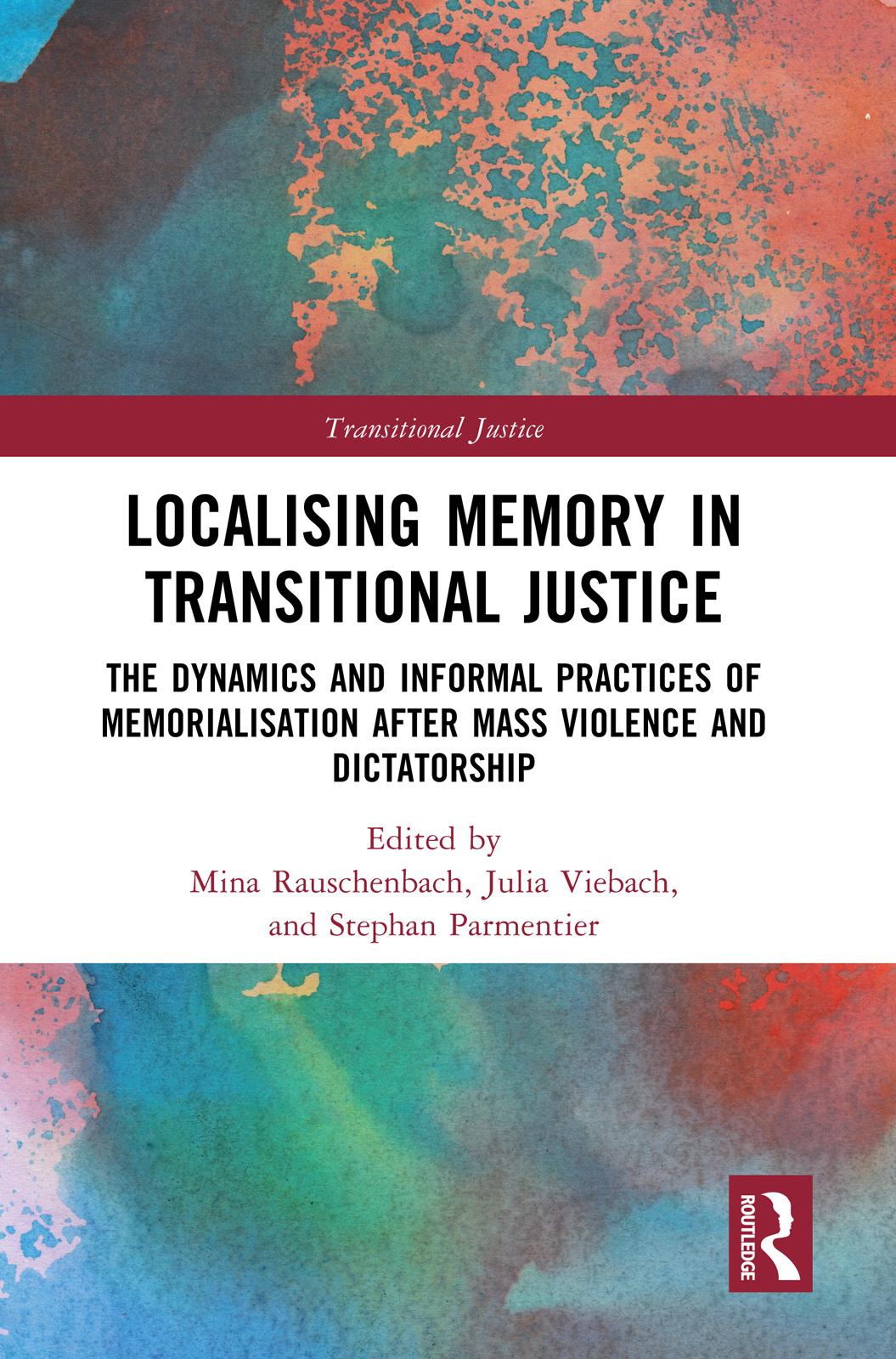
This collection adds to the critical transitional justice scholarship that calls for “transitional justice from below” and that makes visible the complex and oftentimes troubled entanglements between justice endeavours, locality, and memory-making. Broadening this perspective, it explores informal memory practices across various contexts with a focus on their individual and collective dynamics and their intersections, reaching also beyond a conceptualisation of memory as mere symbolic reparation and politics of memory.
It seeks to highlight the hidden, unwritten, and multifaceted in today’s memory boom by focusing on the memorialisation practices of communities, activists, families, and survivors. Organising its analytical focal point around the localisation of memory, it offers valuable and new insights on how and under what conditions localised memory practices may contribute to recognition and social transformation, as well as how they may at best be inclusive, or exclusive, of dynamic and diverse memories.
Drawing on inter- and multi-disciplinary approaches, this book brings an in-depth and nuanced understanding of local memory practices and the dynamics attached to these in transitional justice contexts. It will be of much interest to students and scholars of memory and genocide studies, peace and conflict studies, transitional justice, sociology, and anthropology.
Betaal eenvoudig met kaart, Klarna, Apple Pay of Google Pay. Niet tevreden? Je hebt altijd 14 dagen bedenktijd. Lees meer in onze voorwaarden. Heb je vragen, mail ons dan via hello@memmo.org.
Memmo maakt studeren makkelijker – waar je ook bent ter wereld. Wij brengen je cursusboeken en slimme studietools samen op één plek: samenvattingen, quizzen, podcasts en flashcards. En Ted, je studievriend die antwoord geeft op alles wat je je afvraagt. Meer dan 50.000 studenten studeren hier al – gebouwd om je sneller te laten leren en minder stress te geven.