
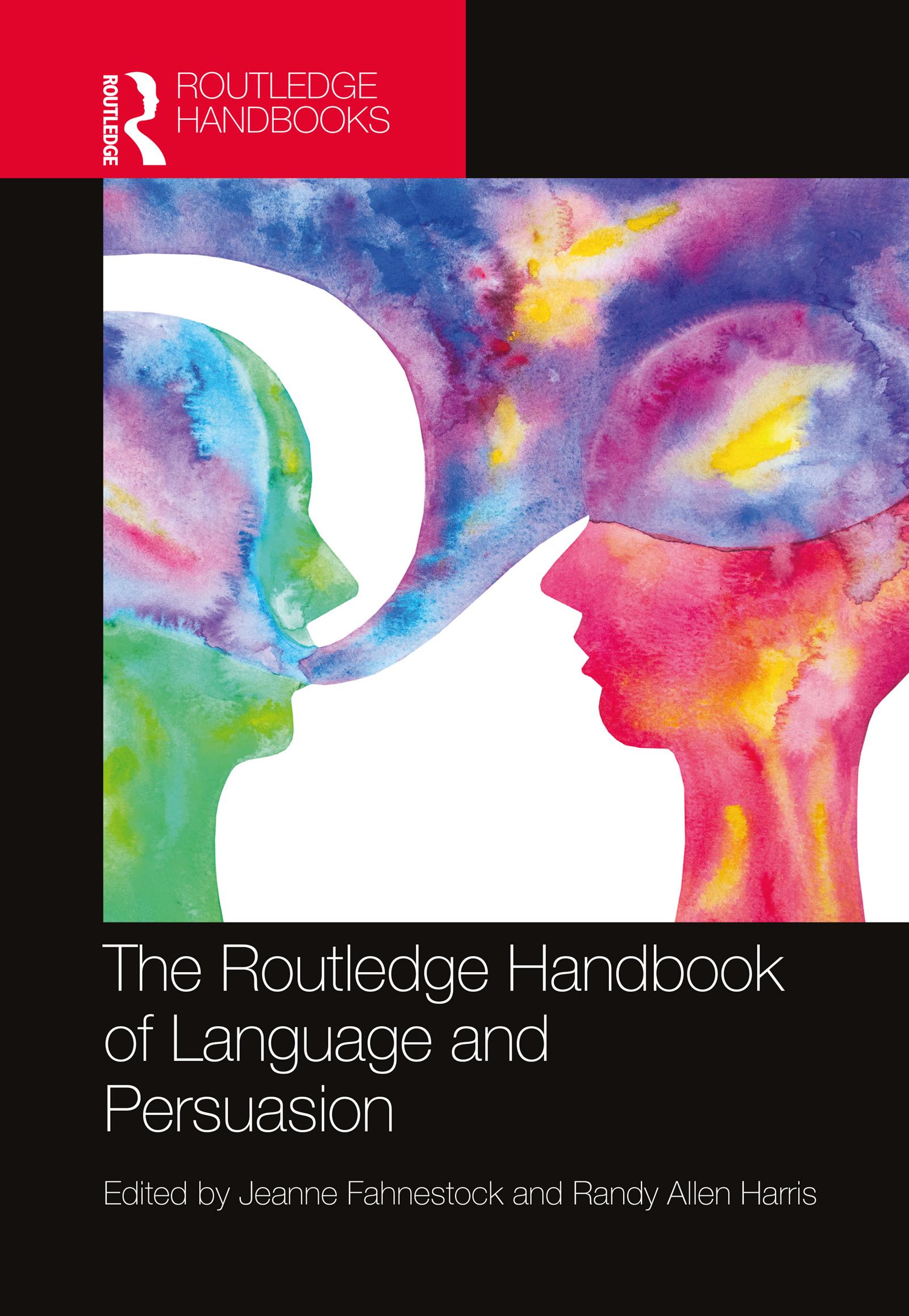
This handbook provides a wide-ranging, authoritative, and cutting-edge overview of language and persuasion. Featuring a range of international contributors, the handbook outlines the basic materials of linguistic persuasion – sound, words, syntax, and discourse – and the rhetorical basics that they enable, such as appeals, argument schemes, arrangement strategies, and accommodation devices.
After a comprehensive introduction that brings together the elements of linguistics and the vectors of rhetoric, the handbook is divided into six parts. Part I covers the basic rhetorical appeals to character, the emotions, argument schemes, and types of issues that constitute persuasion. Part II covers the enduring effects of persuasive language, from humor to polarization, while a special group of chapters in Part III examines figures of speech and their rhetorical uses. In Part IV, contributors focus on different fields and genres of argument as entry points for research into conventions of arguing. Part V examines the evolutionary and developmental roots of persuasive language, and Part VI highlights new computational methods of language analysis.
This handbook is essential reading for those researching and studying persuasive language in the fields of linguistics, rhetoric, argumentation, communication, discourse studies, political science, psychology, digital studies, mass media, and journalism.
Betaal eenvoudig met kaart, Klarna, Apple Pay of Google Pay. Niet tevreden? Je hebt altijd 14 dagen bedenktijd. Lees meer in onze voorwaarden. Heb je vragen, mail ons dan via hello@memmo.org.
Memmo maakt studeren makkelijker – waar je ook bent ter wereld. Wij brengen je cursusboeken en slimme studietools samen op één plek: samenvattingen, quizzen, podcasts en flashcards. En Ted, je studievriend die antwoord geeft op alles wat je je afvraagt. Meer dan 50.000 studenten studeren hier al – gebouwd om je sneller te laten leren en minder stress te geven.