
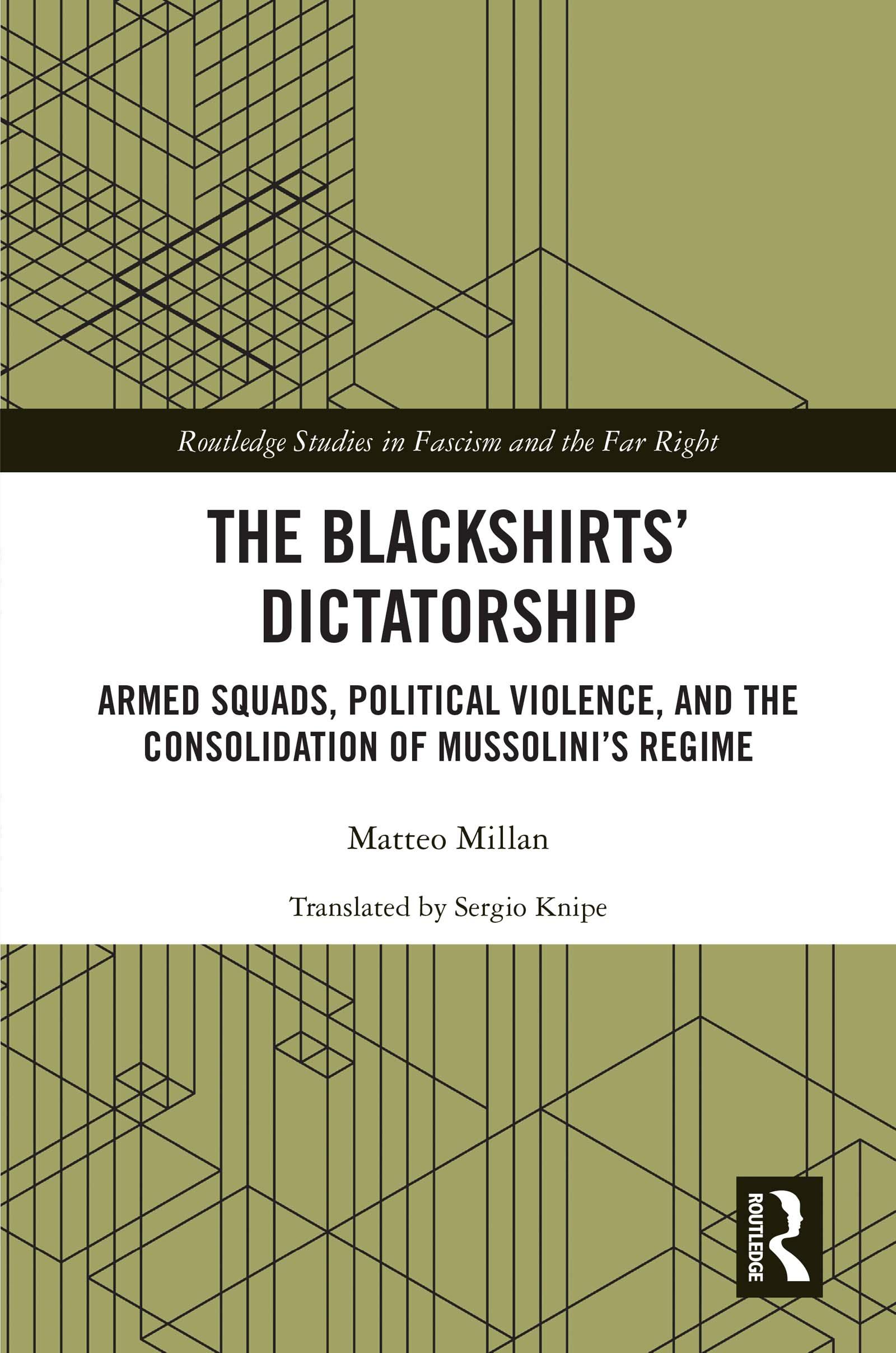
On October 1922 Mussolini became head of the Italian government, a situation that would last for twenty years. That power was obtained was largely due to the widespread violence perpetrated by blackshirts throughout Italy (squadristi). Violence however did not end. Old and new blackshirts played a major role in making Italy a fascist country. Contrary to the claims of many scholars that have depicted blackshirts after the March on Rome only as troublemakers for Mussolini, the book shows that they played a crucial role in establishing a full and totalitarian dictatorship. Squadristi carried out processes of fascistisation, crushed opponents and convinced bystanders and dubious people, consolidating fascist power in many aspects of social, political and even intimate life. By resorting to new archives, a long chronology and a focus on individual perspectives, this book gives voice to the perpetrators of fascist violence and offers new insights into the lives of squadristi throughout the dictatorship, outlining their beliefs, outlooks and expectations. The book shows that post-1922 squadrismo was not a side effect of Fascism's twenty-year history. On the contrary, violence represents one of the essential components of any definition of Italian Fascism.
Betaal eenvoudig met kaart, Klarna, Apple Pay of Google Pay. Niet tevreden? Je hebt altijd 14 dagen bedenktijd. Lees meer in onze voorwaarden. Heb je vragen, mail ons dan via hello@memmo.org.
Memmo maakt studeren makkelijker – waar je ook bent ter wereld. Wij brengen je cursusboeken en slimme studietools samen op één plek: samenvattingen, quizzen, podcasts en flashcards. En Ted, je studievriend die antwoord geeft op alles wat je je afvraagt. Meer dan 50.000 studenten studeren hier al – gebouwd om je sneller te laten leren en minder stress te geven.