
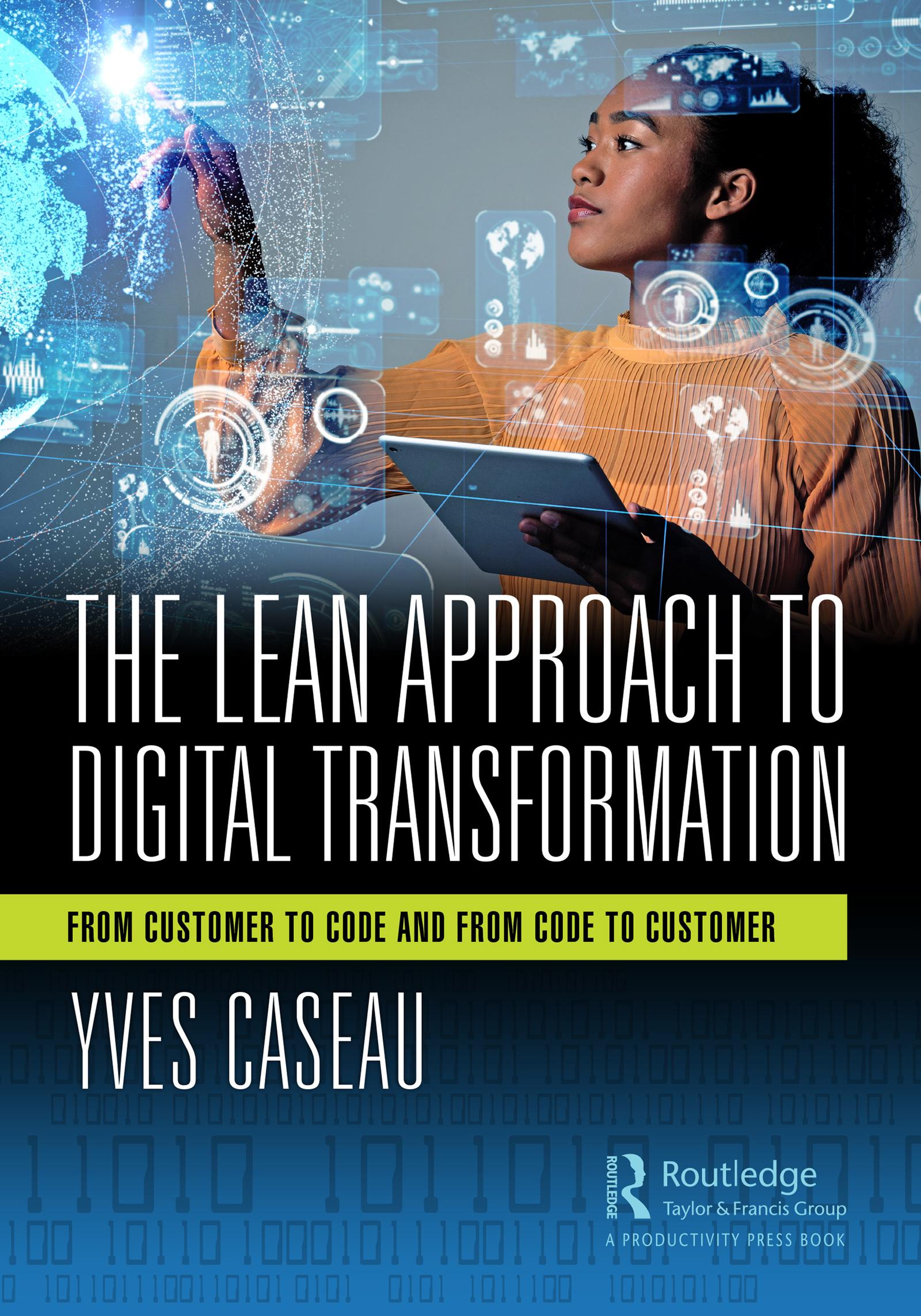
The Lean Approach to Digital Transformation: From Customer to Code and From Code to Customer is organized into three parts that expose and develop the three capabilities that are essential for a successful digital transformation:
1. Understanding how to co-create digital services with users, whether they are customers or future customers. This ability combines observation, dialogue, and iterative experimentation. The approach proposed in this book is based on the Lean Startup approach, according to an extended vision that combines Design Thinking and Growth Hacking. Companies must become truly "customer-centric", from observation and listening to co-development. The revolution of the digital age of the 21st century is that customer orientation is more imperative -- the era of abundance, usages rate of change, complexity of experiences, and shift of power towards communities -- are easier, using digital tools and digital communities.
2. Developing an information system (IS) that is the backbone of the digital transformation – called “exponential information system” to designate an open IS (in particular on its borders), capable of interfacing and combining with external services, positioned as a player in software ecosystems and built for processing scalable and dynamic data flows. The exponential information system is constantly changing and it continuously absorbs the best of information processing technology, such as Artificial Intelligence and Machine Learning.
3. Building software “micro-factories” that produce service platforms, which are called “Lean software factories.” This “software factory” concept covers the integration of agile methods, tooling and continuous integration and deployment practices, a customer-oriented product approach, and a platform approach based on modularity, as well as API-based architecture and openness to external stakeholders. This software micro-factory is the foundation that continuously produces and provides constantly evolving services.
These three capabilities are not unique or specific to this book, they are linked to other concepts such as agile methods, product development according to lean principles, software production approaches such as CICD (continuous integration and deployment) or DevOps. This book weaves a common frame of reference for all these approaches to derive more value from the digital transformation and to facilitate its implementation.
The title of the book refers to the “lean approach to digital transformation” because the two underlying frameworks, Lean Startup and Lean Software Factory, are directly inspired by Lean, in the sense of the Toyota Way. The Lean approach is present from the beginning to the end of this book -- it provides the framework for customer orientation and the love of a job well done, which are the conditions for the success of a digital transformation.
Betaal eenvoudig met kaart, Klarna, Apple Pay of Google Pay. Niet tevreden? Je hebt altijd 14 dagen bedenktijd. Lees meer in onze voorwaarden. Heb je vragen, mail ons dan via hello@memmo.org.
Memmo maakt studeren makkelijker – waar je ook bent ter wereld. Wij brengen je cursusboeken en slimme studietools samen op één plek: samenvattingen, quizzen, podcasts en flashcards. En Ted, je studievriend die antwoord geeft op alles wat je je afvraagt. Meer dan 50.000 studenten studeren hier al – gebouwd om je sneller te laten leren en minder stress te geven.