
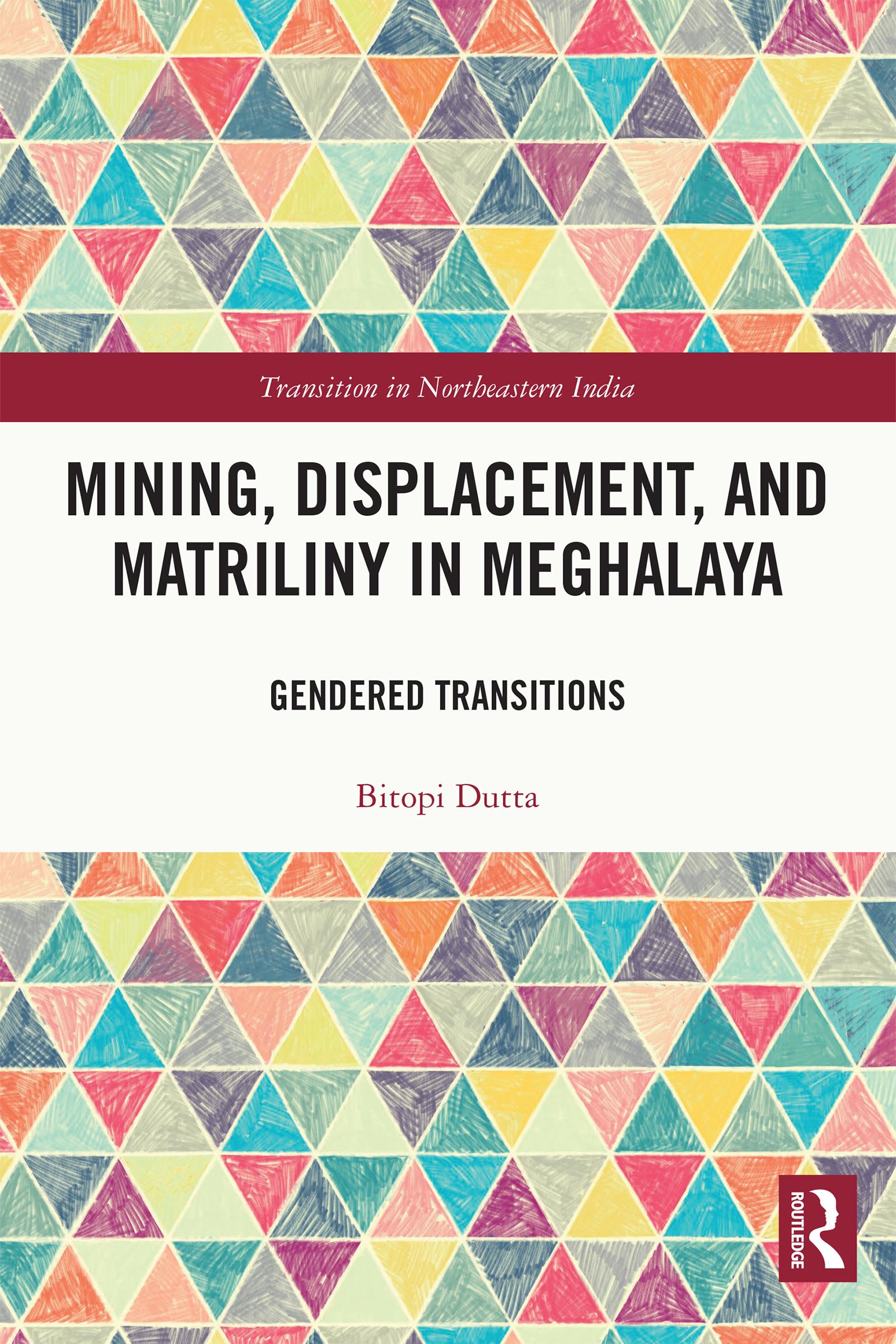
This book studies how Development-Induced Displacement (DID) radically restructures gender relations in indigenous tribal societies. Through an indepth case study of the Indian state of Meghalaya, one of the few matrilineal societies of the world, it analyses how people cope with conflicts in their perception of self, family, and society brought on by the transition from traditional modes of living to increased urbanisation, and how these experiences are different for men and women. It looks at the ways in which this gendered change is experienced inter-generationally in different contexts of people’s lives, including work and leisure activities. The book also investigates people’s attitudes towards matrilineal structures and their perception of change on matriliny where mining has played a role in building their view of their matrilineal tradition.
Drawing on extensive interviews with individuals directly affected by this phenomenon, the book, part of the Transition in Northeastern India series, makes a significant contribution to the study of DID. It will be useful for scholars and researchers of urbanisation, gender studies, Northeast India studies, development studies, minority studies, public policy, political studies, and sociology.
Betaal eenvoudig met kaart, Klarna, Apple Pay of Google Pay. Niet tevreden? Je hebt altijd 14 dagen bedenktijd. Lees meer in onze voorwaarden. Heb je vragen, mail ons dan via hello@memmo.org.
Memmo maakt studeren makkelijker – waar je ook bent ter wereld. Wij brengen je cursusboeken en slimme studietools samen op één plek: samenvattingen, quizzen, podcasts en flashcards. En Ted, je studievriend die antwoord geeft op alles wat je je afvraagt. Meer dan 50.000 studenten studeren hier al – gebouwd om je sneller te laten leren en minder stress te geven.