
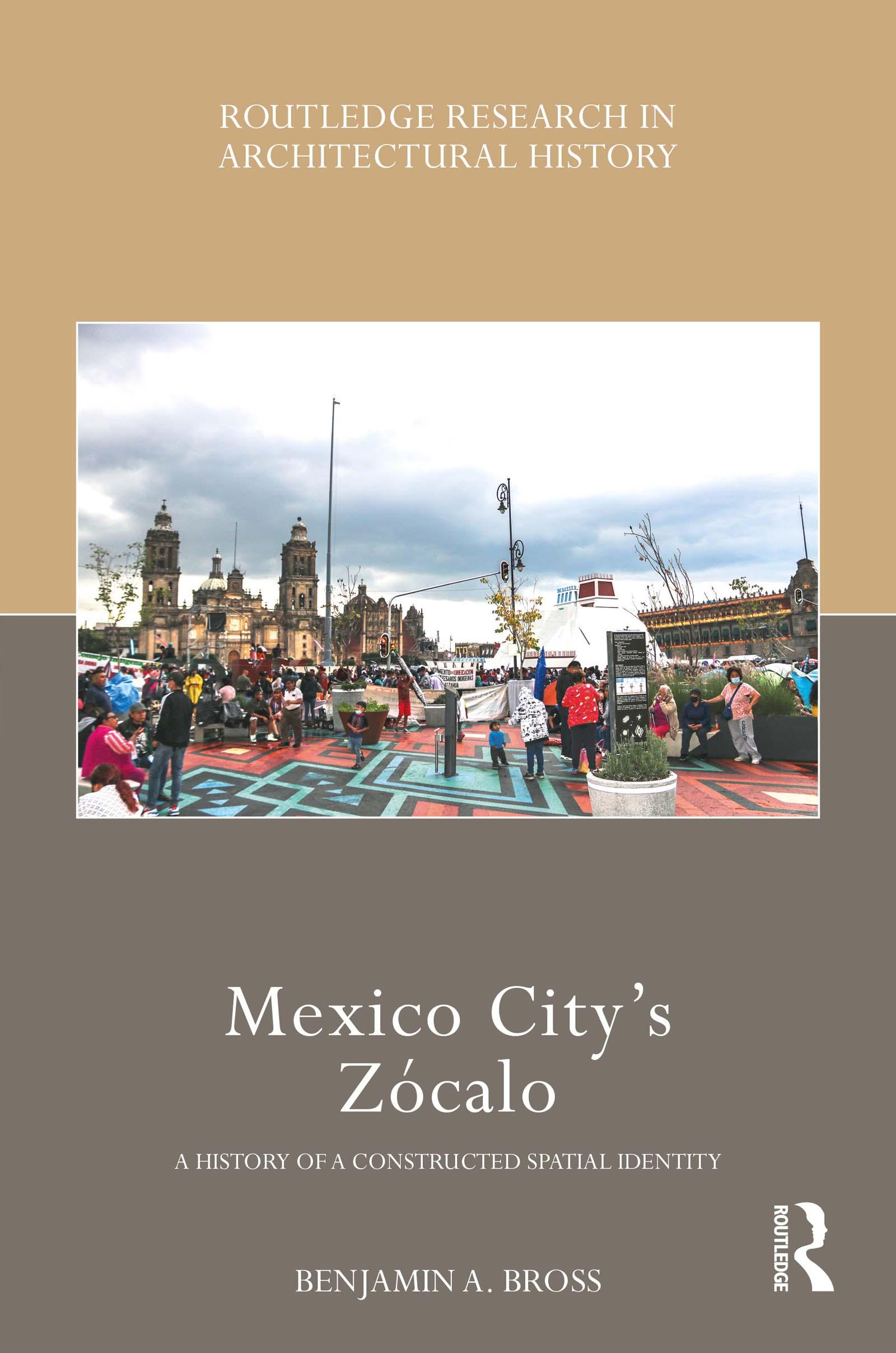
This book presents a case study of one of Latin America’s most important and symbolic spaces, the Zócalo in Mexico City, weaving together historic events and corresponding morphological changes in the urban environment. It poses questions about how the identity of a place emerges, how it evolves and, why does it change? Mexico City’s Zócalo: A History of a Constructed Spatial Identity utilizes the history of a specific place, the Zócalo (Plaza de la Constitución), to explain the emergence and evolution of Mexican identities over time.
Starting from the pre-Hispanic period to present day, the work illustrates how the Zócalo reveals spatial manifestations as part of the larger socio-cultural zeitgeist. By focusing on the history of changes in spatial production – what Henri Lefebvre calls society’s "secretions" – Bross traces how cultural, social, economic, and political forces shaped the Zócalo’s spatial identity and, in turn, how the Zócalo shaped and fostered new identities in return. It will be a fascinating read for architectural and urban historians investigating Latin America.
Betaal eenvoudig met kaart, Klarna, Apple Pay of Google Pay. Niet tevreden? Je hebt altijd 14 dagen bedenktijd. Lees meer in onze voorwaarden. Heb je vragen, mail ons dan via hello@memmo.org.
Memmo maakt studeren makkelijker – waar je ook bent ter wereld. Wij brengen je cursusboeken en slimme studietools samen op één plek: samenvattingen, quizzen, podcasts en flashcards. En Ted, je studievriend die antwoord geeft op alles wat je je afvraagt. Meer dan 50.000 studenten studeren hier al – gebouwd om je sneller te laten leren en minder stress te geven.