
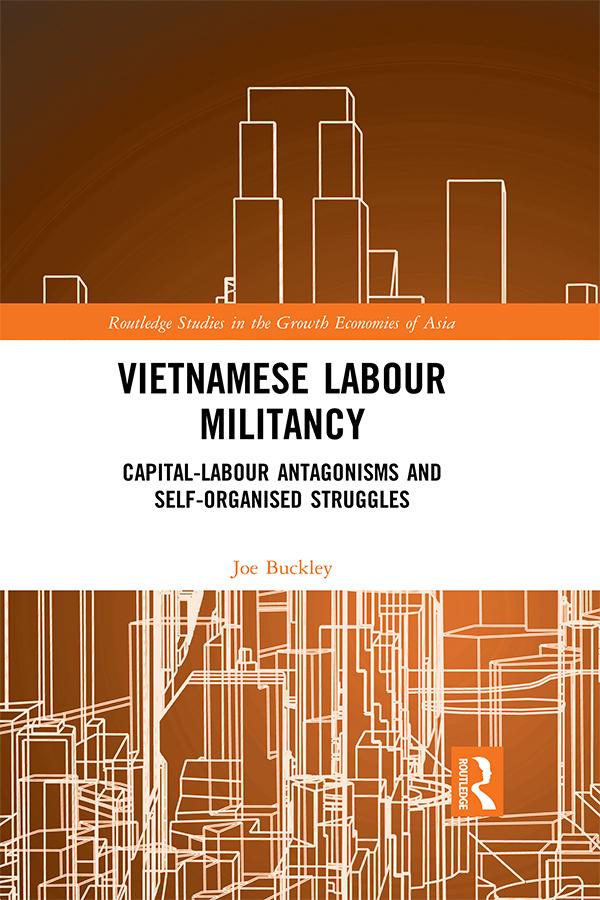
This book explores how capital-labour relations and antagonisms structure forms of militancy in Vietnam and shows that Vietnamese labour militancy is in line with global trends of worker activism.
Vietnamese labour politics is undergoing significant changes, with a new Labour code that became law in 2021 allowing workers to join ‘worker representative organisations’ not subordinate to the state-led union or the ruling Communist Party. This book reflects on the nature of Vietnamese labour politics on the cusp of reform. It focuses on nominally formal labour within the garment and footwear industry in the southern part of the country, the author argues that while employment in the formal economy is expanding in terms of the absolute numbers of people working in formally registered firms, capital employs various ways to make conditions inside these companies increasingly insecure. In response, workers organise in forms of decentralised resistance. The book analyses two of these in detail; wildcat strikes and ‘microstrikes’—short collective work stoppages that occur inside workplaces.
Arguing that labour resistance is structured in relation to capital’s behaviour, and not only because of weak labour relations institutions and mechanisms, this book makes a valuable contribution to the field of labour and social movement studies, development studies, sociology, and political economy and Southeast Asian Studies.
Betaal eenvoudig met kaart, Klarna, Apple Pay of Google Pay. Niet tevreden? Je hebt altijd 14 dagen bedenktijd. Lees meer in onze voorwaarden. Heb je vragen, mail ons dan via hello@memmo.org.
Memmo maakt studeren makkelijker – waar je ook bent ter wereld. Wij brengen je cursusboeken en slimme studietools samen op één plek: samenvattingen, quizzen, podcasts en flashcards. En Ted, je studievriend die antwoord geeft op alles wat je je afvraagt. Meer dan 50.000 studenten studeren hier al – gebouwd om je sneller te laten leren en minder stress te geven.