
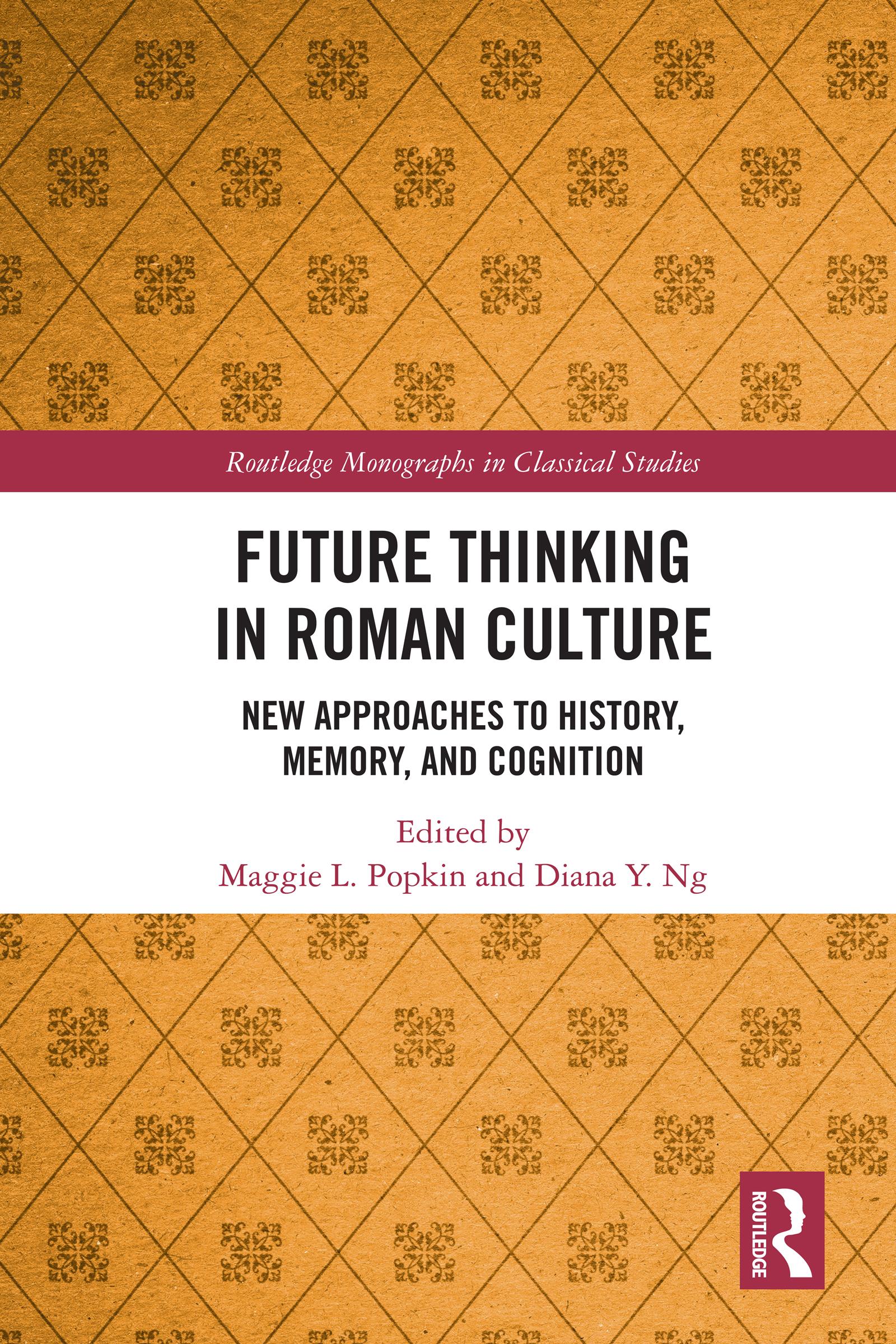
Future Thinking in Roman Culture is the first volume dedicated to the exploration of prospective memory and future thinking in the Roman world, integrating cutting edge research in cognitive sciences and theory with approaches to historiography, epigraphy, and material culture.
This volume opens a new avenue of investigation for Roman memory studies in presenting multiple case studies of memory and commemoration as future-thinking phenomena. It breaks new ground by bringing classical studies into direct dialogue with recent research on cognitive processes of future thinking. The thematically linked but methodologically diverse contributions, all by leading scholars who have published significant work in memory studies of antiquity, both cultural and cognitive, make the volume well suited for classical studies scholars and students seeking to explore cognitive science and philosophy of mind in ancient contexts, with special appeal to those sharing the growing interest in investigating Roman conceptions of futurity and time. The chapters all deliberately coalesce around the central theme of prospection and future thinking and their impact on our understanding of Roman ritual and religion, politics, and individual motivation and intention.
This volume will be an invaluable resource to undergraduate and postgraduate students of classics, art history, archaeology, history, and religious studies, as well as scholars and students of memory studies, historical and cultural cognitive studies, psychology, and philosophy.
Betaal eenvoudig met kaart, Klarna, Apple Pay of Google Pay. Niet tevreden? Je hebt altijd 14 dagen bedenktijd. Lees meer in onze voorwaarden. Heb je vragen, mail ons dan via hello@memmo.org.
Memmo maakt studeren makkelijker – waar je ook bent ter wereld. Wij brengen je cursusboeken en slimme studietools samen op één plek: samenvattingen, quizzen, podcasts en flashcards. En Ted, je studievriend die antwoord geeft op alles wat je je afvraagt. Meer dan 50.000 studenten studeren hier al – gebouwd om je sneller te laten leren en minder stress te geven.