
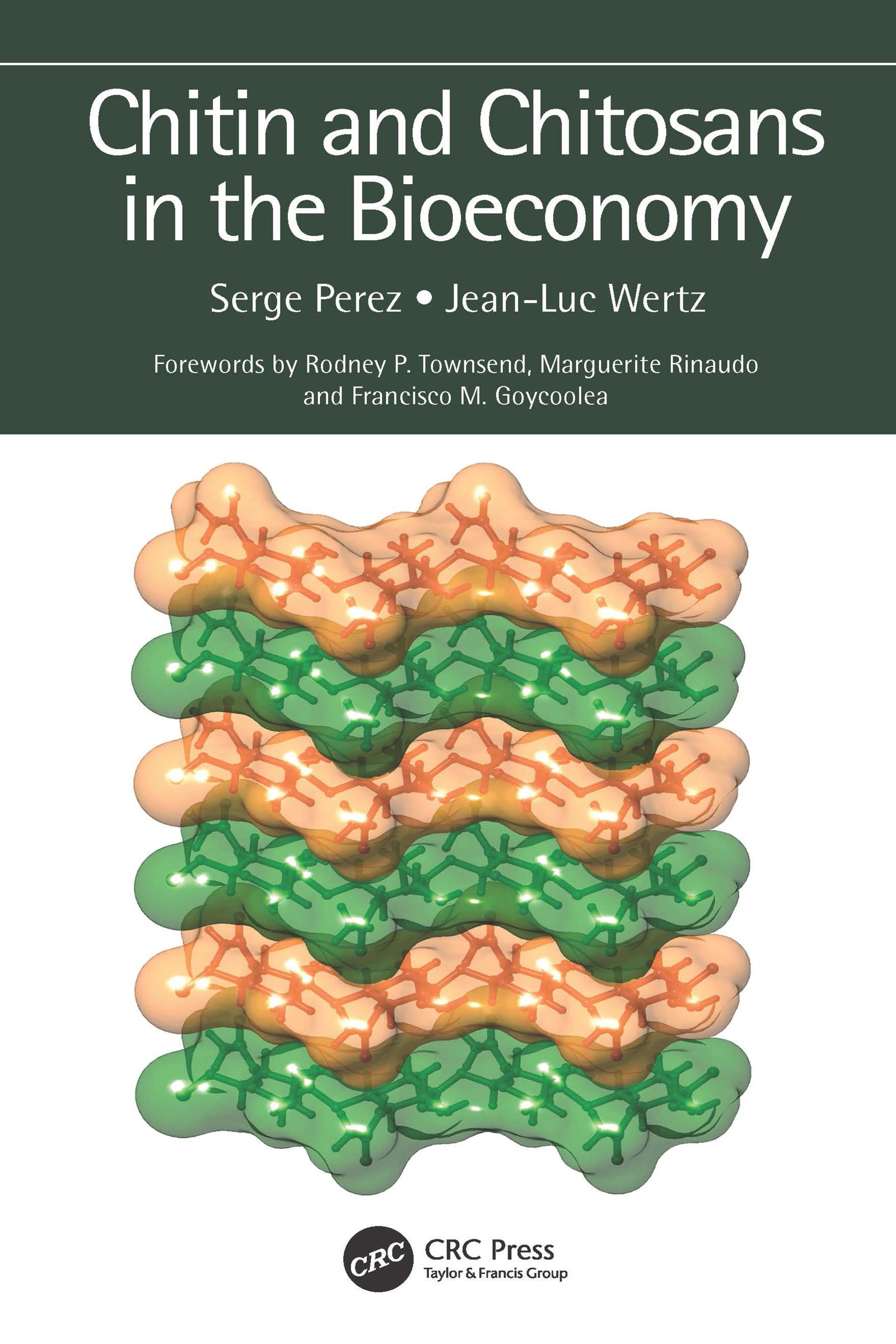
Chitin is the second most abundant natural polymer in the world after cellulose, mainly derived from the food waste of shrimp and crabs. Chitosan is the most important derivative of chitin. Thanks to their biodegradability, non-toxicity, biocompatibility, bioactivity, and versatile chemical and physical properties, chitin and chitosan derivatives are used in a wide variety of applications, including water treatment, cosmetics and toiletries, food and beverages, healthcare/medical, and agrochemicals. Chitin and Chitosans in the Bioeconomy covers all major aspects of chitin and chitosan, including structure, biosynthesis, biodegradation, properties of chitin and derivatives, applications, and market. It offers a special focus on the bioeconomy, which is the renewable segment of the circular economy.
- Describes the structure, biosynthesis, and biodegradation of chitin and chitosan
- Covers chitin- and chitosan-based products
- Details valorization of these materials
- Presents information on shell biorefineries
Chitin and Chitosans in the Bioeconomy serves as a reference for polymer scientists and engineers and is also accessible to economists and advanced students.
Betaal eenvoudig met kaart, Klarna, Apple Pay of Google Pay. Niet tevreden? Je hebt altijd 14 dagen bedenktijd. Lees meer in onze voorwaarden. Heb je vragen, mail ons dan via hello@memmo.org.
Memmo maakt studeren makkelijker – waar je ook bent ter wereld. Wij brengen je cursusboeken en slimme studietools samen op één plek: samenvattingen, quizzen, podcasts en flashcards. En Ted, je studievriend die antwoord geeft op alles wat je je afvraagt. Meer dan 50.000 studenten studeren hier al – gebouwd om je sneller te laten leren en minder stress te geven.