
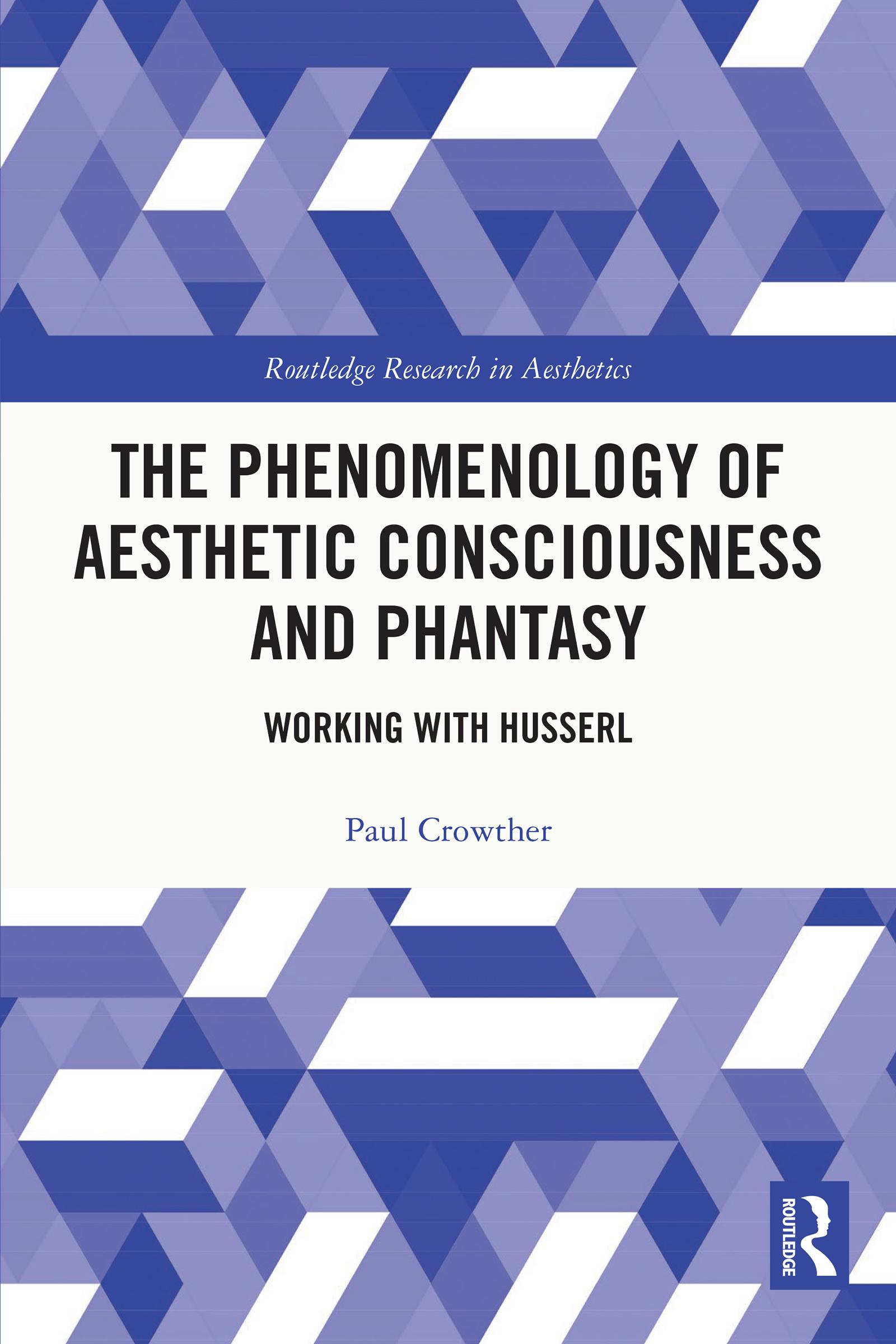
This is the first book dedicated to Husserl’s aesthetics. Paul Crowther pieces together Husserl’s ideas of phantasy and image and presents them as a unified and innovative account of aesthetic consciousness. He also shows how Husserl’s ideas can be developed to solve problems in aesthetics, especially those related to visual art, literature, theatre, and nature.
After outlining the major components of Husserl’s phenomenological method, Crowther addresses the scope and structure of Husserl’s notion of aesthetic consciousness. For Husserl, aesthetic consciousness in all its forms involves phantasy—where items or states of affairs are represented as if actually perceived or experienced, even though they are not, in fact, given in the present perceptual field. Husserl also makes some extraordinarily interesting links between aesthetic consciousness and nature, showing how natural things and environments become instigators of such consciousness when apprehended in the appropriate terms. This "unreality" of the object of aesthetic consciousness anticipates contemporary debates about pictorial representation and is also relevant to Husserl’s accounts of literature and theatre.
The Phenomenology of Aesthetic Consciousness and Phantasy will appeal to scholars and advanced students interested in aesthetics, philosophy of art, phenomenological aesthetics, and Husserl’s philosophy.
Betaal eenvoudig met kaart, Klarna, Apple Pay of Google Pay. Niet tevreden? Je hebt altijd 14 dagen bedenktijd. Lees meer in onze voorwaarden. Heb je vragen, mail ons dan via hello@memmo.org.
Memmo maakt studeren makkelijker – waar je ook bent ter wereld. Wij brengen je cursusboeken en slimme studietools samen op één plek: samenvattingen, quizzen, podcasts en flashcards. En Ted, je studievriend die antwoord geeft op alles wat je je afvraagt. Meer dan 50.000 studenten studeren hier al – gebouwd om je sneller te laten leren en minder stress te geven.