
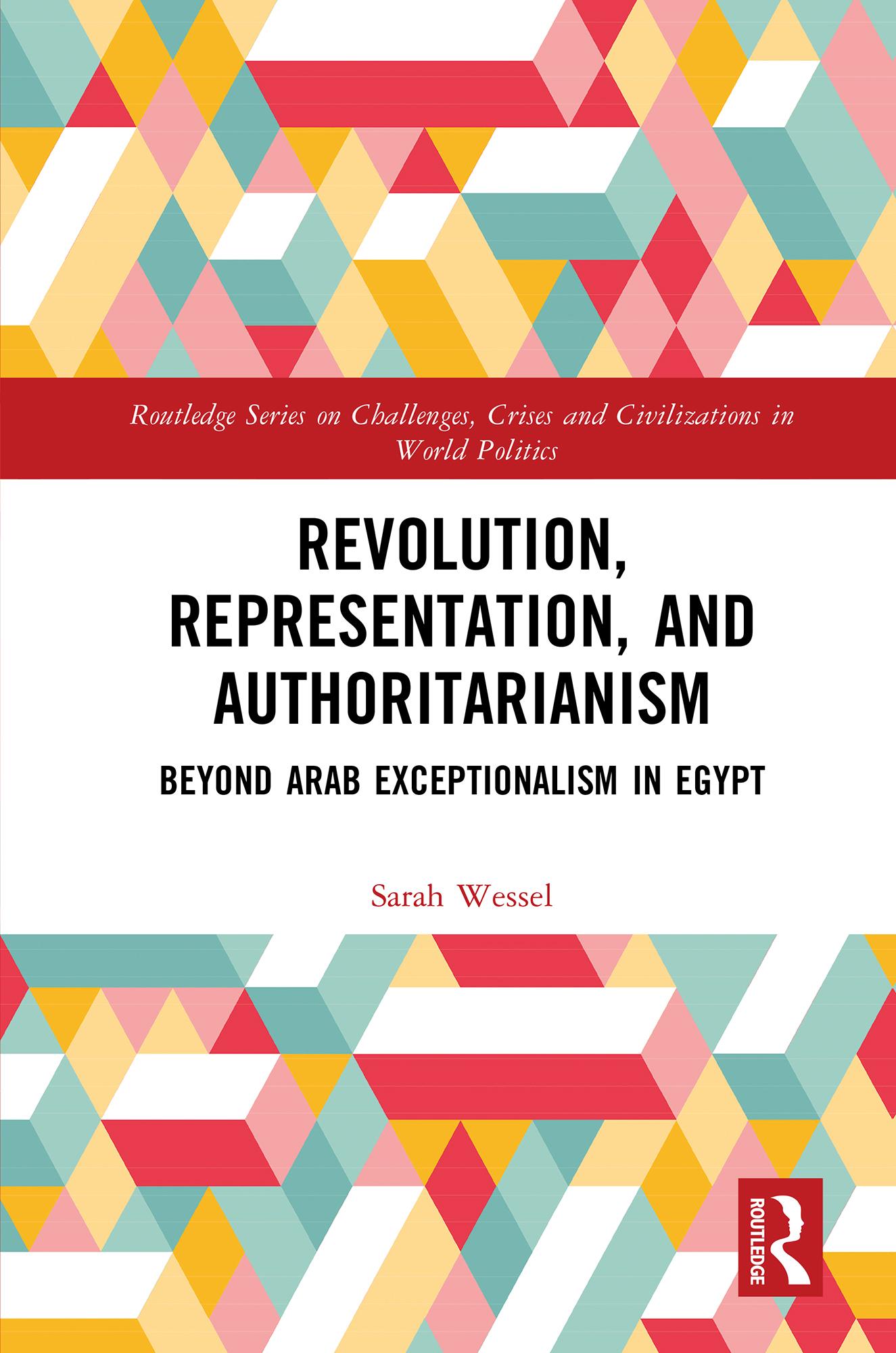
This book examines Egypt’s turbulent and contradictory political period (2011-2015) as key to understanding contemporary politics in the country and the developments in the Arab region after the mass protests in 2010/11, more broadly.
In doing so, it breaks new ground in the study of political representation, providing analytical innovation to the study of disenchantment with politics, democracy fatigue and social cohesion. Based on five years of intense fieldwork, the author provides rare insights into local and national ideas on politics, justice and identity, and on how people situate themselves and Egypt in the regional and global context. It analyzes how the creation of an alternate, political system was discussed and negotiated among the Egyptian population, the military, the government, public figures, the media, and international actors, and yet nevertheless today, Egypt has a new political regime that is the most repressive in the countries’ modern history. Finally, it recalls the emotions and perceptions of individuals and collectives and interlinks these local perspectives to national events and developments through time.
This book will be of key interest to scholars and students of democratization and authoritarianism, Middle East Studies, political representation and informality, collective action, and more broadly to cultural studies and international relations.
Betaal eenvoudig met kaart, Klarna, Apple Pay of Google Pay. Niet tevreden? Je hebt altijd 14 dagen bedenktijd. Lees meer in onze voorwaarden. Heb je vragen, mail ons dan via hello@memmo.org.
Memmo maakt studeren makkelijker – waar je ook bent ter wereld. Wij brengen je cursusboeken en slimme studietools samen op één plek: samenvattingen, quizzen, podcasts en flashcards. En Ted, je studievriend die antwoord geeft op alles wat je je afvraagt. Meer dan 50.000 studenten studeren hier al – gebouwd om je sneller te laten leren en minder stress te geven.