
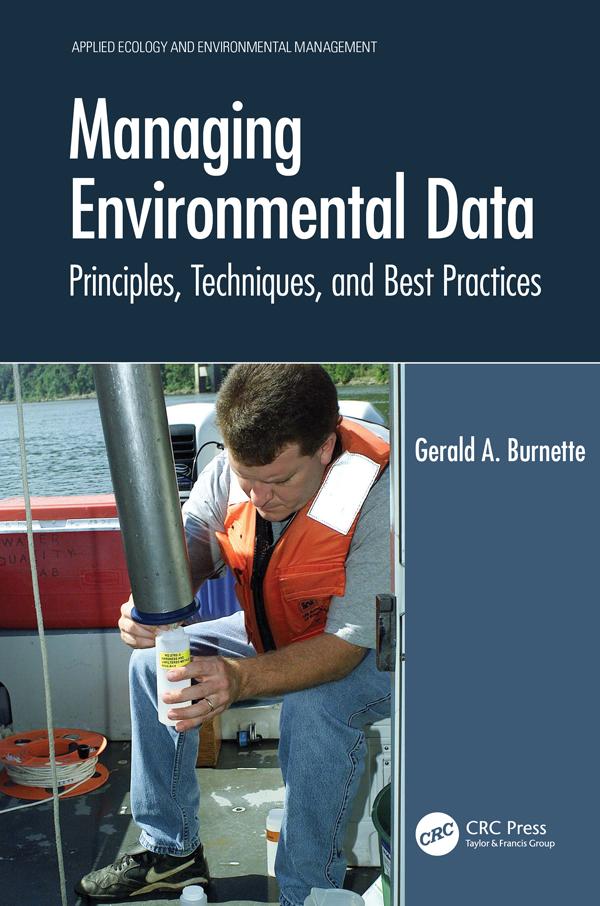
Focused on the mechanics of managing environmental data, this book provides guidelines on how to evaluate data requirements, assess tools and techniques, and implement an effective system. Moving beyond the hypothetical, Gerald Burnette illustrates the decision-making processes and the compromises required when applying environmental principles and practices to actual data.
Managing Environmental Data explains the basic principles of relational databases, discusses database design, explores user interface options, and examines the process of implementation. Best practices are identified during each portion of the process. The discussion is summarized via the development of a hypothetical environmental data management system. Details of the design help establish a common framework that bridges the gap between data managers, users, and software developers.
It is an ideal text for environmental professionals and students. The growth in both volume and complexity of environmental data presents challenges to environmental professionals. Developing better data management skills offers an excellent opportunity to meet these challenges. Gaining knowledge of and experience with data management best practices complements students’ more traditional science education, providing them with the skills required to address complex data requirements.
Betaal eenvoudig met kaart, Klarna, Apple Pay of Google Pay. Niet tevreden? Je hebt altijd 14 dagen bedenktijd. Lees meer in onze voorwaarden. Heb je vragen, mail ons dan via hello@memmo.org.
Memmo maakt studeren makkelijker – waar je ook bent ter wereld. Wij brengen je cursusboeken en slimme studietools samen op één plek: samenvattingen, quizzen, podcasts en flashcards. En Ted, je studievriend die antwoord geeft op alles wat je je afvraagt. Meer dan 50.000 studenten studeren hier al – gebouwd om je sneller te laten leren en minder stress te geven.