
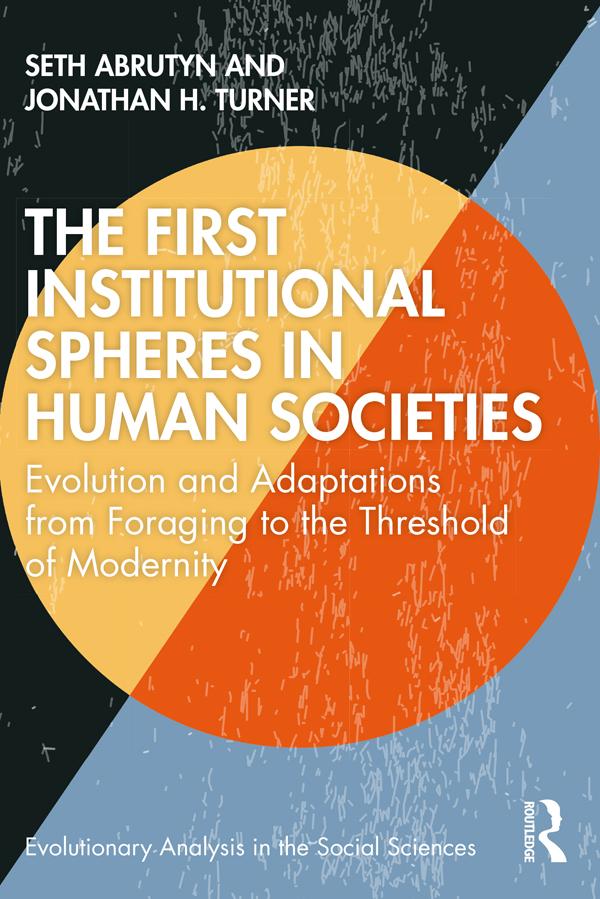
Few concepts are as central to sociology as institutions. Yet, like so many sociological concepts, institutions remain vaguely defined. This book expands a foundational definition of the institution, one which locates them as the basic building blocks of human societies—as structural and cultural machines for survival that make it possible to pass precious knowledge from one generation to the next, ensuring the survival of our species. The book extends this classic tradition by, first, applying advances in biological evolution, neuroscience, and primatology to explain the origins of human societies and, in particular, the first institutional sphere: kinship. The authors incorporate insights from natural sciences often marginalized in sociology, while highlighting the limitations of purely biogenetic, Darwinian explanations. Secondly, they build a vivid conceptual model of institutions and their central dynamics as the book charts the chronological evolution of kinship, polity, religion, law, and economy, discussing the biological evidence for the ubiquity of these institutions as evolutionary adaptations themselves.
Betaal eenvoudig met kaart, Klarna, Apple Pay of Google Pay. Niet tevreden? Je hebt altijd 14 dagen bedenktijd. Lees meer in onze voorwaarden. Heb je vragen, mail ons dan via hello@memmo.org.
Memmo maakt studeren makkelijker – waar je ook bent ter wereld. Wij brengen je cursusboeken en slimme studietools samen op één plek: samenvattingen, quizzen, podcasts en flashcards. En Ted, je studievriend die antwoord geeft op alles wat je je afvraagt. Meer dan 50.000 studenten studeren hier al – gebouwd om je sneller te laten leren en minder stress te geven.