
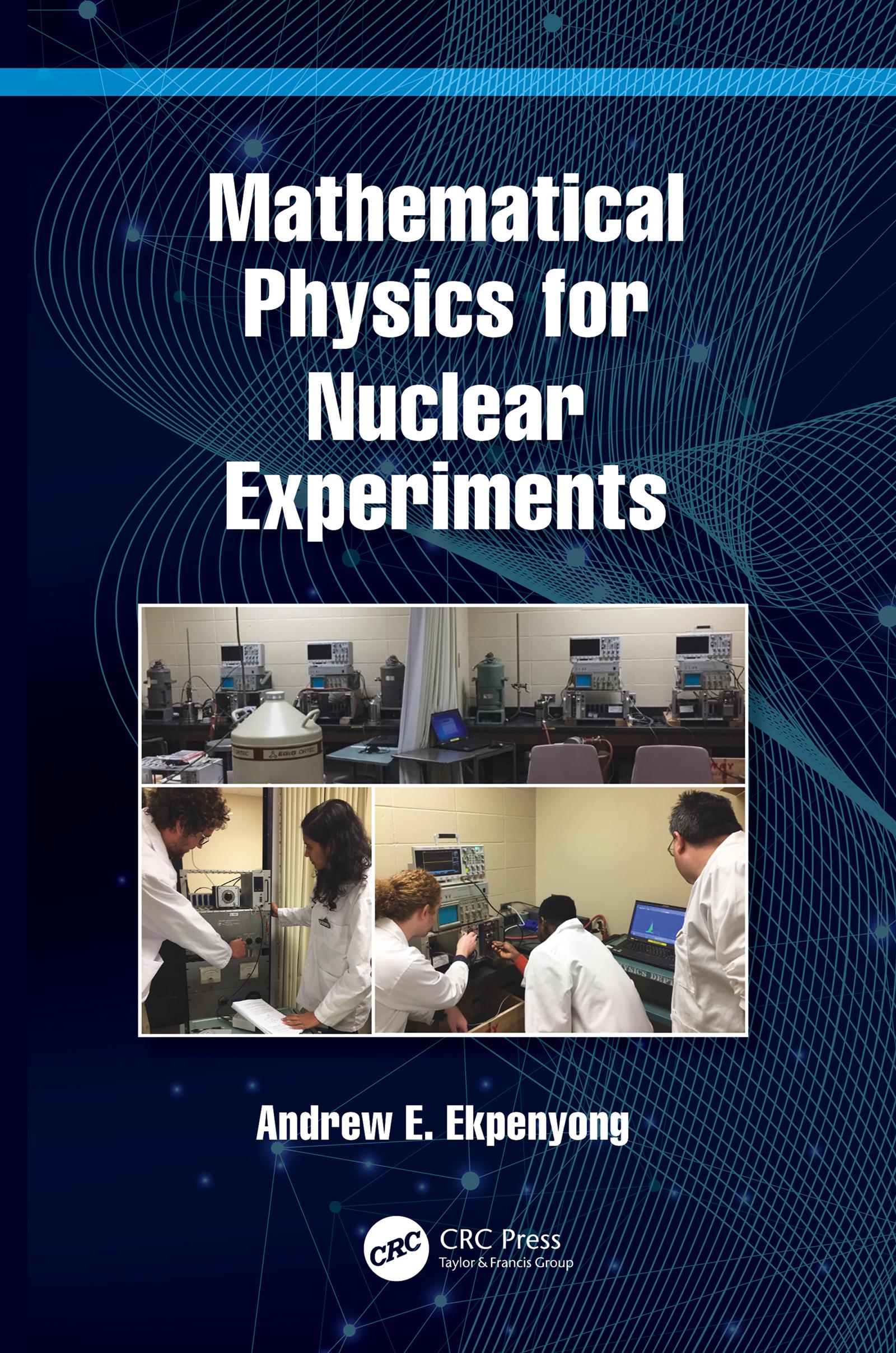
Mathematical Physics for Nuclear Experiments presents an accessible introduction to the mathematical derivations of key equations used in describing and analysing results of typical nuclear physics experiments. Instead of merely showing results and citing texts, crucial equations in nuclear physics such as the Bohr’s classical formula, Bethe’s quantum mechanical formula for energy loss, Poisson, Gaussian and Maxwellian distributions for radioactive decay, and the Fermi function for beta spectrum analysis, among many more, are presented with the mathematical bases of their derivation and with their physical utility.
This approach provides readers with a greater connection between the theoretical and experimental sides of nuclear physics. The book also presents connections between well-established results and ongoing research. It also contains figures and tables showing results from the author’s experiments and those of his students to demonstrate experimental outcomes.
This is a valuable guide for advanced undergraduates and early graduates studying nuclear instruments and methods, medical and health physics courses as well as experimental particle physics courses.
Key features
- Contains over 500 equations connecting theory with experiments.
- Presents over 80 examples showing physical intuition and illustrating concepts.
- Includes 80 exercises, with solutions, showing applications in nuclear and medical physics.
Betaal eenvoudig met kaart, Klarna, Apple Pay of Google Pay. Niet tevreden? Je hebt altijd 14 dagen bedenktijd. Lees meer in onze voorwaarden. Heb je vragen, mail ons dan via hello@memmo.org.
Memmo maakt studeren makkelijker – waar je ook bent ter wereld. Wij brengen je cursusboeken en slimme studietools samen op één plek: samenvattingen, quizzen, podcasts en flashcards. En Ted, je studievriend die antwoord geeft op alles wat je je afvraagt. Meer dan 50.000 studenten studeren hier al – gebouwd om je sneller te laten leren en minder stress te geven.